Nine US arenas allegedly block Macklemore from hosting his benefit shows. Now, the rapper is promising to take the tour back where it belongs
The fight continues.
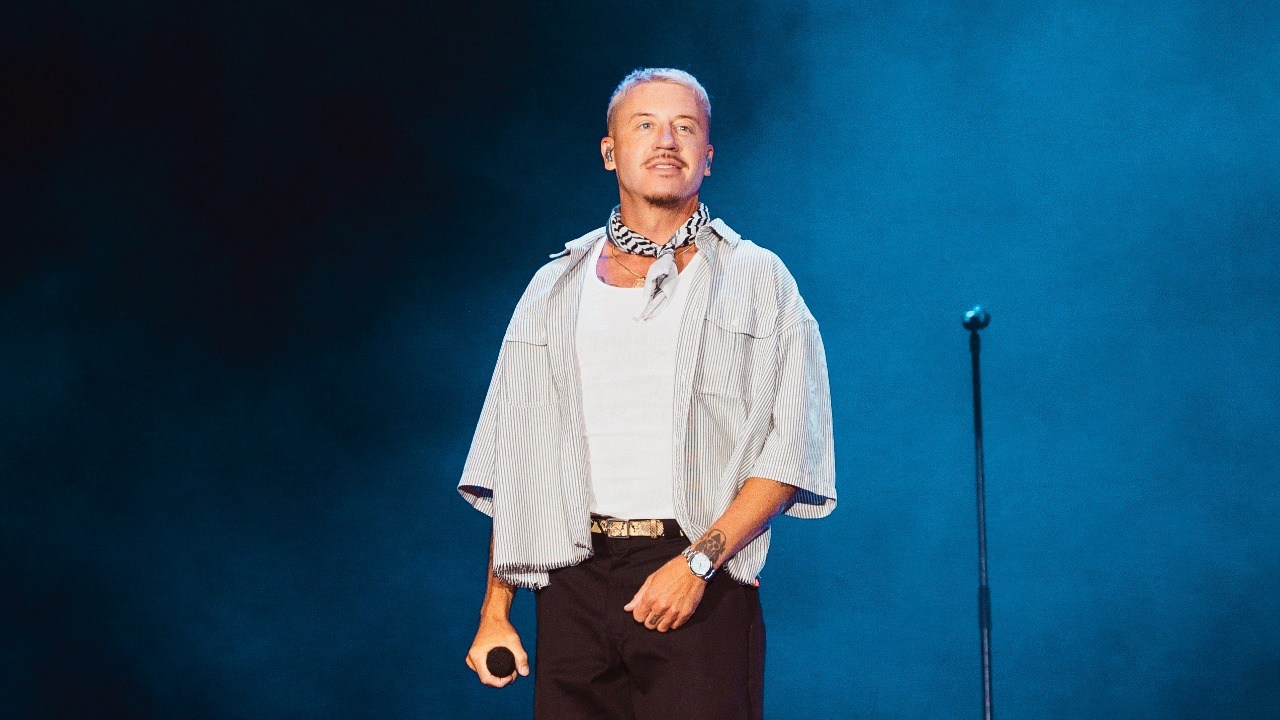
Macklemore is facing a massive roadblock in the United States as he attempts to bring his Free Palestine benefit tour to major venues. According to The Guardian, the rapper claimed that nine significant arenas across the country have refused to host his shows. He says this move is a clear case of intimidation and suppression within the music industry.
The rapper shared his frustration in a detailed post on Instagram. He explained that his initial plan was to bring the tour home after successful, sold-out performances in Dublin, London, and Paris. The long-time Palestine advocate noted that these European shows were a success that brought together thousands of people from many different backgrounds. He described the atmosphere in those venues as one rooted in love rather than the hatred some critics suggest.
His post concluded with a message of hope. He said, “There will be more shows for Palestine. We’ll keep working with other artists and organizers, continuing where we left off in Europe. We’ll probably just take that s*** outside where it belonged in the first place. Our commitment to raising funds and standing in solidarity with the Palestinian people remains the same… We will build our own areas.”
Macklemore says the doors were closed to him because of the nature of his cause
The list of venues he says turned him down includes some of the biggest names in the country. He mentioned Madison Square Garden, the Crypto.com arena, and the Barclays Center. He also pointed to the UBS arena, Prudential Center, Intuit Dome, Kia Forum, Chase Center, and Climate Pledge arena as locations that refused to host him.
The rapper, whose real name is Ben Haggerty, said his team had access to available dates at several major U.S. arenas as recently as mid-September. He alleges that once the venues realized the events were benefit shows for Palestine, the availability disappeared. The result was the same regardless of how the individual conversations went, he added.
Madison Square Garden has since provided a response regarding the situation. According to Deadline, a spokesperson for the venue claimed that the decision was based on extremely limited availability. The representative also stated that the rapper is not an arena level act. This comment stands in contrast to the fact that he recently filled large arenas in Europe.
This tension follows a series of events involving Ed Sheeran. Macklemore was dropped from Sheeran’s tour earlier after making an onstage speech supporting Palestine. Sheeran later stated that it was the decision of the promoter to remove the rapper. He noted that Gillette Stadium owner Robert Kraft had gathered several venue owners to issue an ultimatum. Following the removal of Macklemore, all four opening acts and Sheeran’s live band decided to quit the tour in solidarity.
The rapper says he has had enough
Macklemore has expressed that he is finished with trying to maintain business relationships with those who do not support his cause. He wrote that he is “three years past giving two s**** about maintaining any relationships, business or personal, with anyone that isn’t riding for a Free Palestine.” He believes that those in power use tactics like intimidation, manipulation and suppression to keep entertainers quiet and the industry expects artists to stay in line or face punishment.
The rapper stated that he would rather lose every opportunity in this industry than spend another day protecting people who value their business relationships with Israel more than they value Palestinian human life.
He also shared his thoughts on the current political climate in the United States, particularly the midterm elections and the victory of Abdul El-Sayed. Macklemore pointed out that El-Sayed won despite significant spending from AIPAC to oppose him. He thinks this shows that the power of money has its limits.
The rapper stated that while stadium owners may own the arenas, they do not own the people who fill them. He also encouraged other artists to speak up, saying, “To the artists who are afraid of what those two words might cost them, I understand that fear. I felt it myself, especially when I was struggling to speak out. But I believe that fear begins to lose its power the moment we realize that we are not standing alone.”
Have a tip we should know? [email protected]
Follow The Mary Sue: