


Utah Republicans Force the Pentagon to Back Down After a Controversial Religious Labeling Policy Sparks a Military Firestorm
‘Tear down that wall.’
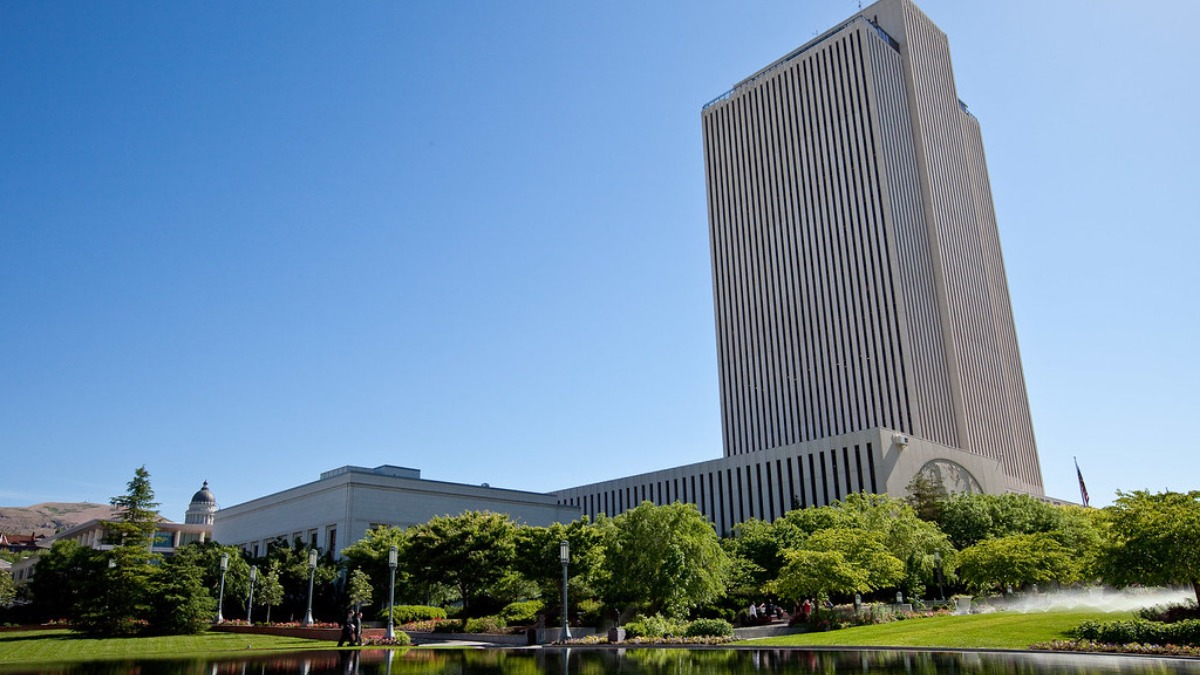
The Pentagon just backtracked on a controversial religious labeling policy after Utah Republicans raised hell over the exclusion of the Church of Jesus Christ of Latter-day Saints from the Christian category. The Defense Department announced on Monday, June 8, 2026, it had revised its list of 31 faith codes, down from over 200, to include LDS, but the initial snub sparked outrage from Mormon lawmakers who argued the move was theologically inaccurate and offensive.
According to The Hill, Secretary of War Pete Hegseth had originally defended the streamlined system, calling the previous 200-plus codes “impractical and unusable.” In March, he said most service members only used six of the codes, and the new structure would help chaplains better support troops based on their faith.
But when the Pentagon released the updated list last Friday, LDS wasn’t grouped under the Christian denominations, a decision that immediately drew fire from Utah’s congressional delegation. Sen. Mike Lee took the lead, posting a video on X June 7 where he called the exclusion “very unfortunate” and “repugnant to any sense of decency.” He told Hegseth to “tear down that wall” and demanded the Pentagon “undo it” immediately.
The Senator didn’t hold back
Lee later hinted that changes were coming after speaking with President Trump about the issue, and by Monday, he was praising the Pentagon’s reversal. “The Pentagon’s job is not to adjudicate theological debates, but instead to ensure sincerely-held faith is respected and encouraged in our ranks,” he wrote on X.
The Pentagon’s initial response was to downplay the controversy. Press secretary Sean Parnell shared a May 20 memo on X, framing the changes as “long overdue” and emphasizing that the military wasn’t passing judgment on any faith’s legitimacy. The goal, he said, was to simplify data collection so chaplains could better serve troops.
But that explanation didn’t fly with Mormon lawmakers, who pointed out that LDS considers itself a Christian denomination, just not Catholic or Protestant. The church’s official website states it’s a “restoration of the Church of Jesus Christ as originally established by the Savior in the New Testament of the Bible.”
Rep. Mike Kennedy called the Pentagon’s decision “wrong and needs to be corrected.” Sen. John Curtis argued that LDS members are “unequivocally Christian” and that the government had no business contradicting a religion’s own foundational beliefs.
The backlash worked
By Monday, the Pentagon announced the list had been fixed, reducing the codes to 30 and removing the Christian subcategories entirely. Now, service members can identify as LDS, along with other Christian denominations, or as Jewish, Muslim, Sikh, Buddhist, Hindu, Bahá’i, or agnostic. Notably absent from the list are atheist, Wiccan, pagan, and humanist designations.
This isn’t the first time Hegseth has stirred controversy with religious policy changes in the military. Back in March, he announced that chaplains would no longer wear rank insignia, instead displaying symbols of their religious affiliation.
The move was framed as a way to emphasize chaplains’ spiritual role over their military rank, making them more approachable to service members. “A chaplain is first and foremost a chaplain and an officer second,” Hegseth said, adding that the change would reduce “any unease or anxiety” troops might feel when seeking spiritual guidance from a superior.
Hegseth is aiming at reasserting religion’s place in the military
The shift reflects Hegseth’s broader push to reassert religion’s place in the military. He’s been vocal about his belief that previous administrations weakened the Chaplain Corps by infusing it with “political correctness and secular humanism,” turning chaplains into little more than therapists.
“A warfighter needs more than a coping mechanism,” he argued. “They need truth, big-T truth, they need conviction, they need a shepherd.” His efforts have included banning transgender troops, reviewing women’s roles in combat, and even pressuring Scouting America to adopt “core value reforms.”
His influence extends beyond policy. Since last spring, he’s hosted monthly prayer services at the Pentagon, sometimes featuring controversial figures like Christian nationalist pastor Doug Wilson. Wilson’s church, which Hegseth attends, has drawn criticism for its extreme views, including opposition to women’s suffrage and support for traditional gender roles.
The Pentagon’s latest flip-flop on the faith codes shows just how much pushback even small changes can provoke, especially when they touch on deeply held religious identities. For now, the Pentagon seems to have walked back the most contentious part of its policy, but the debate over how the military handles religion is far from over.
The new list still excludes several faiths, and it’s unclear whether more revisions are coming. What is clear is that lawmakers won’t hesitate to step in when they feel their constituents’ beliefs are being misrepresented.
(Featured image: alh1)
Have a tip we should know? [email protected]
Follow The Mary Sue:
