


Maggie Haberman Reveals Why JD Vance’s Vocal Dissent on Iran Pushed Him to the Edge of Trump’s Inner Circle
Less policy, more politics.
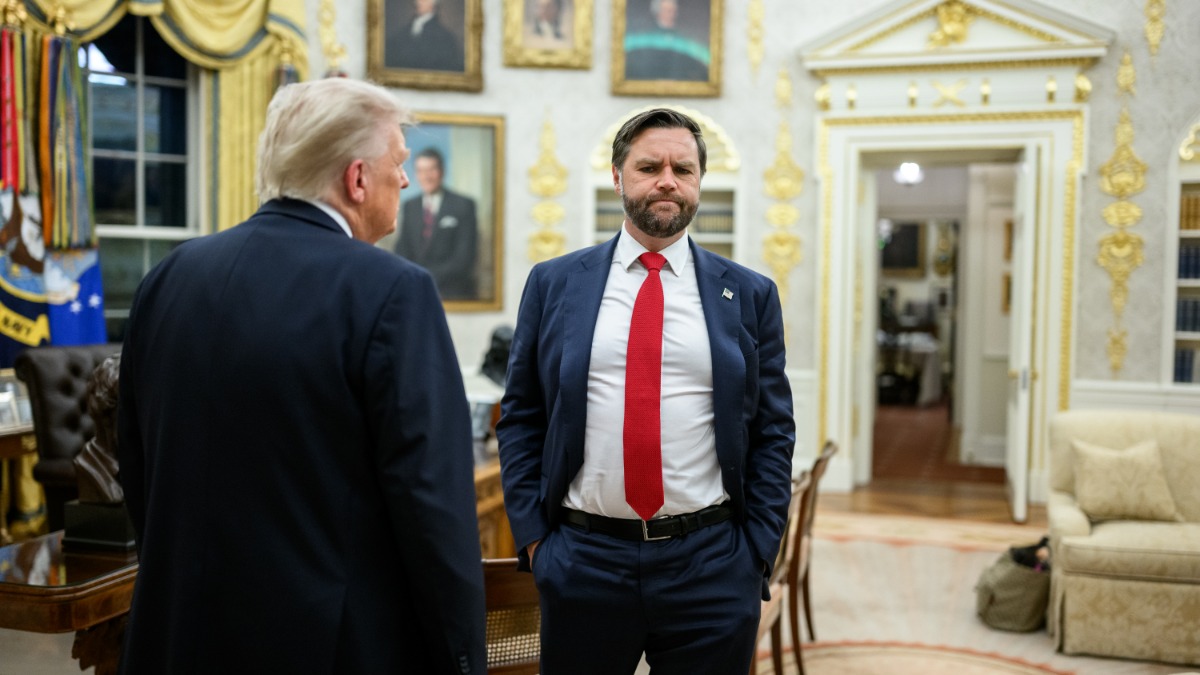
Maggie Haberman dropped a major insight into why J.D. Vance is walking a tightrope with Donald Trump. According to the New York Times White House correspondent, Vance’s vocal opposition to the Iran war didn’t just ruffle feathers; it actively cost him influence inside the administration. Haberman revealed in a segment on NBC’s Meet the Press that Vance was the only adviser who openly challenged Trump on the conflict, a move that clearly irritated the president.
According to The Hill, while other officials, like Joint Chiefs Chair Dan Caine, presented warnings about munitions depletion and the risk of Iran closing the Strait of Hormuz, they did it quietly. Vance, on the other hand, didn’t hold back. This dynamic has left Vance in a precarious position. He’s now leading high-stakes negotiations with Iran after the U.S. signed a 60-day memorandum of understanding aimed at reopening the Strait of Hormuz.
The talks are already off to a shaky start, especially after the U.S. and Iran exchanged fire over the weekend. Trump even joked earlier this month that if the peace deal collapses, Vance will take the blame. Despite his private reservations about the war, Vance has stayed publicly supportive.
The tension is palpable
Haberman’s recently-released book, Regime Change: Inside the Imperial Presidency of Donald Trump, co-written with fellow journalist Jonathan Swan, sheds more light on the internal dynamics. Treasury Secretary Scott Bessent and Energy Secretary Chris Wright, who might have raised concerns about energy markets and economic fallout, were reportedly kept out of the loop on Iran strike discussions.
Vance, meanwhile, has been consistent in his skepticism about foreign wars. In an October 2024 interview with comedian Tim Dillon, he called a conflict with Iran a “huge distraction” and “massively expensive.”
The Iran war has also taken a toll on America’s military readiness. Reports suggest it could take three years or more to replenish the advanced weapons used during the conflict. This has fueled criticism from former Trump allies like Tucker Carlson and Rep. Marjorie Taylor Greene, who have turned against the administration over its Middle East policies.
Vance’s stance on Iran isn’t just a personal conviction. It’s a political liability in an administration where loyalty to Trump’s vision is paramount. The V-P’s approach to the Iran negotiations has been notably different from that of Secretary of State Marco Rubio. While Vance has taken a more conciliatory tone toward Iran, Rubio has doubled down on a tougher stance.
According to Al Jazeera, Rubio recently declared that international waterways like the Strait of Hormuz “do not belong to any nation-state,” a direct rebuke to Iran’s attempts to assert control over the critical chokepoint. Vance, meanwhile, has suggested that regional Arab countries could contribute to Iran’s reconstruction fund, a proposal Rubio dismissed as premature.
The contrast has sparked speculation about a split within the administration
Vance has been vocal in his criticism of Israel’s military tactics in Lebanon, arguing that bombing civilian infrastructure undermines U.S.-led peace efforts. He’s even publicly urged Israel to stop criticizing the Trump administration, framing Trump as its only sympathetic ally on the global stage. Rubio, on the other hand, has defended Israel’s actions in Lebanon as a justified response to Hezbollah attacks.
The White House has vehemently denied any division between Vance and Rubio. White House spokeswoman Anna Kelly insisted that the entire administration is “fully behind the president’s efforts to ensure Iran can never possess a nuclear weapon.”
State Department spokesman Tommy Pigott called the idea of a split a “tired and fake” narrative, emphasizing that the administration is “100% in lockstep” behind Trump. Rubio himself has downplayed any differences, telling reporters that both he and Vance take their lead from the president.
Vance and Rubio represent two competing factions within the Republican Party. Vance, a former critic of foreign wars, embodies the growing skepticism among Republicans about military intervention. Rubio, a self-described hawk, has long advocated for a more confrontational approach to adversaries like Iran. Both men are seen as potential successors to Trump, and their differing views reflect broader debates within the GOP about America’s role in the world.
The stakes couldn’t be higher
The Strait of Hormuz remains a flashpoint, with Iran seeking to impose its authority over the waterway that carries a fifth of the world’s energy supplies. The U.S. and Iran are set to resume technical talks this week, but the path to a lasting peace deal is far from clear.
Meanwhile, the war between Israel and Hezbollah in Lebanon continues to complicate diplomatic efforts. If Vance’s negotiations fail, it won’t just be a foreign policy setback – it could further strain his relationship with Trump.
Vance’s willingness to challenge Trump on Iran may have cost him in the short term, but it’s also a defining feature of his political identity. Whether that gamble pays off in the long run remains to be seen. For now, he’s stuck between a president who values loyalty above all else and a party that’s increasingly divided over America’s role in the world.
If the Iran deal collapses, Vance will be the one left holding the bag. If it succeeds, he might just prove that dissent, when done strategically, can be a path to influence. Either way, this is a high-wire act with no safety net.
(Featured image: The White House)
Have a tip we should know? [email protected]
Follow The Mary Sue:
