


Putin just handed Iran a lifeline after Trump’s ‘all the cards’ bluff backfired in the Strait of Hormuz
Russia has entered the chat.
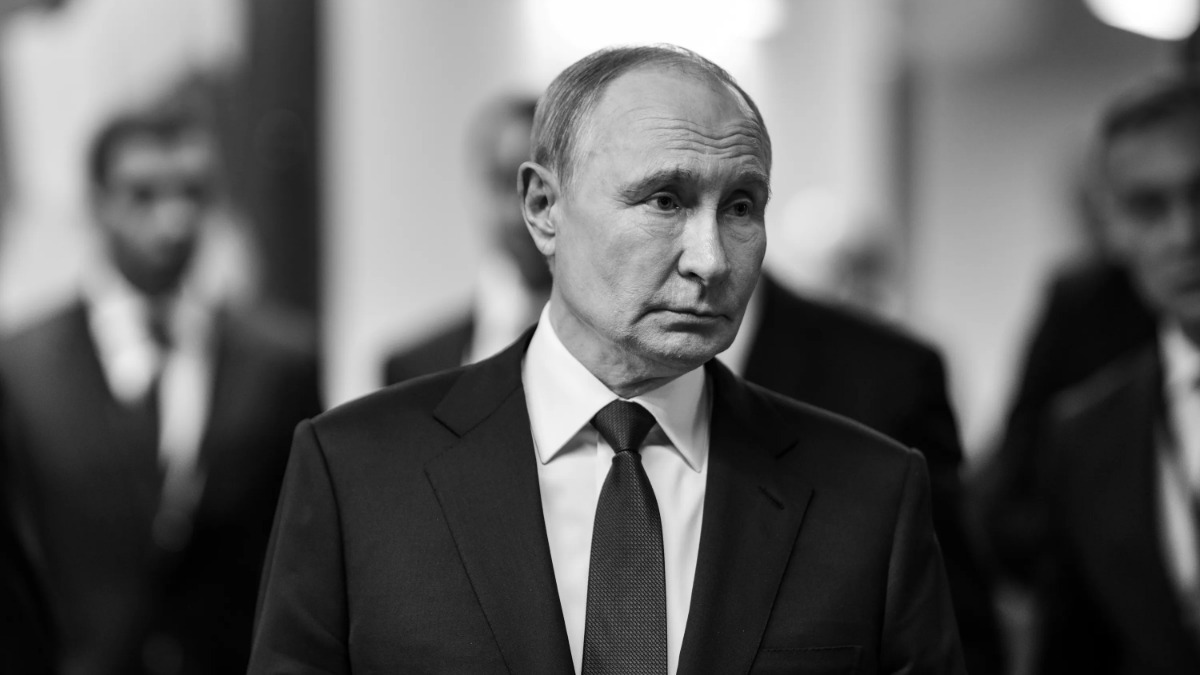
Russian President Vladimir Putin just threw Iran a diplomatic lifeline as tensions in the Strait of Hormuz threaten to reignite full-scale conflict. During a high-profile meeting in Russia, Putin praised Iran’s “courage” and pledged unwavering support, signaling Moscow’s growing role in shaping the outcome of the standoff. The move comes after a U.S. bluff in the region backfired, leaving negotiations between Washington and Tehran at a deadlock.
According to Al Jazeera, Iran’s Foreign Minister Abbas Araghchi arrived in Russia on Monday for talks with Putin, framing the visit as a chance to “continue close consultations” on regional and international issues. Araghchi told Iranian media the meeting would focus on “developments in the war” and the latest efforts to de-escalate the crisis.
His trip follows a whirlwind of diplomacy, including stops in Pakistan and Oman, as Iran scrambles to rally allies amid stalled peace talks with the U.S. “We see how courageously and heroically the Iranian people are fighting for their independence and sovereignty,” Putin told Araghchi, according to Russian state media. The Russian leader vowed to do “everything that serves your interests” to help achieve peace in the region.
The warm rhetoric underscores Russia’s willingness to step into the mediator role
The temporary ceasefire brokered on April 8 is on the brink of collapse, with both sides locked in a high-stakes dispute over shipping in the Strait of Hormuz. The U.S. has enforced a naval blockade on Iranian ports, while Iran has effectively shut down the critical waterway, choking off a fifth of the world’s oil and gas supplies. The result? A deepening global energy crisis and soaring prices that are rippling through economies worldwide.
Iran’s demands are clear: it wants the blockade lifted before it will even consider resuming negotiations. President Masoud Pezeshkian has repeatedly stated that Tehran won’t engage in talks while the restrictions remain in place. The U.S., meanwhile, has doubled down on its position. U.S. Central Command (CENTCOM) announced that its forces have “directed 38 ships to turn around or return to port,” enforcing the blockade with military precision.
The U.S. had planned to send a delegation, including special envoy Steve Witkoff and adviser Jared Kushner, to Islamabad for talks with Iran over the weekend. But those plans were abruptly scrapped, with the White House citing “tremendous infighting and confusion” within Iran’s leadership. The cancellation left Pakistan’s backchannel efforts in limbo, though officials in Islamabad remain hopeful.
Araghchi described his discussions in Islamabad as productive
He said they included a review of “the specific conditions under which negotiations between Iran and the U.S. could continue.” But the optimism in Pakistan contrasts sharply with the hardline stance from Washington. The U.S. has made it clear that its top priority is the “complete eradication of Iran’s atomic program,” a demand Tehran has flatly rejected as a non-starter.
The Strait of Hormuz has become the flashpoint in this standoff. Before the war, the narrow waterway saw about 20% of the world’s oil and gas pass through daily. Now, it’s a ghost town of stranded ships and rising tensions. Iran’s foreign minister framed the issue as a regional responsibility during his visit to Oman, which shares the strait’s coastline.
“Our focus included ways to ensure safe transit that is to benefit all dear neighbors and the world,” Araghchi said, per NPR. Omani Foreign Minister Badr Albusaidi echoed the sentiment, calling for “practical solutions to ensure lasting freedom of navigation.”
The U.N. has also weighed in, with Secretary-General António Guterres urging both sides to “let ships pass.” At a high-level meeting chaired by Bahrain, Guterres framed the blockade as a humanitarian crisis, warning that the global economy “can’t breathe” under the current restrictions.
The U.S. ambassador to the U.N., Mike Waltz, took a harder line, calling the strait “too important to the global economy to be choked off or attacked by two-bit pirates.” Russia and China, however, placed the blame squarely on the U.S. and Israel, with Russia’s ambassador accusing Western countries of “lawless” actions.
The conflict between Israel and Lebanon continues
The Israeli military carried out airstrikes in eastern Lebanon’s Bekaa Valley on Monday, targeting what it claimed were Hezbollah sites. Hezbollah retaliated with drone attacks, killing at least one Israeli soldier and injuring several others.
The economic toll of the standoff is becoming impossible to ignore. The U.S. has claimed Iran is running out of storage for its oil, with Trump saying Tehran has “just three days” before its pipelines explode from pressure. Energy analysts dispute that timeline, with Amena Bakr of Kpler estimating Iran has closer to 20 days of storage left at current production levels.
Bakr also noted that Iran has a southern terminal outside the Strait of Hormuz that could theoretically be used to reroute oil if its ships can bypass the U.S. blockade. Iran’s parliamentary speaker, Mohammad Bagher Ghalibaf, fired back at Trump’s claim that the U.S. holds “all the cards.” Ghalibaf presented a complex economic equation to argue that the U.S. is facing its own supply and demand challenges. The back-and-forth highlights the brinkmanship at play.
Russia’s involvement adds another layer of complexity to the crisis. Putin’s meeting with Araghchi wasn’t just symbolic, it was a clear signal that Moscow is positioning itself as a key player in any future negotiations. Al Jazeera’s Tohid Asadi, from Tehran, said, “We have a scenario for diplomatic settlement and another for confrontation. Russia is going to play a key role when it comes to both.”
(Featured image: whitehouse.gov)
Have a tip we should know? [email protected]
Follow The Mary Sue:
