Harmeet Dhillon is the first major Trump appointee to exit following the Republican midterm battering: ‘I wasn’t asked to resign’
‘My decision, my choice.’
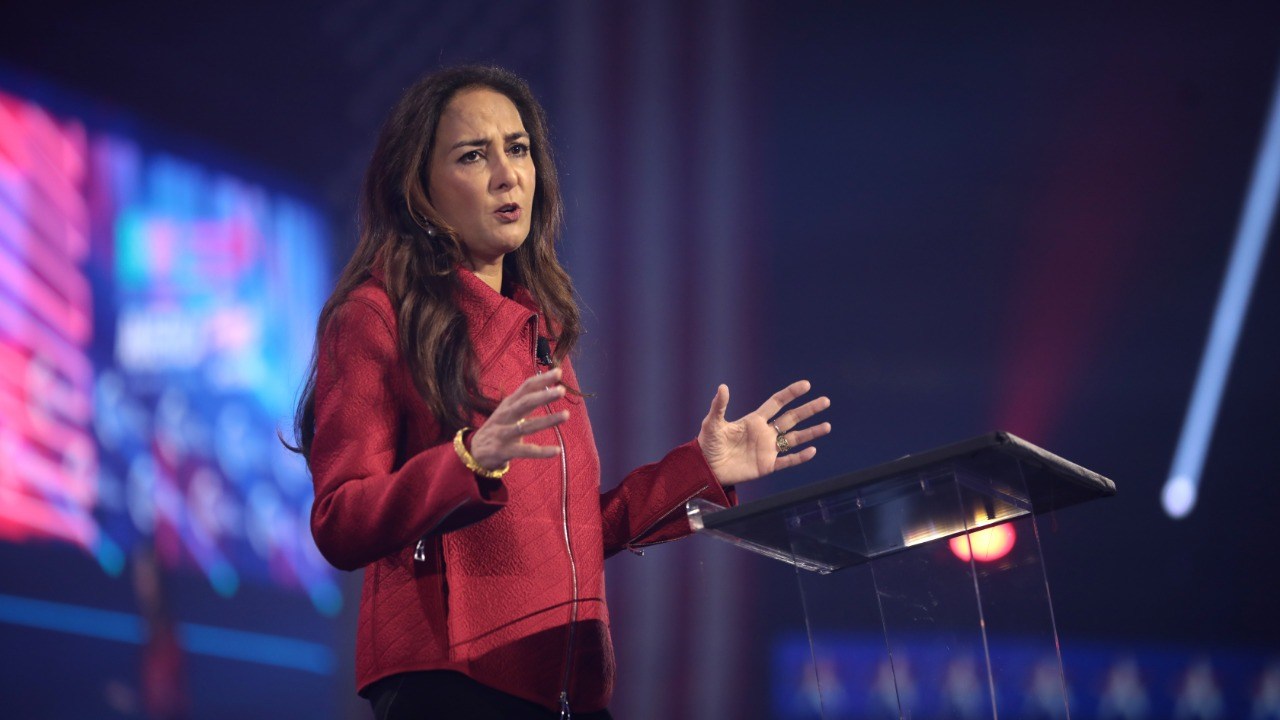
Harmeet Dhillon is the first major Donald Trump appointee to exit the administration following the Republican midterm battering. As the assistant attorney general for the Civil Rights Division at the Department of Justice (DOJ), her departure marks a significant shift for the agency. According to The Hill, Dhillon formally submitted her resignation on November 5, 2026.
Attorney General Todd Blanche announced the news on X, stating, “Today, I accepted the resignation of Assistant Attorney General Harmeet Dhillon, who led the Civil Rights Division with conviction the past 18 months. She has defended the civil liberties of every American and enforced the law without fear or favor. The Department is grateful for her dedicated public service, and we wish her every success in her future endeavors.”
Despite the timing of her exit, Dhillon insists that the decision was entirely her own and was not a reaction to the election results. She told Fox News Digital that she made the choice weeks ago. “I wasn’t asked to resign,” Dhillon said. “I resigned three weeks ago, and Susie asked me to please wait until after the midterms.” She explained that she told White House chief of staff Susie Wiles in early October that she wanted to return to private practice because she felt she had finished the work she came to Washington to do.
Some suggest a different narrative behind the scenes
Two sources told CBS News that President Trump wanted Dhillon fired after watching her October 18 appearance on 60 Minutes. During that interview, she discussed the department’s election integrity efforts and the investigation into noncitizens voting.
While she touted the investigation of thousands of cases, some sources indicate that the President felt she should have been more forceful in her explanation. Justice Department officials reportedly stalled to allow her to follow through with her original plan to resign after the election.
Dhillon’s tenure was defined by a massive overhaul of the Civil Rights Division. She moved the focus away from traditional priorities, such as monitoring police departments for excessive force or protecting voting access. Instead, she prioritized issues like religious discrimination, Second Amendment rights, and challenging equity, diversity, and inclusion policies at universities. She also pushed for transgender participation in women’s sports to be restricted and launched lawsuits against states like Minnesota and California.
This shift in focus led to significant internal turnover
Reports suggest that more than 75% of the staff departed during her time in office. Dhillon herself claimed she recruited more than 130 lawyers to fill those ranks. Critics were vocal about these changes.
Stacey Young, who heads the DOJ alumni group Justice Connection, called Dhillon “the most destructive, lawless, and hateful head of the Civil Rights Division in DOJ history.” Young argued that the division, once considered the crown jewel of the Justice Department, was decimated under her leadership.
Dhillon defended her actions, saying, “We changed it, and that’s what we came here to do. And it’s done.” Her approach often involved unconventional tactics. She frequently used X to announce investigations and share videos, a departure from standard practices. She also handed out challenge coins to staff with the phrase ‘FAFO’ printed on them.
Furthermore, the division filed 31 lawsuits against various states to gain access to voter rolls, though it lost 27 of those cases. The department later admitted in court that it intended to share that voter information with the Department of Homeland Security (DHS) for immigration enforcement purposes.
Dhillon’s time in the administration also included other controversial moments
She represented former Attorney General Pam Bondi when Bondi appeared before the House Oversight Committee to discuss the Epstein files. Some lawmakers labeled this a conflict of interest, but Dhillon maintained she was there to represent the interests of the Justice Department.
As she prepares to leave, questions remain about whether she might face future congressional inquiries. When asked if she would testify if subpoenaed, Dhillon noted that executive privilege would limit what she could discuss. She stated she would seek legal advice and follow it.
Dhillon also mentioned she has not discussed the possibility of a pardon with the President. She moved to Washington to serve after the deaths of her husband and father, and she now believes it is time to move on. As she put it, “My decision, my choice. It’s time.”
Have a tip we should know? [email protected]
Follow The Mary Sue: