


Trump’s Latest Jab at the Navy’s Longest Deployment in Years Reveals a Disturbing Indifference Toward the Crew’s Squalid Conditions at Sea
Headed back.
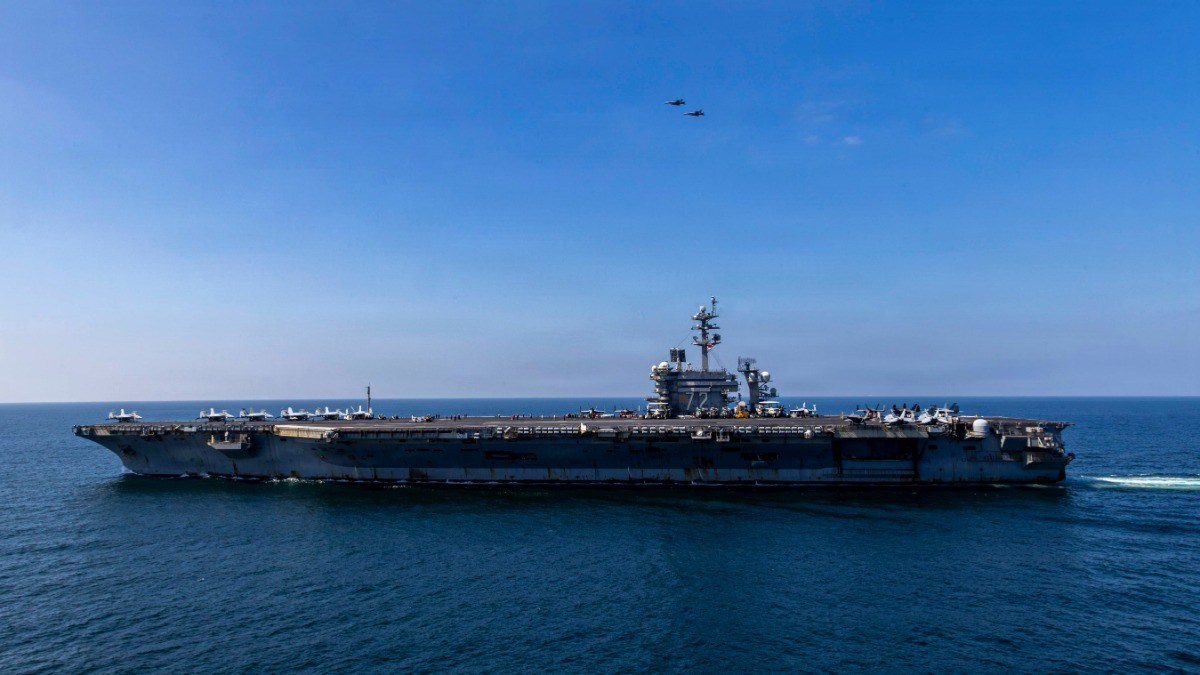
The USS Abraham Lincoln is finally heading home after nearly 275 days at sea, the longest deployment for a U.S. Navy aircraft carrier in years. According to Reality Tea, the ship departed San Diego on November 21, 2025, for what was supposed to be a seven-month mission, but sailors are only now returning after conditions aboard deteriorated into what some described as squalid.
Reports of food shortages, contaminated water, and broken toilets surfaced as the deployment dragged on, with one sailor even going overboard in a mental health episode before being rescued. The Navy has pushed back on the severity of these claims, but the situation has raised serious questions about how the military is handling prolonged deployments in a grinding war with Iran.
Donald Trump weighed in on the Lincoln’s return just days before the ship was officially ordered home. Speaking to reporters at Joint Base Andrews, he dismissed concerns about the deployment’s length, saying the carrier hadn’t been at sea “nearly long enough.” He later called the 275-day stretch a “good period of time,” pointing to longer deployments in the past. His comments struck a nerve with critics.
They argue that the administration has shown little regard for the well-being of sailors
Acting Navy Secretary Hung Cao tried to soften the blow, insisting the rotation was always part of the plan and that the safety of personnel remained the top priority. “The USS Abraham Lincoln crushed their deployment and will return home soon as part of a planned rotation,” he said. But the timing of Trump’s remarks, coming just as the Navy was preparing to bring the ship back, made his indifference hard to ignore.
The Lincoln’s struggles aren’t happening in a vacuum. Experts say the deployment highlights the Navy’s limits in a prolonged conflict, especially one as asymmetrical as the war with Iran. Unlike traditional naval battles, this fight has relied heavily on drones, small boats, and persistent harassment rather than large-scale engagements. Iran’s strategy has forced the U.S. to adapt in ways that strain its existing fleet.
Bradley Martin, a retired Navy captain and senior policy researcher at the RAND Corporation, put it bluntly: “The navy exists to project power, and it exists to fill gaps, but you do have to deal with the fact that there are limits.” Those limits have become painfully clear.
Al Jazeera reports that the Navy’s primary resupply hub in Bahrain was heavily damaged early in the war, forcing ships to rely on Diego Garcia, an island in the Indian Ocean nearly 2,200 miles away from the conflict zone. That’s a logistical nightmare, especially for an aircraft carrier strike group that requires constant fuel, food, and spare parts to function.
The Lincoln isn’t the only ship feeling the strain
The USS Gerald Ford spent 326 days at sea before rotating home in May, and Democratic lawmakers have accused the Trump administration of repeating the same mistakes. In a letter to Defense Secretary Pete Hegseth, they warned that the Navy isn’t “adapting quickly enough” to the realities of the war.
“The circumstances leave both Congress and the public concerned that the Department is not taking the appropriate steps to mitigate the continued challenges in our fleet,” the lawmakers wrote. Hegseth has dismissed reports of dire conditions aboard the Lincoln, calling them “completely misrepresented.”
But the fact that Adm. Brad Cooper, head of U.S. Central Command, felt the need to visit the ship and later pen an op-ed praising the crew’s performance suggests the situation was serious enough to warrant high-level attention. “You delivered a performance for the ages, and now you are going home,” Cooper wrote in the Wall Street Journal. The acknowledgement doesn’t change the fact that sailors were dealing with broken equipment and supply shortages for months.
The Navy’s current predicament is a microcosm of the broader challenges the U.S. faces in this war
Iran has effectively neutralized two aircraft carriers – the Ford and the Lincoln. Harlan Ullman, a former naval officer and chairman of the Killowen Group advisory firm, said the administration’s initial assumption that the conflict would be short-lived has backfired. “One of the things that we don’t realize is that Iran has now put two US naval aircraft carriers out of commission for what could be a year,” he said.
Aircraft carriers are designed for power projection, not blockades or drone swarms. As Martin pointed out, “An aircraft carrier is a very capable platform for a lot of purposes, but for most of what we were dealing with with Iran, it is not.”
The shift in strategy – from degrading Iran’s military to simply reopening the Strait of Hormuz – reflects the administration’s recognition that it can’t achieve its original goals with the forces available. But even that more limited objective is proving difficult. The Navy lacks the small, agile ships needed to maintain a persistent presence in the strait, and its larger vessels are ill-suited for the kind of asymmetric threats Iran poses.
Mona Yacoubian, senior adviser, Center for Strategic and International Studies, compared the situation to Ukraine’s use of drones to counter Russia’s much larger navy in the Black Sea. “The reporting regarding the deterioration of conditions on the USS Abraham Lincoln really embodies the broader challenge that the U.S. faces with respect to this conflict,” she said.
For now, Lincoln’s return offers some relief, but the Navy’s problems are far from over. The USS George Washington, which had been based in Japan, is replacing the Lincoln in the Middle East, leaving the western Pacific without a carrier for the first time in years.
(Featured image: NAVCENT Public Affairs)
Have a tip we should know? [email protected]
Follow The Mary Sue:
