


Rubio snaps at ‘stupid question’ about Iran ceasefire. Then admits the US just fired back because ‘we’re not a stupid country’
A very thin line.
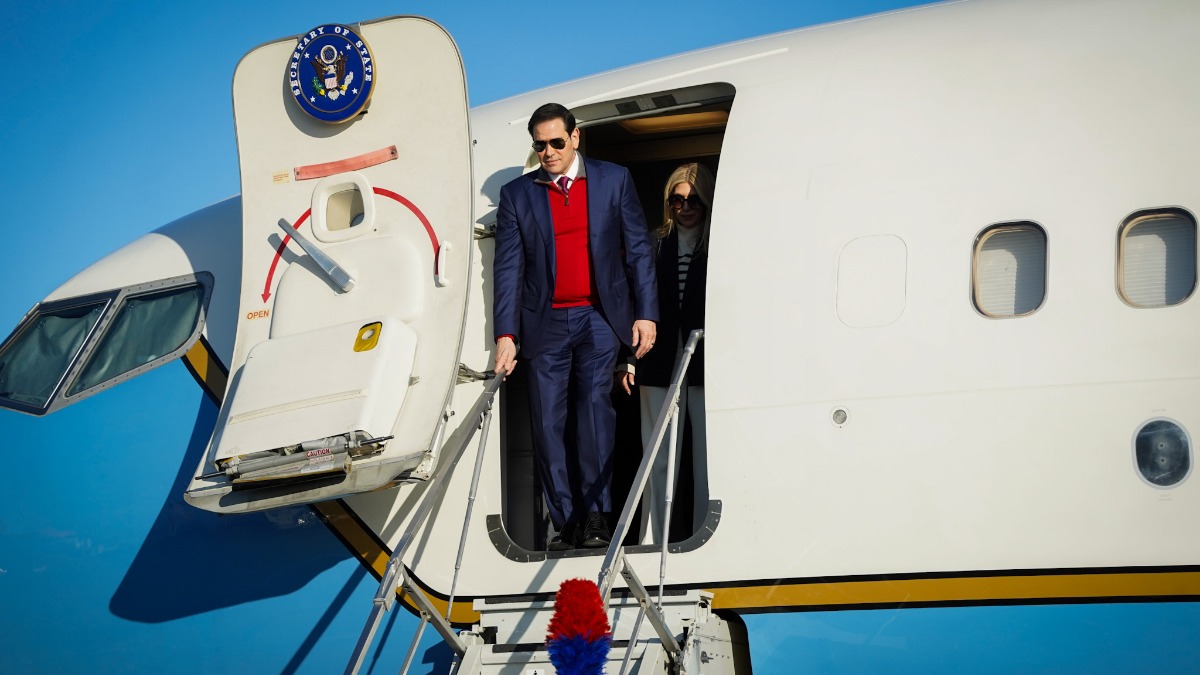
Marco Rubio lost his cool with a reporter who asked how a ceasefire can still hold after the U.S. and Iran traded missile fire. The Secretary of State didn’t hold back, calling the question “stupid” before doubling down that America fired back because “we’re not a stupid country.” The exchange happened on May 8, 2026, during a press briefing where Rubio was grilled about the previous day’s skirmish.
U.S. destroyers in the Strait of Hormuz were targeted by Iranian drones and missiles, and the military responded with strikes on Iranian soil, including a port city. According to Mediaite, Rubio made it clear the U.S. wasn’t going to sit idle while under attack.
“If you fire a drone or a missile at our destroyer, what are we supposed to do, let it hit?” he said. “We have to respond to it. We have to knock down the missile, and we have to knock out whatever it is that launched that missile. The alternative is to let it sink one of our ships. That’s crazy.”
Rubio blamed Iran for initiating the missile fire
When a reporter pressed him on how the ceasefire could still be intact after the exchange, Rubio didn’t mince words. “Well, you should ask that of the Iranians,” he shot back. “Don’t ask me. We didn’t fire, they fired on us.”
He went on to call the idea of not responding “a stupid question” and “a stupid position to take.” His reasoning was straightforward: “Of course, we fired back at them; they were shooting at us. That’s what I would expect to do. Only stupid countries don’t shoot back when you’re shot at, and we’re not a stupid country.”
The back-and-forth came just a day after President Donald Trump weighed in on the strikes, calling them a “love tap” in a phone call with ABC News’ Rachel Scott. Scott shared the exchange on X, where Trump insisted the ceasefire was still in effect. “It’s just a love tap,” he said.
When asked if that meant the ceasefire was over, he responded, “No, no, the ceasefire is going. It’s in effect.” The term “love tap” didn’t sit well with everyone, especially given the scale of the strikes, but the administration has been adamant that the conflict isn’t escalating.
The military’s stance aligns with Rubio’s and Trump’s
A senior U.S. official told Fox News that the war isn’t restarting, and U.S. Central Command (CENTCOM) described the strikes as self-defense after Iranian forces launched unprovoked attacks. No U.S. assets were hit, but the situation remains tense. The Strait of Hormuz, a critical waterway for global oil shipments, has been a flashpoint for years, and the latest exchange only underscores how fragile the ceasefire really is.
Adding to the complexity, Saudi Arabia and Kuwait briefly closed their airspace to U.S. military flights over concerns about Project Freedom, the operation to escort ships through the strait. They’ve since reopened it, but the move highlights how regional allies are walking a tightrope between supporting the U.S. and avoiding further entanglement in the conflict. The U.S. has framed its actions as defensive, but Iran’s response remains an open question.
Rubio’s frustration with the reporter’s question reflects a broader sentiment within the administration: the U.S. isn’t going to apologize for defending itself. The ceasefire, as Trump and Rubio both emphasized, is still technically in place, but the rules of engagement are clear. If Iran fires first, the U.S. will fire back.
For now, the focus is on de-escalation, but the line between self-defense and provocation is thin. The U.S. has made it clear it won’t tolerate direct attacks on its forces, and Iran knows that. The question is whether both sides can avoid crossing that line again, or if the ceasefire is just a temporary pause in a conflict that’s far from over. If the past few days are any indication, the answer isn’t reassuring.
The strikes on Iran’s Kesham Port and Bandar Abbas were framed as proportional responses, but the term “love tap” has already sparked debate. Critics argue it downplays the severity of the situation, while supporters see it as a way to signal restraint.
Either way, the administration is walking a fine line. The U.S. wants to project strength without triggering a full-blown war, and so far, that’s exactly what it’s doing. But in a region where miscalculations can spiral quickly, every move is a gamble.
(Featured image: U.S. Department of State)
Have a tip we should know? [email protected]
Follow The Mary Sue:
