


New bill that forces firms to disclose hidden records could help US regulators ban Wall Street executives for financing Jeffrey Epstein
Potential game-changer.
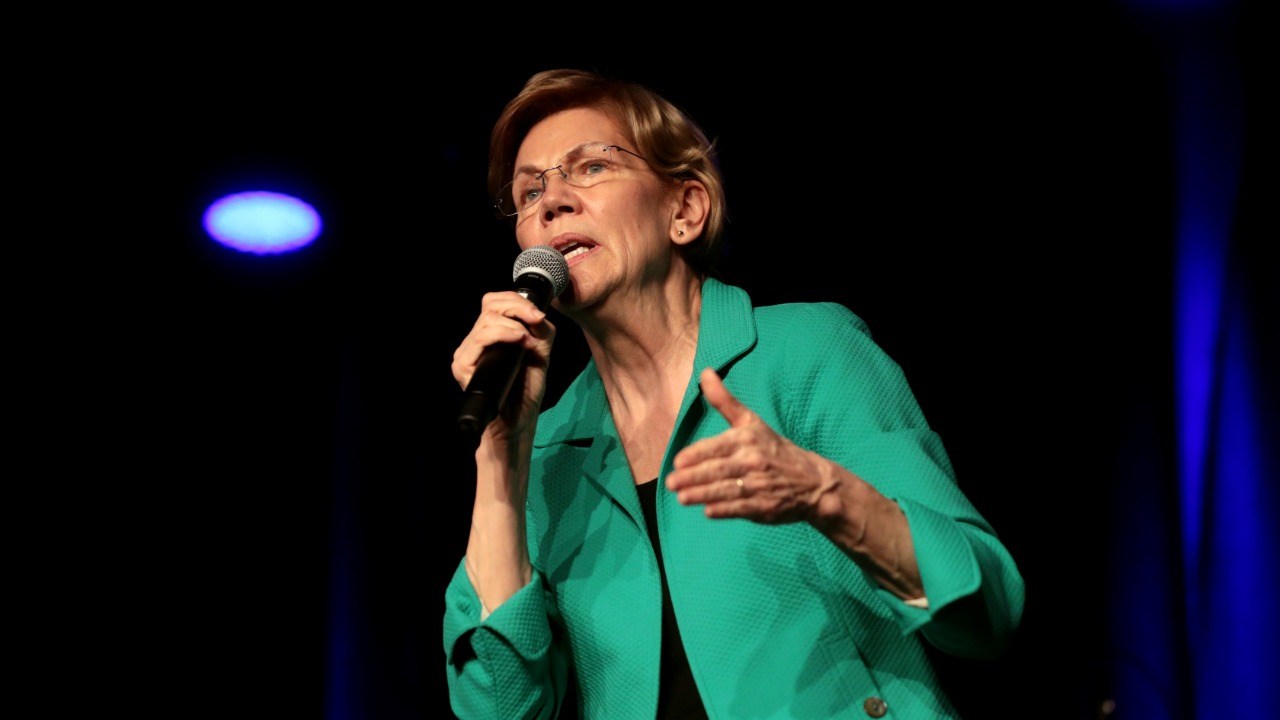
U.S. lawmakers unveiled a bill designed to hold Wall Street executives accountable for their connections to the late sex offender Jeffrey Epstein. This move forces financial firms to open up their hidden records. According to The Guardian, the bipartisan group of politicians, spearheaded by Senator Elizabeth Warren and House representative Robert Garcia, introduced the legislation on Thursday, October 15, 2026.
Called the Epstein Wall Street Records Act, it is the culmination of a months-long investigation into the financier, who died in prison in 2019 while awaiting trial on child sex trafficking charges. If this bill gets passed, regulators like the Federal Reserve and the Securities and Exchange Commission would be forced to investigate any “Epstein connected” financial firms and their executives. They’d be looking for potential breaches of banking, investment, or illicit funding laws.
The bill, which also has the backing of House Republican Thomas Massie, would make regulators publicly disclose any records related to Epstein and his associates. Plus, if they find any potential criminal violations, they’d have to refer those straight to the Department of Justice (DOJ).
The bill is a push for transparency
Senator Warren stated, “Since the big banks won’t hold themselves accountable – and the Trump administration won’t either – Congress must act to force real transparency and accountability for them and their executives who enabled Jeffrey Epstein’s crimes.” The move comes after Warren’s condemnation of Barclays. She accused them of dodging responsibility over their failure to vet their former chief executive, Jes Staley, and his ties to Epstein.
Staley resigned from Barclays in November 2021, after U.K. regulators started digging into the nature of his relationship with Epstein. He first met Epstein in 2000, during his three-decade stint at JP Morgan. The Financial Conduct Authority’s original investigation, triggered by more than 1,200 emails between Staley and Epstein, concluded that the pair were “indeed close” and had a relationship that “went beyond one that was professional in nature.”
Things got even worse for Staley in 2023 when he was banned from the U.K.’s financial sector. He tried to fight that decision in court last year, but failed. That court battle ended up revealing intimate details about their friendship. Staley even admitted to having sex with a member of Epstein’s staff in New York, an encounter he claimed was “consensual.”
The case also brought up a 2010 exchange where Staley reportedly said, “That was fun. Say hi to Snow White.” Staley, however, denied knowing about that exchange during the U.K. court hearing.
In July, House Democrats sent a letter to Barclays chair Nigel Higgins
They sought to know how the bank had vetted its former chief executive and if it had investigated any “deficiencies” in its executive hiring process, pointing out that the bank had “allowed the board to hire a CEO who held extensive professional and personal ties to a convicted sex offender.” Barclays responded with a letter from its head of U.S. government relations, Lance Williams. Warren, however, found the response to be insufficient.
Williams’ letter focused on the findings of the U.K. regulators’ investigation. He stressed that Staley had “concealed information about his actions and the nature of his relationship with Mr Epstein” and that “previously unknown information come to light through various public disclosures” only after Staley’s resignation.
Williams claimed, “This information paints a fundamentally different picture of Mr Staley than what he presented to Barclays.” He noted that Barclays had relied on external executive search firms to recruit Staley in 2015, when he was “known for his accomplishments in the banking industry.” Warren wasn’t buying it. She said Barclays’ “lacklustre response” just goes to show why regulators need to launch formal investigations into Wall Street’s ties to Epstein.
The proposed legislation would apply to the Federal Reserve, Federal Deposit Insurance Corporation, the Treasury’s Office of the Comptroller of the Currency, and the Securities and Exchange Commission. Spokespeople for the Federal Reserve and the OCC declined to comment, while others did not respond.
Warren has been relentless in her pursuit
The Senator called on the President’s financial regulators to investigate banks and executives who might have enabled Epstein’s crimes. She even stated, “I have spent the last year calling on Donald Trump’s financial regulators to launch investigations into the big banks and executives who may have enabled Jeffrey Epstein’s horrific crimes.”
She added, “Since they have failed to act, Congress must. The bipartisan Epstein Wall Street Records Act will ensure overdue accountability for the wealthy and well-connected on Wall Street who put profits over people.”
Warren has also sought answers from Goldman Sachs and JP Morgan Chase. Senator Ron Wyden, in his role as the top Democrat on the Senate Finance Committee, released an investigation in August. That investigation found “significant evidence that JPMorgan, Deutsche Bank, and Bank of America violated federal anti-money laundering laws by failing to screen and report Epstein’s suspicious financial transactions in a timely manner.”
The fallout from the Epstein files has had political repercussions
According to CNBC, Republicans initially opposed an effort, led by Massie and Representative Ro Khanna, to force a vote to release the documents. However, after Trump belatedly signaled his support for the legislation, the Epstein Files Transparency Act passed both chambers of Congress with near unanimity and was signed into law in November 2025. That previous legislation was meant to force the DOJ to release its records related to Epstein.
Leading up to November’s midterm election, Democrats have even ramped up campaign ads, hitting their GOP opponents for their past opposition to releasing the Epstein files. Those who have advocated for public disclosure of the files have continued to push for accountability in Washington and on Wall Street.
Massie said, “The Epstein Files Transparency Act forced the Attorney General to release the DOJ, FBI, and U.S. Attorney’s Offices’ files. This bill does the same for bank regulators. Justice for the survivors means following the money.”
Have a tip we should know? [email protected]
Follow The Mary Sue:
