


Epstein survivor reveals she was assaulted for three years while he was under monitored house arrest, a loophole the DOJ never closed
Never safe.
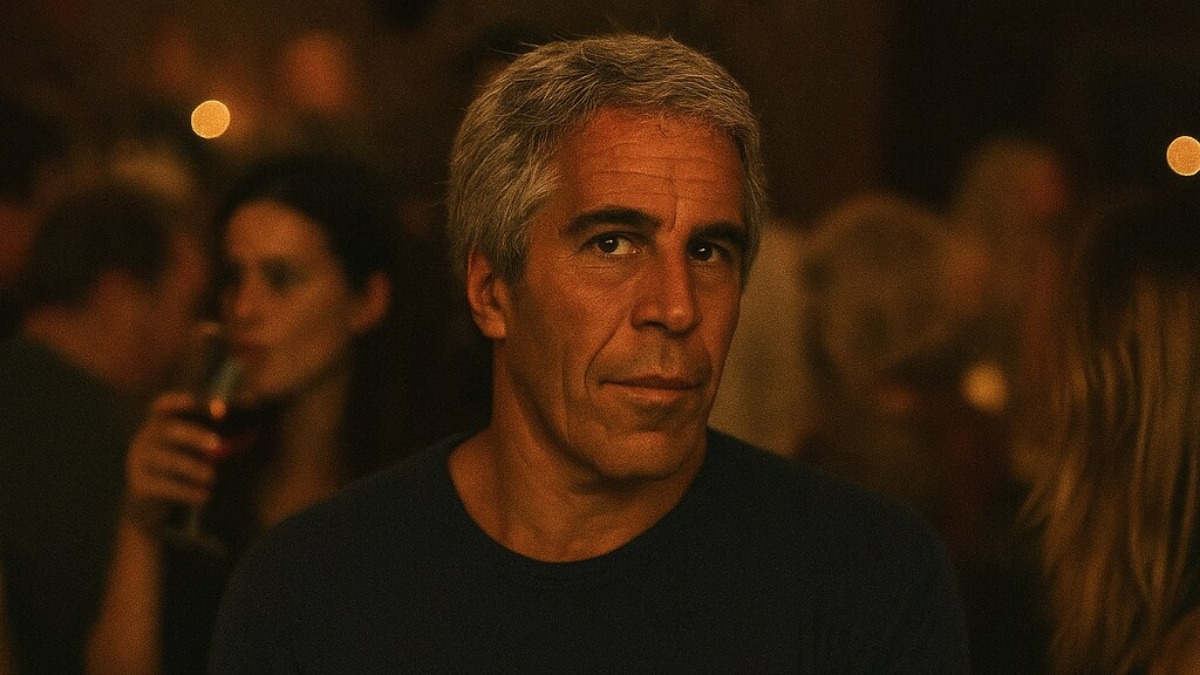
Epstein survivor Roza has revealed she was sexually assaulted for three years while Jeffrey Epstein was under monitored house arrest, exposing a glaring loophole in the justice system that the Department of Justice (DOJ) never closed. Her testimony, delivered at a field hearing organized by House Democrats in West Palm Beach, Florida, paints a horrifying picture of how Epstein exploited legal leniency to continue his abuse unchecked.
According to the BBC, the hearing was held near President Donald Trump’s Mar-a-Lago residence. It was part of an ongoing effort by Democratic lawmakers to scrutinize the handling of Epstein’s crimes and the systemic failures that allowed him to evade accountability for years. Roza, who was recruited from Uzbekistan as a teenager by Epstein’s associate and modeling agent Jean-Luc Brunel, spoke publicly for the first time about her ordeal.
She described being introduced to Epstein in July 2009, just months after he had been convicted of soliciting prostitution from a minor and placed under house arrest. At the time, Epstein was allowed to leave custody for up to 16 hours a day, six days a week, under a work-release arrangement tied to his role at the Florida Science Foundation.
It was during this period that Roza said Epstein offered her a job
He lured her into his orbit with promises of financial stability. What followed was three years of repeated assaults, beginning with an incident in his home where his masseuse called her into his room. “For the following three years I was subject to ongoing rape,” she told lawmakers, her voice breaking with emotion.
The hearing carried no legal authority. However, it was designed to keep the Epstein case in the public eye. It highlighted how Epstein’s 2008 plea deal – a controversial agreement negotiated by his lawyer – enabled him to continue his abuse and trafficking operations for nearly another decade.
A report released by Democratic members of the House Oversight Committee on the same day as the hearing, titled ‘The Price of Non-Prosecution’, detailed how Epstein and his associates exploited the U.S. immigration system to traffic women into the country after his initial conviction. The report, based on bank records and investigative findings, said the “sweetheart deal” struck by then-prosecutor Alex Acosta allowed Epstein to build a global network of exploitation.
“This report is just the beginning of numerous reports and information that we intend to put out over the course of the months ahead,” said Robert Garcia, the ranking Democrat on the committee. Roza’s testimony was one of several harrowing accounts shared by survivors at the hearing.
Many other victims spoke out at the hearing
According to The Guardian, Dani Bensky, another survivor, described how she was groomed and recruited into Epstein’s circle, often by other victims who were pressured to bring in new girls. “I had two recruiters,” she said. “One was a late teen, and the other was only 15 years old, just trying to escape her own abuse.”
The pattern of recruitment extended to Trump’s Mar-a-Lago club, where multiple survivors, including Virginia Giuffre, were allegedly targeted. Giuffre, who was 16 when she was recruited by Epstein’s associate Ghislaine Maxwell, became one of the most prominent voices in exposing the financier’s crimes.
Her brother, Sky Roberts, delivered an emotional statement at the hearing, recounting how his sister had spent years fighting to be believed before her death in April 2025. “She was only 16 years old, a child who had just finished 10th grade, when she began being trafficked,” he said. “Before her passing, Virginia gave sworn testimony exposing this for what it truly was, a global sex-trafficking operation, enabled, protected, and funded by powerful people.”
The hearing highlighted the retraumatization of the survivors
It underscored the retraumatization many survivors have endured due to the DOJ’s mishandling of the so-called Epstein files. Roza revealed that her name was accidentally published in the documents released by the DOJ, leaving her identity exposed to the world. “Now reporters from across the globe contact me. I cannot live without looking over my shoulder. I can only imagine the long-term impact this ‘mistake’ will have on my life,” she said.
The DOJ has acknowledged that technical and human errors led to flawed redactions in the files, compromising the identities of victims. While the department has since removed some of the affected documents from its website, the damage to survivors like Roza has already been done.
Maria Farmer, another survivor who first reported Epstein’s abuse in 1996, delivered a recorded message to lawmakers, accusing law enforcement agencies of repeatedly failing to act. “The government needs to start telling the truth,” she said, echoing the frustration of many victims who felt ignored for decades.
The hearing also touched on the Trump administration’s response to the scandal, with Democrats criticizing what they described as efforts to downplay or obstruct investigations into Epstein’s crimes. Garcia pointed to emails released in November that suggested Trump had knowledge of Epstein’s activities, including one stating, “of course [Trump] knew about the girls.” Trump has consistently denied any wrongdoing, claiming he cut ties with Epstein years ago.
Lawmakers made it clear that their work was far from over. Garcia announced plans to release additional reports in the coming months, digging deeper into the systemic failures that allowed Epstein to operate with impunity. For survivors like Roza, the fight for accountability is personal. Her testimony is a stark reminder of how the justice system failed to protect her and how, even now, the consequences of those failures continue to haunt her.
(Featured image: exit78)
Have a tip we should know? [email protected]
Follow The Mary Sue:
