


After a record-breaking ovation in Venice, Israeli filmmakers of NAZA face threats of state-sanctioned exile from officials crying treason
The No Other Land team is back.
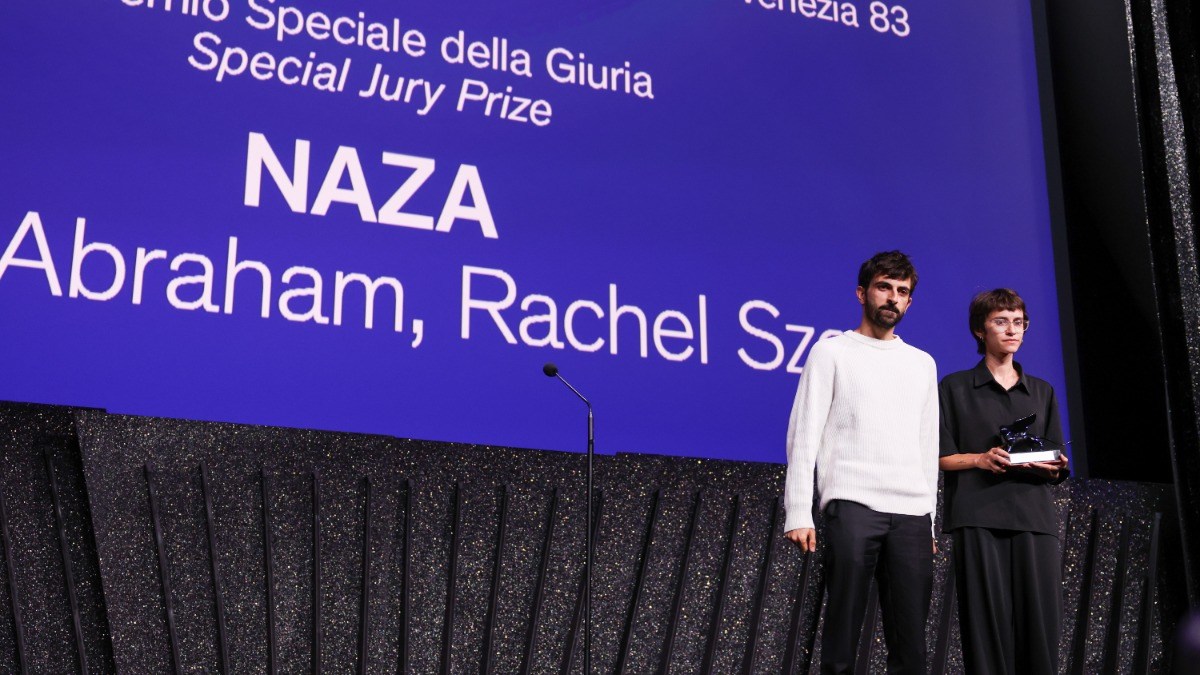
The documentary NAZA has ignited a fierce political firestorm following its record-breaking reception at the Venice Film Festival. Filmmakers Yuval Abraham and Rachel Szor are now facing direct threats of state-sanctioned exile after their work received a massive 25-minute standing ovation and a special jury prize. This show of support from the international film community has been met with harsh condemnation from Israeli government officials.
According to Al Jazeera, Israeli Culture Minister Miki Zohar has publicly vowed to initiate the process of revoking the citizenship of both directors. The film is an 80-minute investigation into the use of artificial intelligence within military operations in Gaza. According to the official synopsis from the festival, NAZA documents the deployment of AI-powered systems to facilitate what it describes as calculated mass killings of Palestinians.
The film takes its name from an acronym utilized by the Israeli intelligence service to estimate the number of anticipated civilian deaths during an airstrike. One whistleblower interviewed in the project even claimed that approval was granted to kill 500 Palestinian civilians in order to eliminate a single member of Hamas.
The project relies on testimonies from 24 Israeli military and intelligence personnel
These testimonies were given on the condition of anonymity. The whistleblowers outlined the specific targeting systems used during the bombardment, including a system referred to as Lavender. This software reportedly monitors telecommunications between Palestinians to determine targets for strikes.
The Guardian reports that the Israeli military has responded by stating it categorically rejects the allegations made in the documentary. Initially, officials criticized the use of anonymous testimonies because their identities cannot be verified. A later statement from the military suggested that the claims required a detailed, evidence-based response rather than a blanket dismissal.
Zohar expressed his outrage over NAZA’s recognition on September 14, 2026. He labeled the documentary ‘vile’ and described its award at the 83rd Venice Film Festival as ‘shocking’. Zohar accused the directors of harming their own country simply to receive applause from antisemites around the world.
In his X post, he declared that the actions of Abraham and Szor constitute treason against the state. He wrote, “As culture minister, I will act immediately to revoke the Israeli citizenship of these despicable creators for treason against the state”.
Other government figures joined in the criticism of the award-winning directors
National Security Minister Itamar Ben-Gvir referred to them as a disgrace and an embarrassment to the people of Israel. He suggested that the filmmakers should go away. Former Prime Minister Naftali Bennett characterized the documentary as a horrific blood libel against Israeli sons and daughters. Meanwhile, former Defense Minister Avigdor Lieberman labeled Abraham and Szor as haters of Israel.
The legal framework for such a threat exists within Israel, though it is rarely utilized. The Supreme Court confirmed in 2022 that the state may strip individuals of their nationality if they fail to show loyalty. This could apply to acts of espionage or treason.
The legislation was further expanded in 2023 to include those convicted of terrorism. To proceed, the interior minister must submit a request, the justice minister must grant approval, and judges must validate the decision.
This is not the first time these filmmakers have faced backlash for their work
Abraham and Szor won an Oscar in 2025 for their previous film, No Other Land, which focused on settler violence in the occupied West Bank. Following the premiere of that project in 2024, the family home of Abraham was targeted by a rightwing mob.
Regarding the risks involved in their activism, Abraham has previously noted that they operate within a system that privileges them as Jewish-Israelis. He has argued that the experience of Palestinian journalists is far more dangerous, noting that they would likely be murdered for attempting similar investigative work.
NAZA has also sparked a broader conversation about media coverage within the country. Anat Saragusti, who serves as the head of press freedom at the Union of Journalists in Israel, noted that the public has not received adequate coverage in Hebrew regarding the events in Gaza.
She explained that mainstream media often avoided showing the Palestinian side of the story, including civilian casualties and destruction. Some left-wing figures have praised the directors for bringing these realities to a global audience. Yousef Jabareen, a former lawmaker, thanked the filmmakers for highlighting the brutal reality of the ongoing war.
The conflict itself remains devastating
The decades-long genocide intensified after a Hamas attack on October 7, 2023, which resulted in 1,221 deaths and the taking of 251 hostages. Since that time, the Gaza health ministry has reported more than 73,000 deaths resulting from the subsequent bombardment. The vast majority of these individuals were civilians.
Abraham has stated that he hopes NAZA will encourage Western governments to apply economic sanctions against Israel. The debate over the documentary continues to highlight deep divisions regarding the conduct of the war and the role of artistic expression in documenting military actions.
Have a tip we should know? [email protected]
Follow The Mary Sue:
