


15,000 US troops deployed to escort tankers through Hormuz but the real question is why Trump’s blockade is making oil prices worse
Project Freedom at what cost?
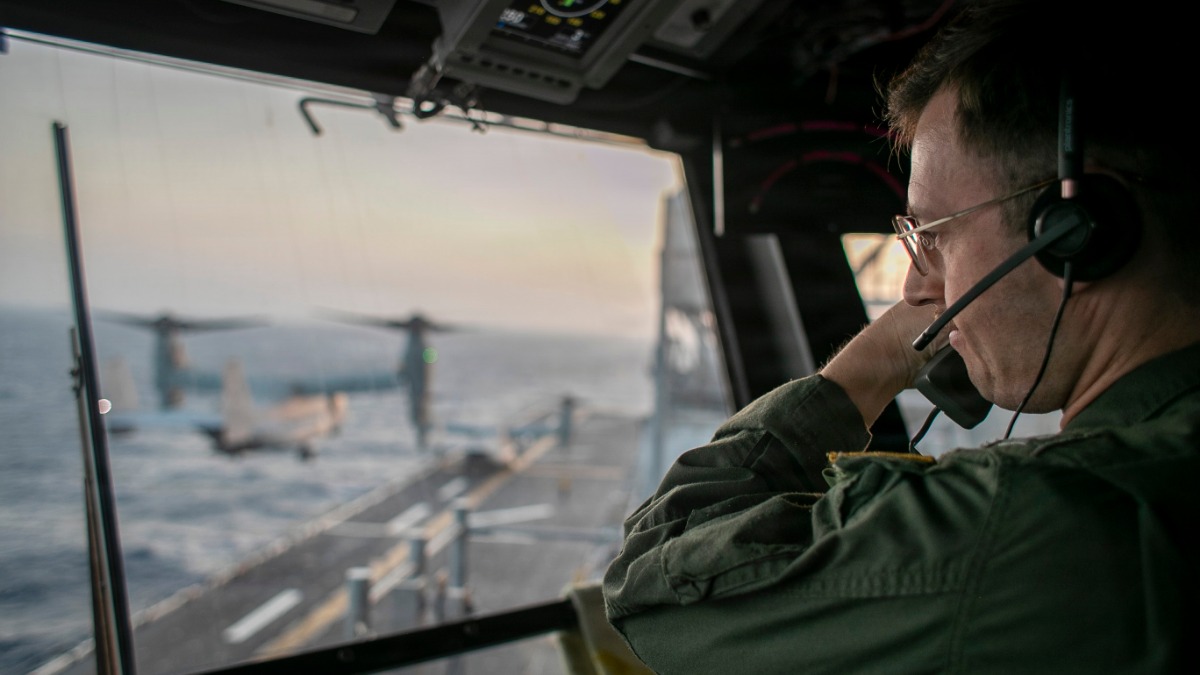
Defense Secretary Pete Hegseth has said that 15,000 U.S. troops are now stationed in the Strait of Hormuz to escort oil tankers through the heavily contested waterway. The deployment is part of “Project Freedom,” a new military operation launched to break Iran’s blockade and restore global oil flow.
However, while the Pentagon frames the mission as a decisive show of force, the real story is unfolding at gas pumps and trading desks, where oil prices just hit a four-year high and economists are warning of a looming recession. According to The Hill, Hegseth announced the operation on May 5, 2026, describing it as a “red, white and blue dome” of American military power stretched over the strait.
The imagery is dramatic, but the numbers tell a more complicated story. Fifteen thousand service members, supported by guided-missile destroyers, fighter jets, helicopters, and drones, are now patrolling the southern entrance to the strait. Their goal is to create what Gen. Dan Caine, chair of the Joint Chiefs of Staff, called an “enhanced security area” where commercial vessels can transit without fear of Iranian attacks.
So far, the results are modest but the consequences grave
Two U.S.-flagged merchant ships made it through May 4 (Monday), but hundreds more remain trapped in the Persian Gulf. Caine said 22,500 mariners aboard over 1,550 vessels are still waiting for safe passage. Iran, meanwhile, isn’t backing down. Tehran’s forces opened fire on U.S. warships and commercial vessels Monday, and Iran’s top negotiator, Mohammad Bagher Qalibaf, accused the U.S. of violating the ceasefire early on Tuesday.
“The security of shipping and energy transit has been jeopardized by the United States and its allies through the violation of the ceasefire and the imposition of a blockade,” he stated. “We know full well that the continuation of the status quo is intolerable for America; while we have not even begun yet.”
The standoff is playing out in real time on oil markets, where Brent crude briefly surged past $126 a barrel on April 30, the highest price in four years. Even after the spike eased, Brent was still trading at $115.80, nearly double its level at the start of the year. WTI crude, the U.S. benchmark, dipped slightly to $106 but remains elevated. Gas prices in the U.S. have followed suit, hitting a four-year high of $4.30 a gallon this week, according to AAA.
The economic fallout isn’t just about fuel
Higher oil prices ripple through the entire economy, driving up costs for plastics, synthetic rubber, textiles, and even food. In Asia, where most of the world’s goods are manufactured, the squeeze is already visible. Factories are reporting shortages of medical gloves, instant noodles, and cosmetics, all products that rely on petroleum-based materials.
Vandana Hari, founder of energy market analysis firm Vanda Insights, put it bluntly: “Oil prices have nowhere to go but up until the permanent reopening of the strait comes into view. As of now, how and when that might happen is anybody’s guess.”
CNN reports that the June futures contract for Brent crude expired on April 30, and trading volume shifted to the July contract, which was trading above $110. But analysts say the real driver is fear. Reports that the U.S. might launch a wave of “short and powerful” strikes on Iran sent traders into a frenzy, and the stalled negotiations between Washington and Tehran have only deepened the uncertainty.
The Strait of Hormuz, which normally handles about a fifth of global oil and natural gas supplies, has seen daily tanker transits plummet to single digits since the war began in late February. The International Energy Agency called it the “largest supply disruption in history.”
Meanwhile, the Pentagon has continued to project confidence. Hegseth told reporters that hundreds of ships from around the world are lining up to transit the strait, and U.S. Central Command is coordinating with their owners and insurers. “As a direct gift from the United States to the world, we have established a powerful red, white and blue dome over the strait,” he said.
But the military’s optimism isn’t translating to relief for consumers
Economists warn that if the disruption drags into the second half of the year, it could trigger a global recession. Countries are already grappling with fuel shortages, rising inflation, and weakened consumer spending.
Janiv Shah, vice president of oil markets at Rystad Energy, said the market is now fixated on “physical scarcity and long-term threat to supply.” Any further escalation, especially attacks on energy infrastructure, could send oil prices even higher and accelerate a decline in global demand that was already showing signs of weakness.
The White House has argued that the U.S. can outlast Iran in this standoff, framing the blockade as a way to starve Tehran’s energy economy. But the reality is messier. Project Freedom is a high-stakes gamble, one that relies on Iran blinking first. So far, that hasn’t happened.
Qalibaf’s stance is clear: Iran isn’t backing down, and it’s prepared to escalate. Meanwhile, the world is paying the price. Every day the strait remains contested, oil prices inch higher, supply chains tighten, and the risk of a broader economic crisis grows.
For now, the focus is on the two ships that made it through. If more follow, it could ease some of the pressure. But with 1,550 vessels still trapped and Iran vowing to resist, the “red, white and blue dome” might not be enough to prevent a financial storm. The question isn’t whether the U.S. can secure the strait but if the global economy can survive the cost of trying.
(Featured image: NAVCENT Public Affairs)
Have a tip we should know? [email protected]
Follow The Mary Sue:
