


Trump’s ‘Nice’ Peace Talks With Iran Blew Up After US Struck Missile Sites. Now, Tehran Vows a Response
The business of war.
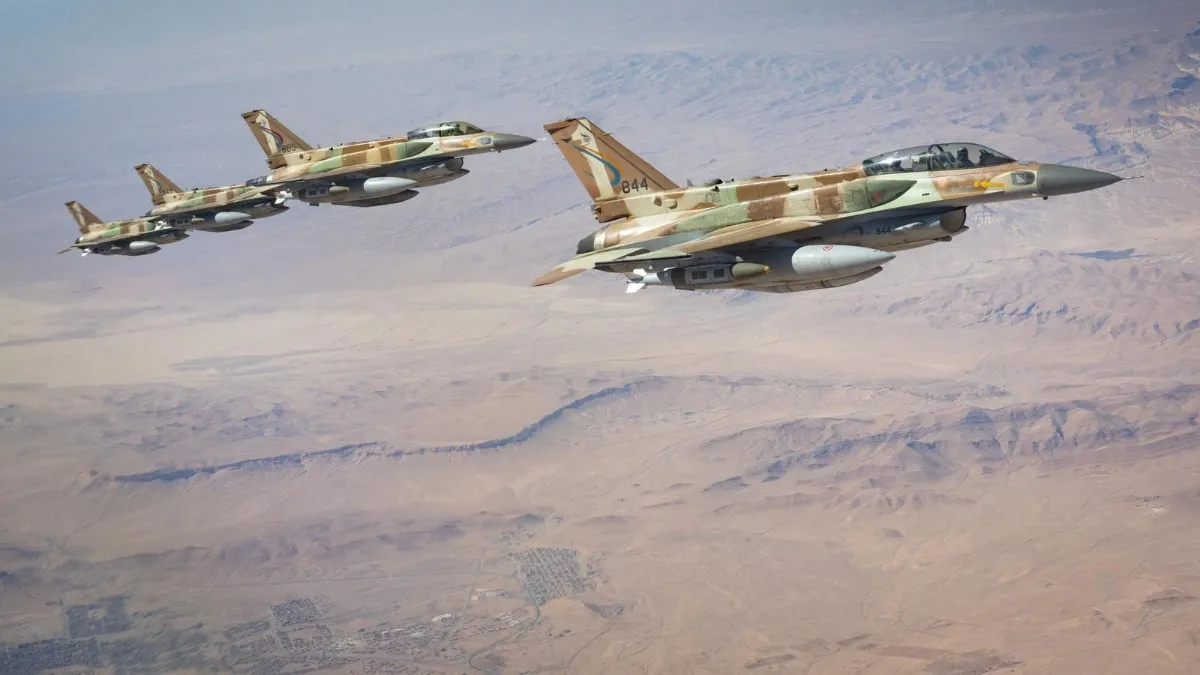
Donald Trump’s peace talks with Iran may have just hit a massive roadblock after the U.S. launched strikes on Iranian missile sites and boats. Tehran is now calling the attacks a “gross violation” of the fragile ceasefire and warning of a response that could send global oil markets into a tailspin. The U.S. says it targeted boats attempting to lay mines and missile launch sites in Iran’s southern Hormozgan province.
The strikes came just as both sides had been signaling progress in negotiations, with Iran’s top negotiator, Mohammad Baqr Qalibaf, wrapping up talks in Qatar. Now, the commander of Iran’s Revolutionary Guard Aerospace Force, Seyed Majid Moosavi, is slamming diplomacy as “pure loss” and vowing a “decisive, swift response” once final orders come from Iran’s commander-in-chief, according to Al Jazeera.
Both countries were inching toward an understanding that could end the war and reopen the Strait of Hormuz, a chokepoint for global oil shipments. Iran’s foreign ministry had even confirmed that a “large portion” of issues with the U.S. had been resolved, though a deal wasn’t imminent. The sticking point – about $24 billion in Iranian funds frozen overseas. Iran’s Fars news agency reported that unfreezing those funds was the last major hurdle before an agreement.
Trump had been optimistic
He had posted that talks were going “nicely” but warned that it would be “a Great Deal for all, or no Deal at all.” That last part now feels like a grim prediction. U.S. Secretary of State Marco Rubio doubled down, telling reporters that the Strait of Hormuz “has to be open one way or the other,” a statement that didn’t exactly scream confidence in the peace process. The war has already sent oil prices soaring and disrupted global supply chains.
The Strait of Hormuz, which normally sees a fifth of the world’s oil and gas pass through it, has been under an effective Iranian blockade. Iran has been selectively allowing ships through, prioritizing those linked to countries it has alliances with, but the situation remains volatile. A full-blown retaliation from Iran could shut down the strait entirely, sending oil prices through the roof and deepening the energy crisis.
Iran’s Revolutionary Guard isn’t backing down. They’ve already claimed to have downed a U.S. drone and fired at another drone and a fighter jet that entered Iranian airspace. Supreme Leader Ayatollah Mojtaba Khamenei didn’t mince words either, saying, “the clock cannot be turned back, and the nations and lands of the region will no longer be a shield for American bases.”
Regional tensions are already sky-high
Israel has been ramping up attacks on Hezbollah in Lebanon, and Iran has hinted that it might target the United Arab Emirates again if Israel doesn’t back off. Lorenzo Kamel, a history professor at the University of Turin, said that for any U.S.-Iran peace deal to stick, Washington needs to “rein in” Israeli Prime Minister Benjamin Netanyahu.
Kamel pointed out that Netanyahu has a vested interest in keeping the conflict alive, at least until Israel’s next elections. “He knows, without this continuous escalation, he would weaken his position, and also the opposition within Israel would place him out of power,” Kamel said.
Mohammad Eslamy, an analyst at the University of Tehran, echoed that sentiment, suggesting that Trump might be using military escalation in the Persian Gulf to pressure Iran during negotiations. “I think that the Iranians will think more about the US blockade to put pressure on and challenge the Americans,” Eslamy said, referring to the Strait of Hormuz.
The U.S. strikes weren’t just a one-off either
United Kingdom Maritime Trade Operations reported that a tanker near Oman’s capital, Muscat, experienced an external explosion on its port side, though the crew was safe. Some bunker fuel did spill into the sea, but the incident underscores just how close to the edge things are.
The U.S. Central Command framed the strikes as “self-defense,” aimed at protecting U.S. troops from Iranian threats. Navy Captain Tim Hawkins, a CENTCOM spokesperson, confirmed that targets included missile launch sites and boats attempting to lay mines.
Mark Cancian, a senior adviser at the Center for Strategic and International Studies, said the strikes were limited in scope but could still derail peace talks depending on Iran’s response. Mona Yacoubian, another CSIS expert, warned, “While both sides may ultimately prefer an end to hostilities, the strikes and retaliation could spiral,” she explained.
Trump’s approach to the negotiations has been characteristically unpredictable
He’s tied the peace talks to the Abraham Accords, urging Saudi Arabia, Qatar, and Pakistan to normalize ties with Israel. The Abraham Accords, signed in 2020, already normalized relations between Israel and several Arab countries, but Trump seems to want to expand that list. Arab countries have historically conditioned normalization on the establishment of a sovereign Palestinian state, but Trump’s latest push suggests he’s not waiting for that.
The Iranian delegation in Qatar, which included Foreign Minister Abbas Araghchi and Central Bank Governor Abdolnaser Hemmati, was supposed to iron out the final details of the deal. Instead, they’re heading back to Tehran to assess the fallout from the U.S. strikes. Several IRGC personnel were reportedly killed in the Bandar Abbas strikes, which will only add fuel to the fire.
If Iran decides to retaliate, the options are grim. They could step up attacks on shipping in the Strait of Hormuz, launch cyberattacks on U.S. infrastructure, or even target U.S. allies in the region. Any of those moves would likely trigger a broader conflict, and with oil markets already on edge, the economic fallout could be catastrophic. The war has already caused an unprecedented oil supply shock, and a full-blown escalation would only make things worse.
(Featured image: IDF Spokesperson’s Unit photographer)
Have a tip we should know? [email protected]
Follow The Mary Sue:
