


Six Months On, 1,300 U.S. Navy Family Members Are Paying the Price for the Pentagon’s Refusal To Admit the Bahrain Base Is Permanently Compromised
‘Making it up as we go.’
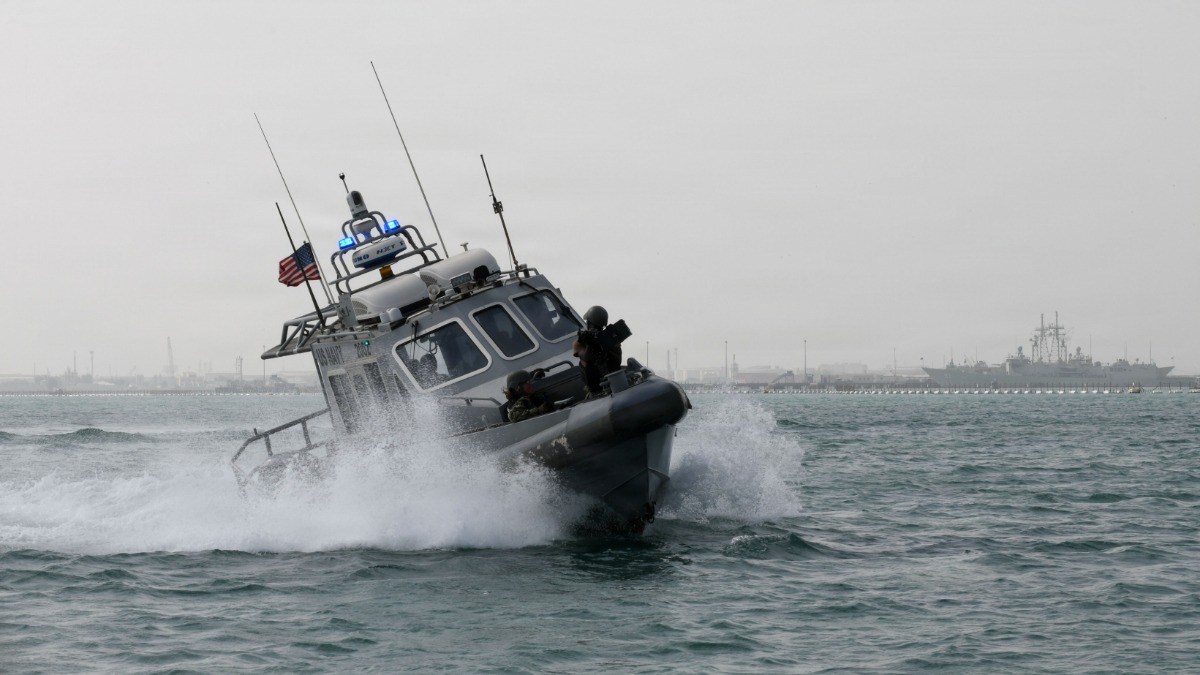
Six months after the U.S. Navy evacuated 1,300 family members from Bahrain at the start of the U.S.–Israeli war on Iran, the Pentagon is still refusing to admit the base is permanently compromised. Instead, the Navy is telling families to pick a new home while officials drag their feet on a long-term solution. The result is a bureaucratic nightmare that’s leaving military spouses and children in financial and emotional limbo, with no clear end in sight.
The evacuation order came on March 2, when the Navy told families to leave Bahrain with little more than a carry-on. Officials promised it would be a short-term displacement, similar to the 12-day conflict in June 2025, per NPR. That didn’t happen. Six months later, families are scattered across the U.S. and Europe, living in hotels and short-term rentals, while their belongings remain stranded in Bahrain or on ships stuck in the region.
Vice Adm. Curt Renshaw, head of the Navy’s 5th Fleet, admitted during a virtual town hall held recently that the Navy is “making it up as we go because nothing is conceived to go on this length of time.” That’s not reassuring for families who’ve been uprooted multiple times in half a year.
The loneliness is crushing
One Navy spouse, who asked to remain anonymous for fear of retaliation, said she’s now on her eighth relocation in six months. She’s living in a state with no military presence, trying to enroll her two kids in school while her husband remains in Bahrain. “I need to take control over my life again and not just be at the whim of the administration,” she said. “I don’t want to be dragged around in this anymore.”
She described how people in her community barely register the war, let alone understand what she’s going through. “It’s very lonely and exhausting,” she said. Meanwhile, she’s burning through savings to cover expenses the military’s slow reimbursement process won’t touch. The financial strain is hitting everyone. Families have had to buy second cars, replace wardrobes, and pay for temporary housing out of pocket.
One spouse said she’s spent nearly $40,000 on expenses the military won’t reimburse because her family was already scheduled to leave Bahrain before the war started. Another civilian employee said he’s lived in 10 different hotels and used seven rental cars since fleeing under missile fire. He’s still waiting on thousands in reimbursements.
The Navy’s outdated regulations aren’t helping. The cap on rental car payments hasn’t been updated since the 1990s, leaving families to cover the difference.
The emotional toll is just as bad
Kids are acting out after being yanked from one temporary home to another. According to Stars and Stripes, one spouse said her youngest child barely recognizes her husband during video calls. “I would go back to Bahrain tomorrow if my husband weren’t worried about that decision affecting his career and our financial future,” she said.
Another spouse, whose family was already in the process of moving when the war started, said the repeated displacements have traumatized her children. The family’s household goods were packed but never shipped, leaving them without furniture or their car at their new duty station.
The Navy’s solution? Tell families to pick a new permanent home while officials figure out what to do with Bahrain. The State Department’s 180-day ordered departure expired on Tuesday, which means safe-haven benefits for civilian families have dried up. The Navy is offering a housing allowance instead, but it’s unclear if that will cover all the expenses families have racked up.
Mark Cancian, a retired Marine colonel and military analyst, said the Iran war has likely changed how the U.S. operates in the Middle East for good. “The families won’t go back there, at least not for quite a while,” he said. “It’s just too dangerous.”
The Pentagon’s refusal to admit the Bahrain base is no longer viable has added to the uncertainty
One teacher from the Pentagon school system who evacuated said she’s gotten conflicting advice from every agency. “There’s been no real empathy or sympathy or compassion or anything toward anybody,” she said. Another spouse called it a “reverse deployment,” where the families are the ones facing constant uncertainty. “We’re the ones having to pack up our kids and all the possessions we own and move from one Airbnb/hotel to another time and time again,” she said.
The Navy’s town hall last week didn’t offer much clarity. Renshaw acknowledged the problems but said the Navy delayed making hard decisions because it didn’t want to “close the door on getting people back into Bahrain.” That door might already be closed.
Naval Support Activity Bahrain is a critical hub for the 5th Fleet, but carriers and supply ships can’t use it right now because of the risk of Iranian attacks. The base has been hit by drones and missiles multiple times since the war started. Meanwhile, the U.S. is maintaining a naval blockade that’s tying up two aircraft carriers, and there’s no sign the conflict will end soon.
Families are being asked to make permanent decisions based on temporary solutions. The Navy wants them to pick a new home base, but what happens if Bahrain becomes viable again? Will they be forced to move back? No one knows.
The State Department is working on stopgap measures to cover civilian families’ expenses, but one spouse said she doesn’t expect it to be enough. “The resiliency of the (mainly) women is amazing,” she wrote. “There are multiple moms with newborns doing this.”
(Featured image: U.S. Navy photo by Petty Officer 2nd Class Raphael McCorey)
Have a tip we should know? [email protected]
Follow The Mary Sue:
