


‘Really weird’: Woman got an email saying her husband had transferred $19,998 from their savings but he was sitting in a meeting and hadn’t logged in
Hard lesson.
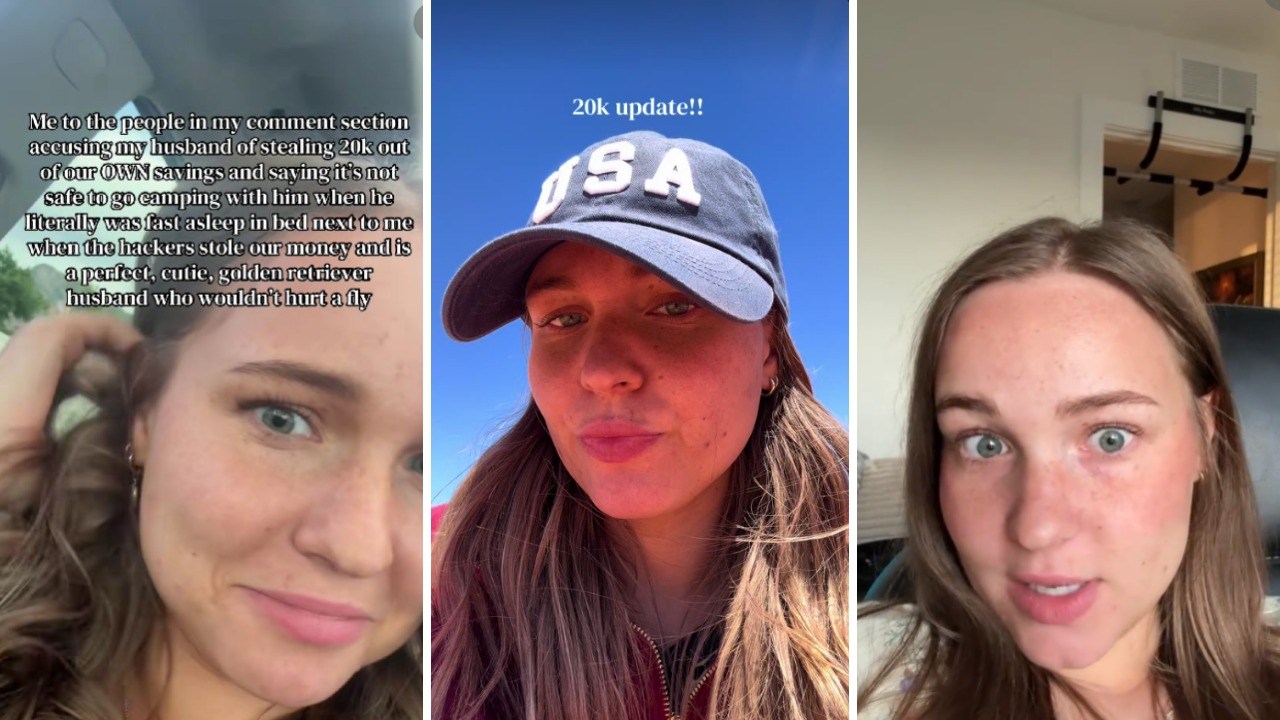
It is a nightmare scenario for anyone who relies on digital banking. Eliza Falkenrath @elizajoy on TikTok, recently found herself in the middle of a financial panic after receiving an email notification claiming her husband, Jace, had moved $19,998 out of their savings account. The situation felt wrong and weird immediately. Jace was sitting in a meeting at the time and had not accessed their SoFi account.
“Someone just stole $20,000 out of my savings accounts. Yeah, if you think that’s insane so do I,” Falkenrath shared in her initial video. She explained that the couple uses a joint account with SoFi because of the competitive high-yield savings rates. While planning for an upcoming camping trip, she noticed the alarming email. The notification stated the transfer was approved and would process within three to five business days.
Falkenrath initially tried to stay calm. She wondered if Jace had moved the funds into their retirement account, as they had discussed doing so previously. However, her attempts to reach him were met with silence. “I call him and he doesn’t answer, which is not normal for him,” she noted. When he finally responded, he confirmed he had not initiated any such transaction.
The panic set in quickly
She reached out to SoFi, only to be frustrated by an automated chatbot. When she finally spoke to a human representative, the news was not comforting. The company informed her that she would have to dispute the charge, but they could not guarantee the return of the funds until an investigation concluded. “I’m sorry? $20,000? You… You’re not gonna give us $20,000 back? Okay so they have 10 days to investigate our dispute of our transaction,” she said in the initial video.
The incident sparked a firestorm of speculation online. With three million views and thousands of comments, many viewers questioned the validity of her story. Some even accused her of orchestrating an elaborate advertisement for the bank, a claim she has firmly denied.
Others turned their skepticism toward her husband, suggesting he might be hiding financial secrets. Falkenrath later acknowledged that her way of telling the story might have led people to make assumptions about her husband’s involvement. As the situation developed, the couple faced a stressful period of uncertainty.
They were preparing to head out of town to a location without cell service, meaning they would have to drive an hour each day just to check on the status of their dispute. The couple remained at the mercy of the bank’s internal processes while they waited to see if they would recover their life savings.
The resolution finally came after Falkenrath had posted several updates
She eventually announced that SoFi had returned the money to their account. The bank determined that their account had been compromised. According to the information provided to the couple, an external bank account from U S. Bank had been linked to their profile without their authorization. The person responsible for the theft appeared to be operating from an IP address in Delaware, a location neither Eliza nor Jace had ever visited.
Despite the return of the funds, the experience left the couple with many unanswered questions. They have pushed SoFi for more details regarding how the security breach occurred, especially given that they had two-factor authentication enabled on their account. “We’ve asked them who the person is, who the bank account belongs to. They won’t tell us any of that,” she explained. The bank cited internal policy as the reason for withholding a full investigative report.
The ordeal changed how the couple views their digital security
Falkenrath now advises others to be extremely cautious with their online activity. She suggests closing browser tabs frequently and being wary of suspicious links. She also emphasizes the importance of checking bank accounts daily, regardless of how secure one assumes their finances to be. These small measures go a long way in ensuring one doesn’t fall prey to online scams.
For those worried about similar incidents, she recommends setting specific transfer limits and enabling notifications for any transactions exceeding a certain dollar amount. She also stresses the importance of having all dispute documentation in writing. Beyond dealing with the bank, she advises filing a report with local law enforcement and the FBI, particularly when fraud involves out-of-state activity.
While the financial issue is resolved, the couple is now considering moving their money to a different institution. The lack of transparency from their bank has left them feeling uneasy about the long-term safety of their savings.
“If anyone has a suggestion on a better bank that they like, that they feel is more secure or has a better reaction to fraud? Let me know,” she asked her audience. For now, the couple is grateful to have their funds back, though the experience serves as a stark reminder of how quickly digital security can fail.
Have a tip we should know? [email protected]
Follow The Mary Sue:
