On election day, Trump says he will end $4 billion US military aid to Israel this year: ‘They don’t need it’
All about the timing.
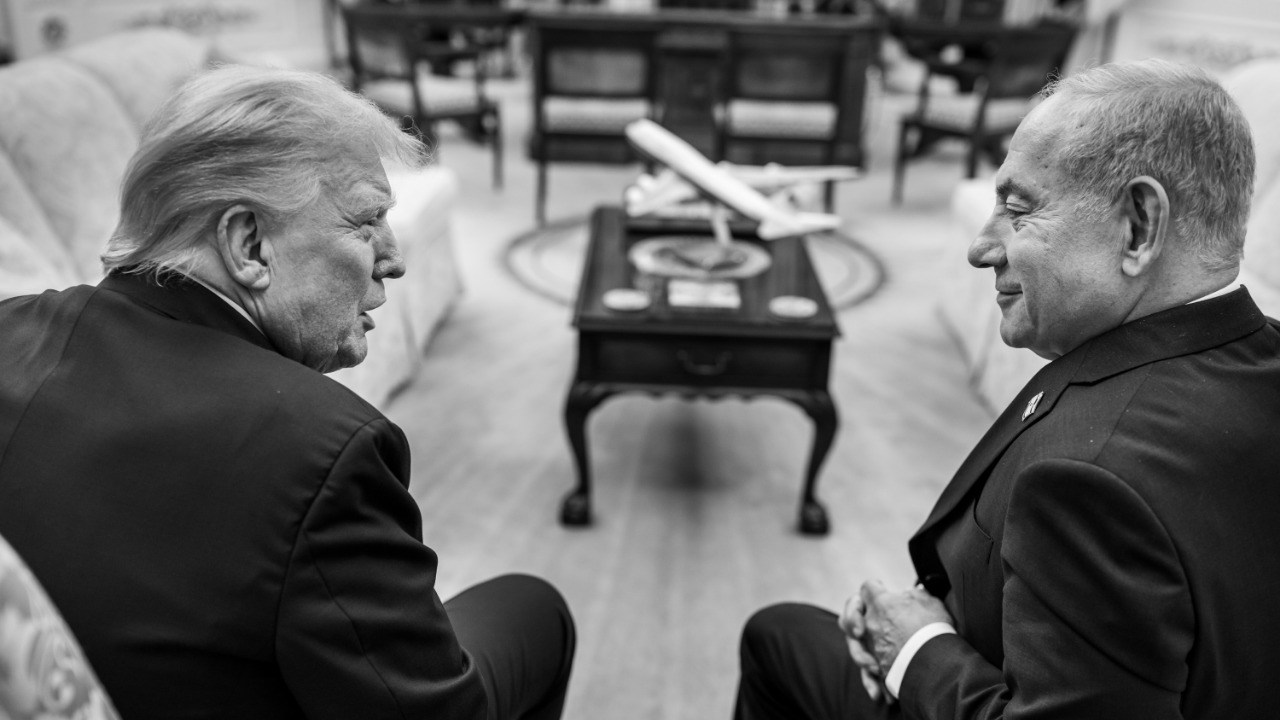
On Election Day, November 3, 2026, Donald Trump announced that he has reached a deal with Israeli Prime Minister Benjamin Netanyahu to stop $4 billion in annual U.S. military aid to Israel after this year. According to Reuters, the President shared this development during an appearance on the Fox News program Fox & Friends. He stated that the two leaders made this agreement months ago.
According to the President, the shift is occurring because Israel no longer needs the financial support. He also suggested the move is intended to remove a political talking point that Democrats have used to criticize Republicans regarding foreign aid. The announcement came as Americans went to the polls for midterm elections that will determine the future control of Congress.
Trump explained that his decision was influenced by the political climate surrounding U.S. financial assistance. He specifically pointed to Democratic Senate candidate Abdul El-Sayed as an example of someone who uses the funding as a target against his administration. Trump said, “Why should we suffer the slings from lunatics like El-Sayed when they don’t need it? It’s a bad talking point.”
Trump says Netanyahu brought up the idea
He added that the Israeli Prime Minister proactively brought up the idea of stopping the aid. Trump recalled the conversation by saying, “Can I be honest with you, Netanyahu brought it up, he said, I think it would be appropriate if we do not receive aid, because he understands this is one of their points of contention.”
While the President claims the funding will end by the end of this year, the actual mechanism for such a change remains unclear. A Memorandum of Understanding currently provides $3.8 billion in annual military aid to Israel, and that agreement is not set to expire until September 2028. Furthermore, Congress holds the power to appropriate funds through annual bills. Because of this, some experts argue that the President cannot end the aid unilaterally.
According to Al Jazeera, Thomas Warrick, an official at the Atlantic Council, noted that the process is complex. He suggested that military assistance will likely be phased out during 2027 rather than ending abruptly by the end of this year. He pointed out that ongoing programs involving missile defense and counter-drone technology cannot be shifted to a foreign military sales model overnight.
The political reaction has been swift
Gadi Eisenkot, a leader of the opposition bloc in Israel, expressed concern about the lack of communication. He wrote on X that the fact that the security establishment and Israeli citizens are learning about this change through the media shows how much the conduct of Benjamin Netanyahu poses a danger.
Meanwhile, some Republican lawmakers were surprised by the timing. U.S. Representative Don Bacon told CNN that his primary concern was that the Israelis did not know about the plan. Others, like former Republican Congresswoman Marjorie Taylor Greene, took to X to suggest that the announcement would not impact the election results. She noted that it is amazing how the prospect of a difficult midterm election changes hearts and minds.
Public opinion regarding Israel has shifted significantly in recent years. Data from a Quinnipiac University poll conducted in June showed that 48% of voters and 66% of Democrats believe the U.S. is too supportive of Israel. This is a sharp increase from 2017 when those numbers stood at 16% and 20%, respectively. This decline in support follows the ongoing genocide in Palestine, that intensified in October 2023.
As a result, military aid has become a major flashpoint in domestic politics. Even within the Republican party, some supporters of the Make America Great Again movement have grown critical of Israel. These critics have accused the country of misleading the President into believing that Iran could be defeated easily.
Despite the uncertainty, the U.S. and Israel have been working on ways to evolve their relationship
Netanyahu had previously indicated that he expected U.S. aid to decrease over time. In anticipation of this, the U.S. House passed a defense bill this past summer that includes Section 219 of the 2027 National Defense Authorization Act.
This provision is designed to deepen cooperation on weapons research, production, and technology between the two nations. Some advocacy groups have criticized this measure, claiming it lacks transparency and could compromise U.S. sovereignty by granting Israel access to sensitive technology.
The timing of the announcement remains a subject of intense debate among analysts. Jon Alterman of the Center for Strategic and International Studies questioned why the President would choose Election Day to reveal such a major shift in foreign policy. He noted that the announcement coincides with reports suggesting a major joint US-Israeli military strike against Iran could be imminent.
While the President insisted that the U.S. would still help Israel if they need it, the practical reality of how such assistance would function without the current aid framework remains to be seen. As it stands, the White House and the office of the Prime Minister have not provided official comments to clarify the details of the arrangement.
Have a tip we should know? [email protected]
Follow The Mary Sue: