


Lee Cronin on Grief & Loss in The Mummy: “An unsatisfiable hole to fill”
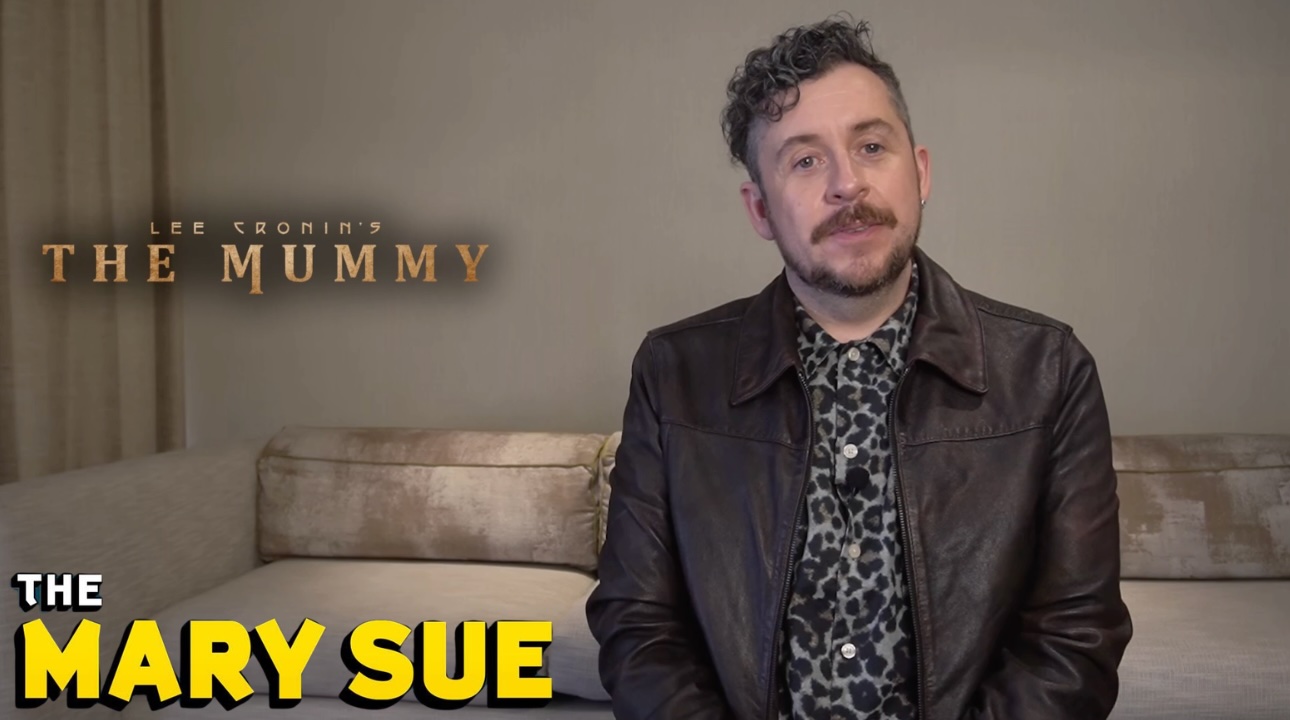
Lee Cronin’s The Mummy is in theaters right now and The Mary Sue had the chance to sit down with the director of the grotesque new horror movie.
Cronin chatted with Aaron Perine about taking The Mummy in a new direction. They also spoke about grief, personal experiences and how important it was to make the Egyptian elements feel authentic. When people saw another Mummy movie dropping this year, they might have been unsure what to expect. But, the early reactions to the director’s interpretation are thrilled at the gross horrors he’s unleashed.
In our interview, we joked about the director warning us to finish the popcorn in the first 30 minutes of the movie. (If you’re going to see this one, go ahead and follow that very good advice!) The filmmaker knew he was going to be putting the audience through their paces. Cronin would laugh, “You need to allow time for digestion before I put you through the ringer.”
And, that is not a joke, so much as it’s a promise to the people watching out there. But, there’s more going on under the hood of Lee Cronin’s The Mummy than just the gross bits.
Lee Cronin’s personal influences for The Mummy
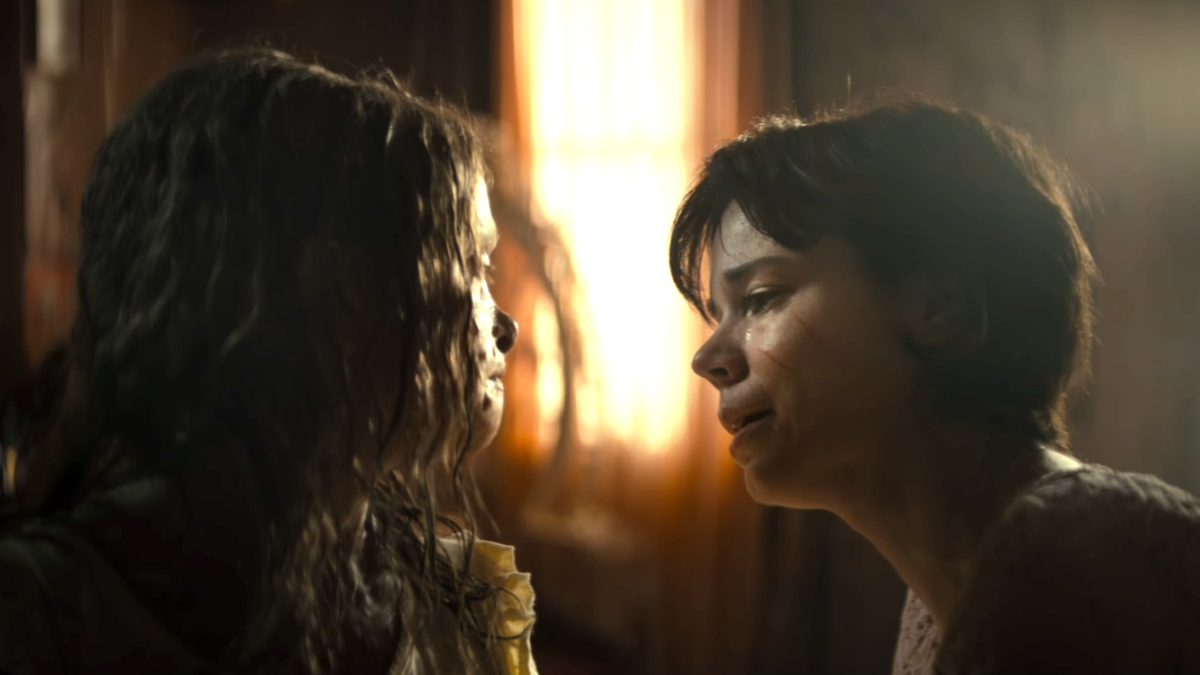
At its core, this version of the story focuses on the grief of a family torn apart more than you might think. Lee Cronin’s The Mummy spends a ton of time with Jack Reynor and Laia Costa’s starcrossed family. (They play Charlie and Larissa Cannon, who lose their daughter at a young age.)
Despite their family having a different heritage than Cronin’s native Ireland, the language of grief travels easily. That and the idea of faith translated easily in the narrative the filmmaker was weaving in Lee Cronin’s The Mummy.
“On a personal level, my observations of faith when I was growing up. Because, there is a big faith aspect to the story,” Cronin told us. “Also, my own experiences and observations around grief and loss in my own life. And, the connectivity of that, to say, the wake sequence that’s in the movie. I think lots of people can identify with losing a loved one. But, I didn’t want it to be a story about my own experiences of grief in full.”
“…which is why I made it about a family that are grieving in a very different way. They’re grieving for someone that’s lost and hasn’t been found, which is a very different and unsatisfiable hole to fill,” he added.
“Then, when Katie comes back, it’s like ‘all is not rosy in the garden’ at all,” Cronin deadpanned. “And then, I think from a cinematic point of view, I wanted to capture something that both had a lot of heart, but a lot of terror.”
May Calamawy and May Elghety bring their A-game
While a good chunk of the action takes place back in the United States. There are multiple plot lines rolling. Egypt is never truly forgotten as the events there set off chain reactions that reverberate throughout the rest of the film. Never letting go of that thread back in Cairo is crucial for the plot and making that frankly wild third act feel earned.
“I wanted to tell a story about a mummy in your sitting room, in your home in America,” He explained. “But, I also wanted to keep that Egyptian connection. Zaki was the key to that. Zaki being able to continue the investigation there. And, we talked a lot about her drive, and her kind of dead-eyed focus.”
“Early on, we meet her character. And, she’s warned that if you’re going to work in the world of missing persons, basically expect to be disappointed,” the director recalled. “Then just like the parents, this missing kid that she was involved with is found. But, there’s unanswered questions that are there. So, she’s as compelled as they are to try and figure out the mystery. And, figure out what’s going on behind it.”
Cronin clearly thought a lot about these performances. “Both our ‘May’s,’ Calamawy and May Elghety, as Egyptian actors, put in compelling performances and share one of the coolest scenes in the movie,” he shared. “Actually, one of my favorite scenes in the movie!”
Navigating trauma in The Mummy
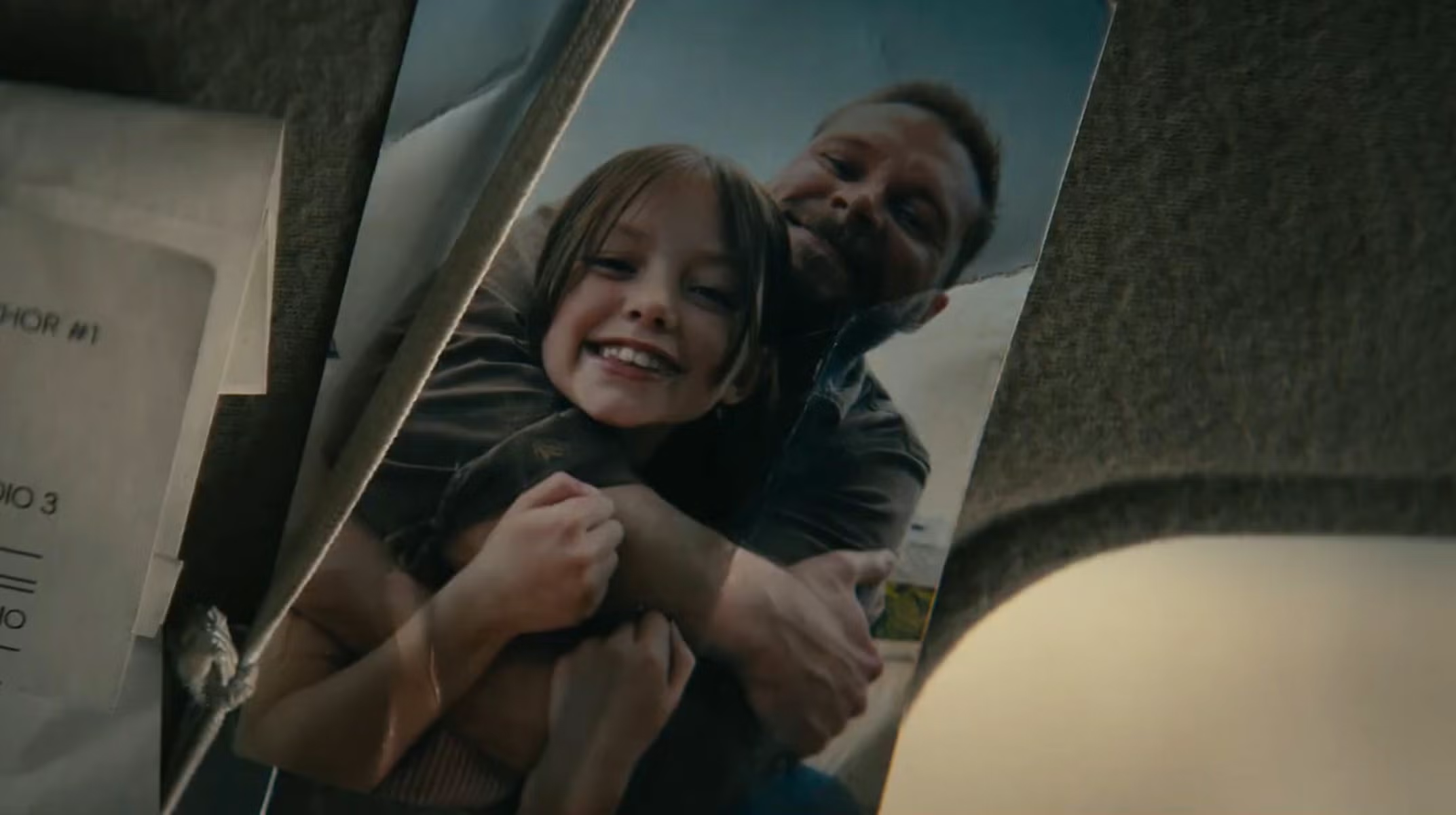
One of the most interesting aspects of faith and family in Lee Cronin’s The Mummy is how the family adjusts to getting Katie back. She’s not like she was, and honestly that would have been impossible. Cronin is aware of that fact and found the question of how to adjust to such a traumatic event fascinating. Humans are resilient, but we all have our breaking points.
That suffocating unease can do great harm if left unchecked. Distrust can fester into something menacing. But, maybe not as malignant as a literal evil spirit causing havoc in your home.
The director walked me through it. “Whenever you’re hit as a collective, if you’re hit by a traumatic or difficult situation in your life, everyone reacts differently. We’re all different humans.”
“And that can create its own scary feelings because you’re thinking, I feel this way,” he elaborated. “Why do you feel that way? Am I wrong? Are you right? Are you wrong? And suddenly, doubt starts to creep in about what the right thing to do is.”
Cronin ponders, “Who knows how you would handle the return of a loved one that had been missing? Because it’s not something you could prepare for.”
(featured image: Warner Bros.)
Have a tip we should know? [email protected]
Follow The Mary Sue:
