


‘GOP will lose in November’: Donald Trump bulldozes reality as cost of basic food has jumped over 30%, yet he insists otherwise
Fact-check: False.
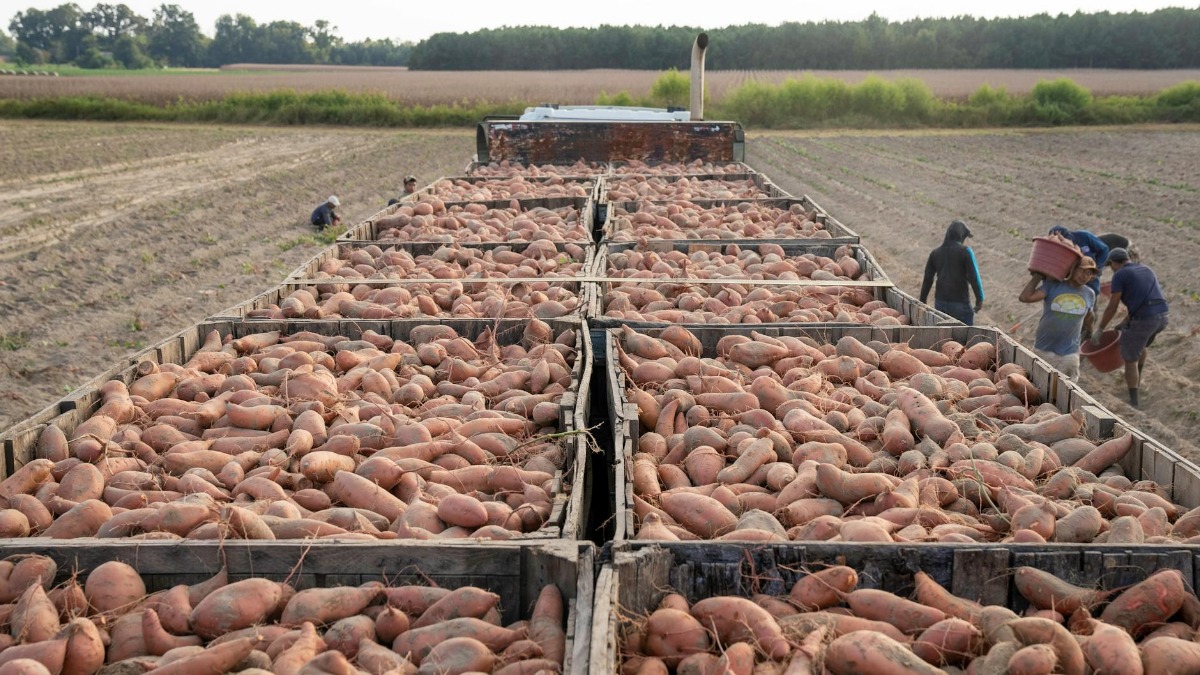
President Donald Trump’s recent claims about lowered food costs have sparked a fact-checking frenzy, with economists and data analysts quickly disputing his assertions. The president told hundreds of farmers, ranchers, and agricultural leaders gathered on the White House’s South Lawn on March 28, that the cost of staple goods like cheese, butter, potatoes, and fruit is now lower than when he first took office, presenting this as evidence of economic success.
According to IBTimes, his claim was quickly scrutinized for its accuracy. Within hours, the internet was abuzz with economists, journalists, and data analysts challenging the president’s remarks. These have since become a major talking point in the ongoing discussion about inflation, public trust, and political messaging.
The group Republicans against Trump posted on X, directly quoting the president’s claim about lower food costs and adding, “Fact check: false.” Another user, @blue_man_chu, perfectly summed up the sentiment, saying, “This is why the GOP will lose in November. He might as well be saying gas is currently $1.50/gallon because you’re just straight up lying to your voters who know exactly what they pay.”
It’s clear that many people feel disconnected from the president’s portrayal of economic reality
When you dive into the official figures, the picture is definitely more complicated than what Trump suggested. According to the US Bureau of Labor Statistics’ February 2026 Consumer Price Index data, there’s some truth to parts of his claim: butter prices are indeed down 7.6% year-on-year, cheese dropped 1.1%, and potatoes fell 2.2%. That sounds good, right?
But here’s the kicker: the US Department of Agriculture’s Economic Research Service reported that overall food prices in February 2026 were actually 3.1% higher than in February 2025. Beef prices, for example, surged a whopping 16.4% over that same period, while coffee rose 19.8%, lettuce was up 7.3%, and frozen fish increased by 8.6%. So, while a few items might have dropped, the general trend is still upwards.
Gbenga Ajilore, chief economist at the Center on Budget and Policy Priorities, pointed out that while specific items might see short-term price drops due to things like supply shifts, overall affordability for households hasn’t improved. “Prices overall are still going back up,” he stated, adding that tariffs are also putting upward pressure on costs.
It’s a nuanced situation, and cherry-picking data doesn’t give the full picture
The reaction from farmers and consumers has been pretty mixed, but a lot of people are understandably skeptical. Farmers, who are on the front lines of production, are seeing their own costs for fuel, fertilizer, and labor continue to rise, which inevitably impacts the prices we see at the grocery store.
Meanwhile, consumers are still feeling the pinch at supermarkets. For many households, that weekly shopping trip remains a struggle, making it hard to reconcile with claims of broadly lower prices. This disconnect is exactly what’s fueling the online fact-checking trend, as people increasingly look for verification of political statements that directly affect their daily lives.
This isn’t the first time Trump’s food price claims have drawn scrutiny either. Other analyses reviewed similar assertions in August 2025 and October 2025, with findings that the broader framing of lower prices was misleading.
Have a tip we should know? [email protected]
Follow The Mary Sue:
