


10 Animated Characters Who Became Gay Icons
Some gay icons aren’t born, they’re drawn. As animation rises in prominence in pop culture, artists are taking advantage of the medium’s potential for increasing queer visibility. From after-school classics to prestige adult projects, each of these titles features queer characters that shaped generations. Bisexual heroes, sapphic power couples, and genderqueer legends that crawled out of the wildest imaginations, these are 10 animated characters who became gay icons.
Him — The Powerpuff Girls
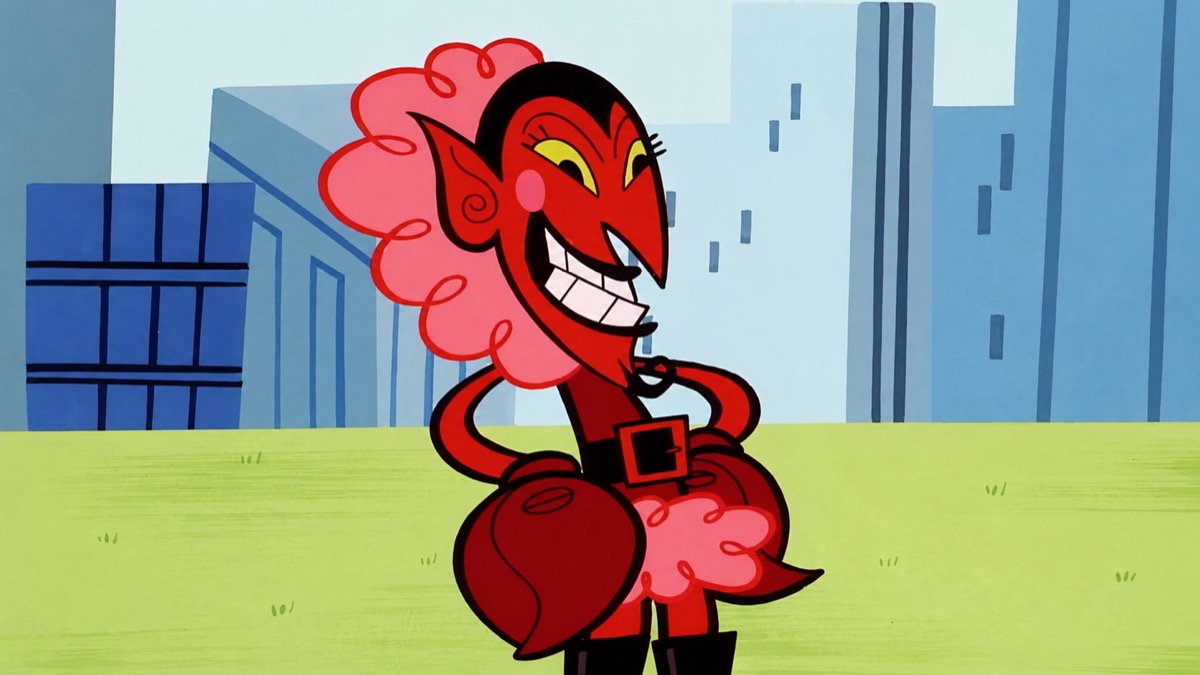
So iconically queer that his name is a pronoun, Him is the Powerpuff Girls‘ greatest contribution to queer culture. While Blossom, Bubbles, and Buttercup are each icons in their own right, this crab-clawed creation from Hell has the trio beat. Equal parts hilarious and terrifying, Him is a heady combination of campy glamor and antagonistic edge. He’s definitely pure evil, but he makes being bad look like such a good time. Shapeshifting, raising the dead, and dishing out sass the entire time? I can’t imagine a better Saturday night. First appearing onscreen in 1998, Him struck a devilishly sweet chord with queer viewers due to the character’s transgressive violation of established gender rules. And while queer-coded villains have a complicated history in media, Him was ultimately reclaimed by queer audiences as genderfluid icon. A millennial-core drag demon from the depths of the Inferno, Him is the delicious nightmare fuel that queer legends are made of. And the thigh-high boots? The frilly ruff that matches the skirt? The little red tunic? Him’s fit is equally iconic.
Korra — The Legend of Korra
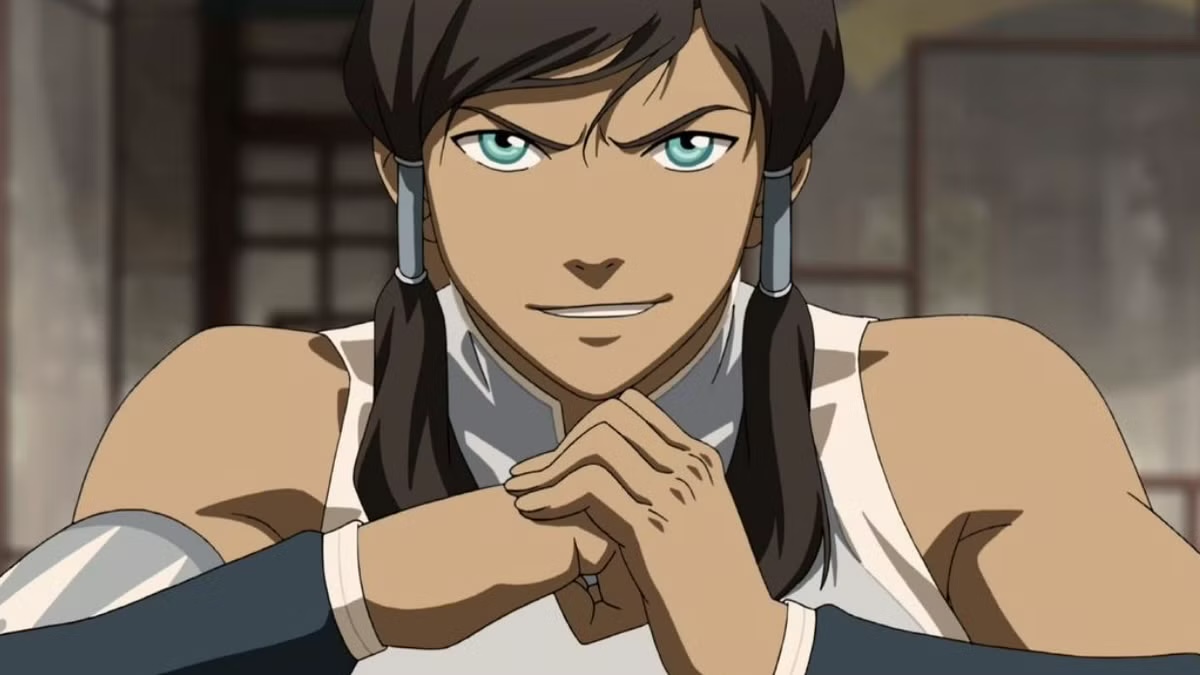
The bisexual icon that inspired a generation, Korra’s legacy shall never be forgotten. The Legend of Korra marked a tonal departure from Avatar: The Last Airbender, trading a childlike good-versus-evil narrative for a more complex story featuring messy teenage emotions and antagonists that make disturbingly good points. Korra’s journey to avatarhood is complicated to say the least, featuring tempestuous relationship dynamics with both genders, and of course, a few traumatizing battles with maniacal anarchists and wannabe dictators. Through the heaviness and heartache, Korra never ceases to rise above her dire circumstances and become the leader that the world so desperately needs, making animation history as a canon queer character on kids’ TV in the process. While she never got to share an onscreen kiss with the equally iconic Asami, the post-series comic books fix that.
Adora and Catra — She-Ra and the Princesses of Power
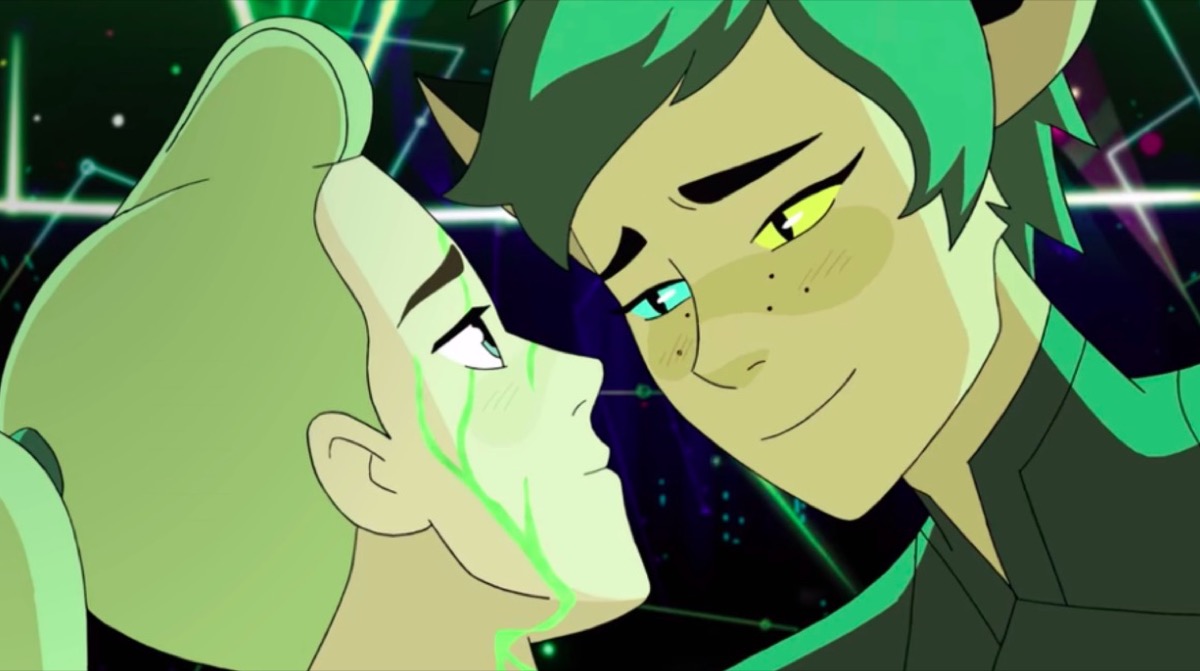
Korra and Asami walked so Adora and Catra could fly. While The Legend of Korra ended with its two female protagonists gazing at each other with subtly sapphic devotion, She-Ra and the Princesses of Power‘s finale featured a full-on same-sex kiss. Adora and Catra are the first lesbian couple to be the leads of a children’s animated TV show, ending it with a groundbreaking liplock that gives Marceline and Bubblegum’s series finale smooch a run for its money. Even before their trailblazing display of affection, both of these women were iconic on their own. She-Ra was a magical girl worthy of Sailor Moon levels of lionization, while Catra’s signature “Hey Adora” catchphrase was a flirtation burned into the brains of a generation. Is their love story complicated and at times toxic? Yes. Does the series ultimately acknowledge and make up for instability with emotional tenderness and accountability? Absolutely.
Marceline and Princess Bubblegum — Adventure Time
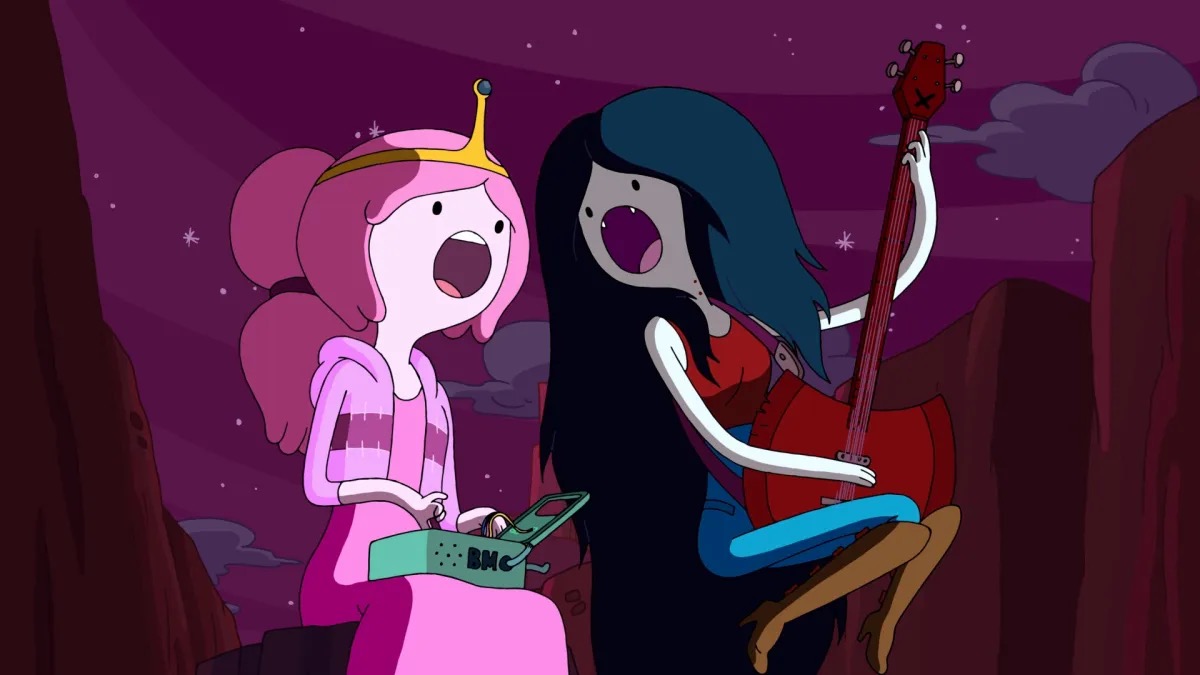
Marceline and Princess Bubblegum made history as the first same-sex couple in Western mainstream animation to share an onscreen kiss. While their romance was more of a subplot than She-Ra‘s series-central love story, the pair subtly shares Adora and Catra’s all-consuming love. Hinted at for 10 seasons, Marceline and Bubbegum’s queerness was finally confirmed in an end-of-the-world display of affection, canonizing them as gay icons. C’mon, a vampire rockstar goth and her bubblegum pink scientist girlfriend? Never has there ever been a more complimentary, contrasting, and quintessentially cool couple on kids’ TV. And while it took a while for their relationship to really get going, Bubblegum’s early series admission to Marceline that she sleeps in the t-shirt Marceline gave her was possibly even more adorable than their end-of-show kiss.
Sailor Moon — Sailor Moon
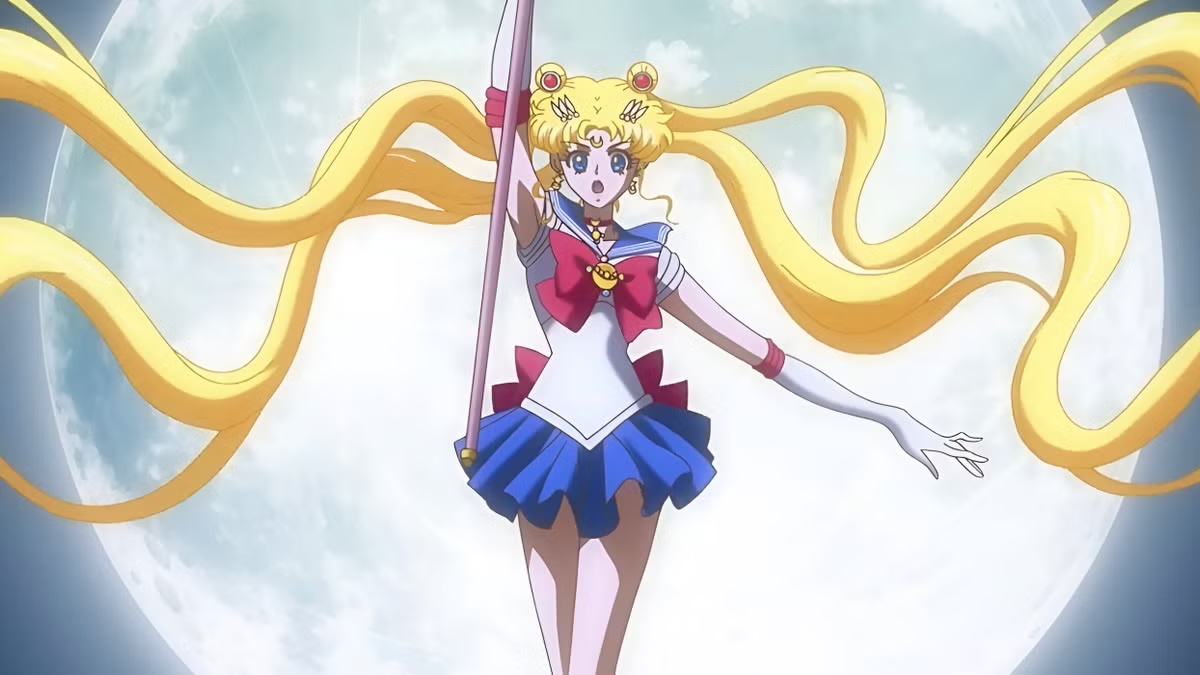
Sailor Moon is anime’s ultimate It Girl, the queen of magical girls to whom all other shojo heroes owe their undying fealty. Once an average teen, Usagi Tsukino’s life is radically transformed after she embraces a new identity, levels up her style, and joins an all-female team of like-minded heroes. The real-life coming-of-age queer parallels are apparent, to say the least. A fan-favorite character in cosplay and drag the world over, Sailor Moon’s legacy is intrinsically tied to artistic expression across multiple forms of media. She’s one of the most iconic characters ever created, and even though she technically spends the series pining for a cis-het man, the sheer intensity of that queer-coded yearning canonizes her as a gay legend regardless.
Mr. Ratburn — Arthur
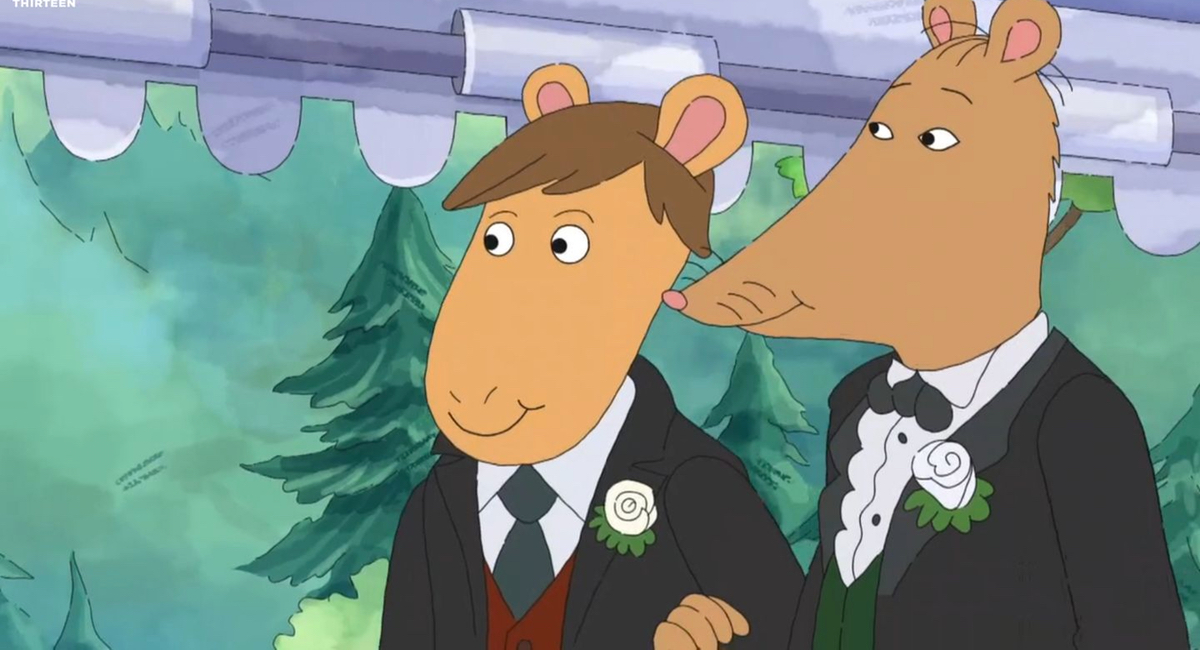
Nigel Ratburn is the unexpected gay icon that queer culture didn’t know it needed, but so thoroughly deserved. The no-nonsense teacher on Arthur, Mr. Ratburn shows his softer side in a special episode that depicts his wedding to a kind-hearted chocolatier named Patrick. While Ratburn’s class is surprised to see their teacher walking down the aisle with a man rather than the Jane Lynch-voiced female guest-star character they suspected he loved, all of them are supportive and accepting. It’s an adorable moment, a deeply moving display of queer love between adults. Mr. Ratburn’s romance is totally, wonderfully normalized, a choice that many of Arthur‘s conservative viewers refused to accept. While right-wing fundamentalists futilely tried to push back against the romance, Ratburn and his beau kept marching on, making gay history in the process.
Shego — Kim Possible
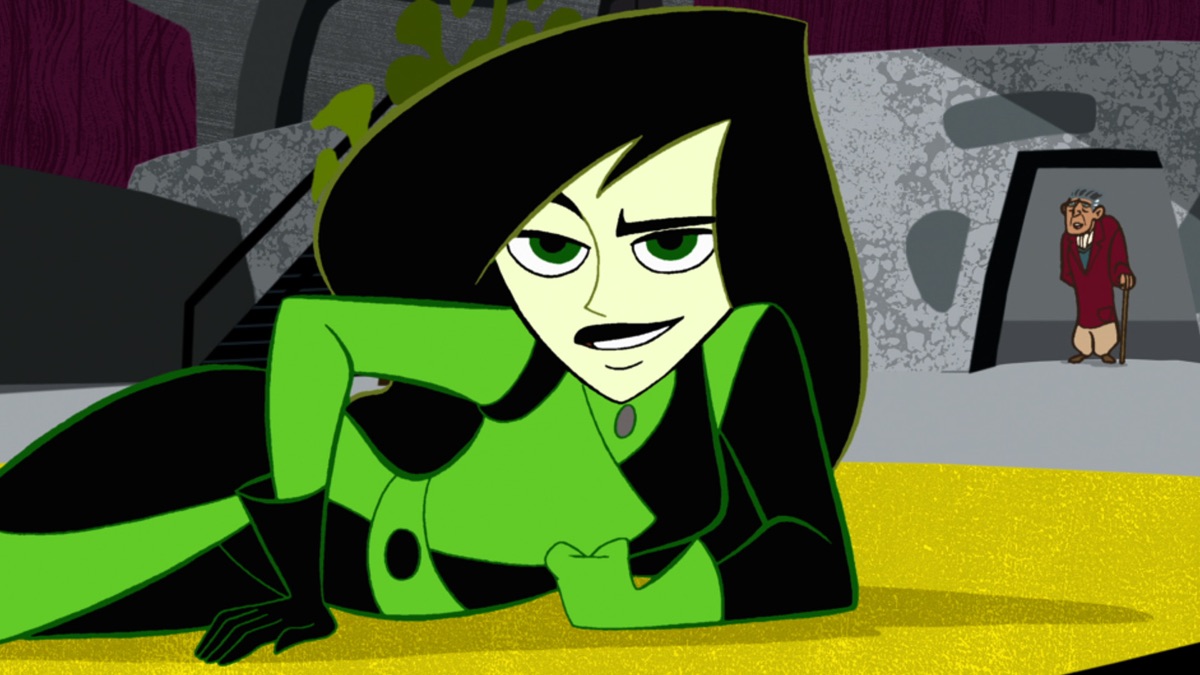
The green-tinted femme fatale that awoke the sapphic feelings of a generation, Kim Possible‘s Shego is an officially unofficial bisexual icon. Sarcastic, dominant, stylish, and totally unconcerned with traditional expectations, Shego’s character was a groundbreaking portrayal of feminine power on children’s TV. Like Helen of Troy, hers is the face that launched a thousand ships, and by that I mean headcanon romances between her and series protagonist Kim Possible. She technically ended up in a relationship with Dracken by the end of the show, but what really made an impression on fans were her sexual tension-fueled hand-to-hand combat sequences with Kim. Shego and Kim were the greatest sapphic enemies-to-lovers relationship that never was, and despite Shego never having been canonically confirmed to be queer, she became a gay icon regardless.
Bon Clay — One Piece
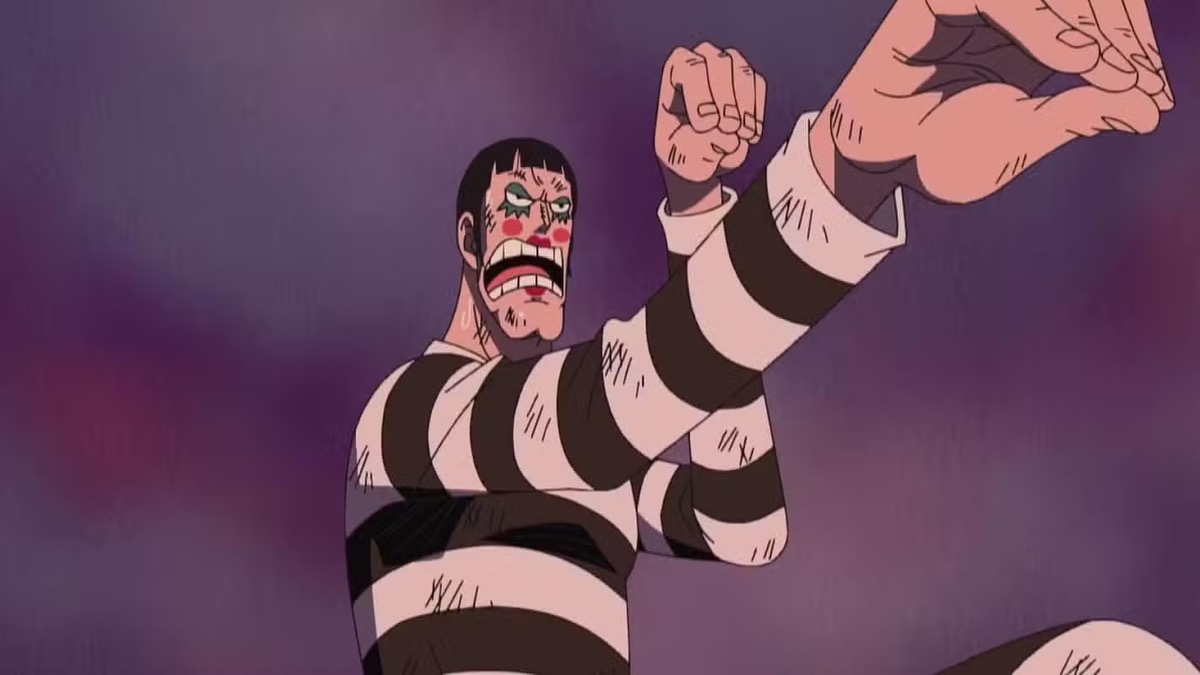
A fan-favorite character on the prestige shonen anime One Piece, Benthem, aka Bon Clay, is a genderqueer icon. While his initial characterization is… problematic to say the least, Bon Clay quickly evolves from a cliché gender-bending antagonist to a queer hero and honorary member of Monkey D. Luffy’s Straw Hat pirate crew. A self-identified “okama” (a Japanese word often translated as “queer” or “drag queen”) Bon Clay sees themself as both a man and a woman. They also have the supernatural power to change their appearance at will, and they use this shape-shifting ability to save the lives of Luffy and his friends multiple times. A self-sacrificing hero with a heart of glittering gold, Bon Clay is a paragon of queer excellence, a gay anime icon of the highest caliber.
Tweek and Craig — South Park
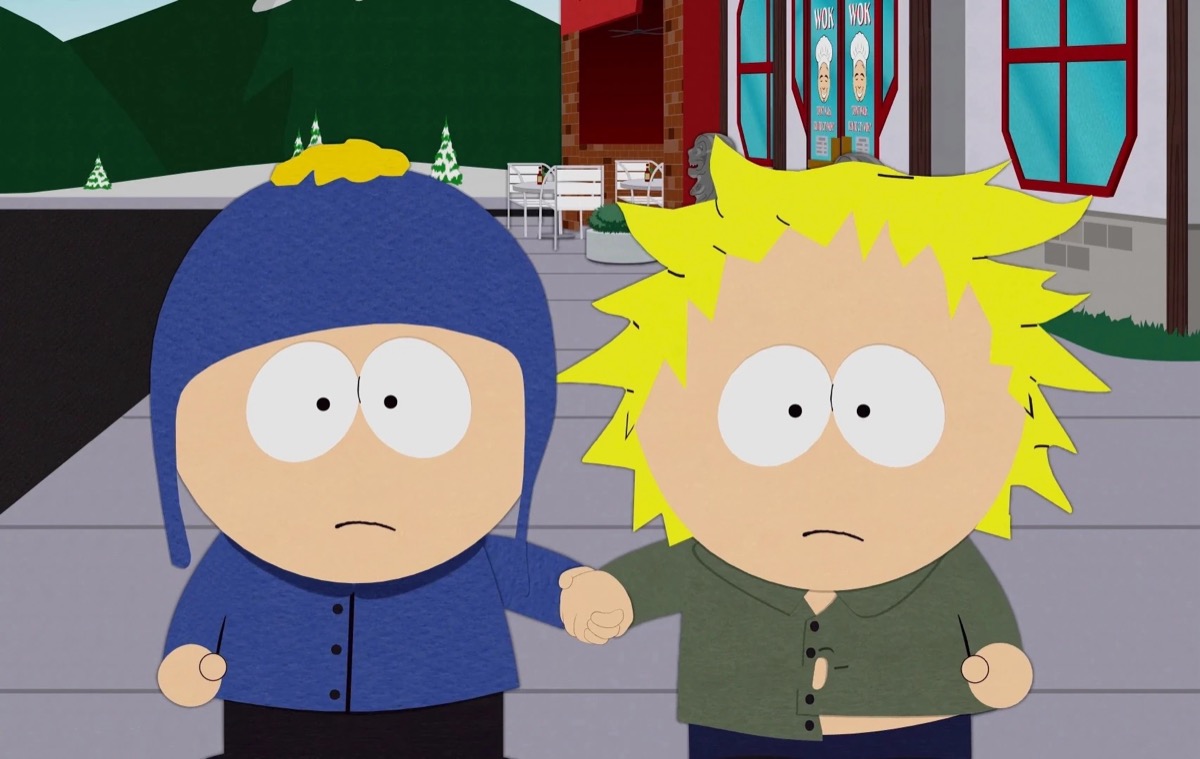
While their fan-art-fueled love story began as a city-wide headcanon, South Park‘s Tweek and Craig’s relationship went from slash fiction romance trope to grounded partnership. In a send-up of yaoi storylines, one of their classmates spread a rumor that the pair were actually a closeted gay couple, and though the two initially reacted with horror at their community’s performative displays of acceptance, it ultimately served as the catalyst for their actual devotion. In a show that satirizes literally everything, Tweek and Craig’s relationship is treated with unexpected tenderness. They’re a non-stereotypical gay couple that gives the cynical series some much-needed wholesomeness. They’re totally supportive of each other, an emotionally grounded couple in a series that revels in human toxicity. Unexpected gay icons, but gay icons nonetheless.
The Cast of Steven Universe
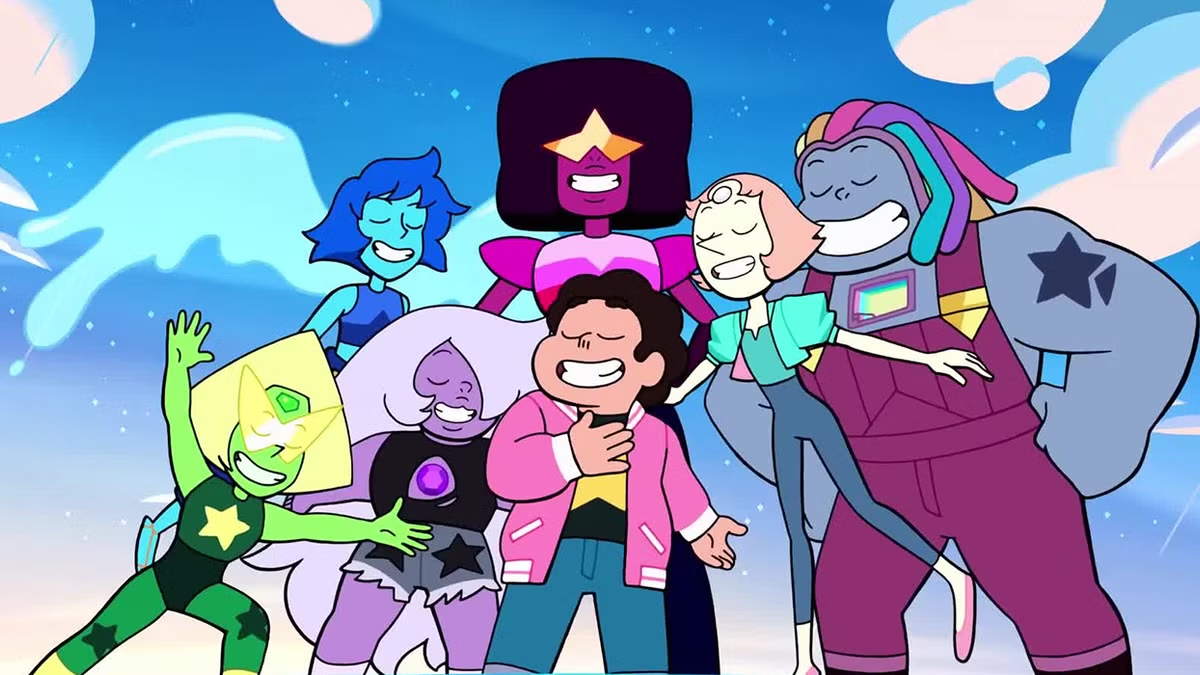
An animated trailblazer without peer, Steven Universe was one of the first ever mainstream cartoons to make queerness a quintessential part of its identity. In the story of a boy who becomes friends with a group of alien gemstones, the Gems are presented as canonically genderless, moving fluidly between expressions of masculinity, femininity, and genderqueerness. The relationships between the characters were treated with equal, canon sincerity. Sapphire and Ruby’s fusion into Garnet is the literal embodiment of stability in queer romance, and their wedding was a groundbreaking episode of children’s TV, much like the ceremony between Arthur‘s Mr. Ratburn and Patrick. While gay and sapphic characters fill the show, the series gained further accolades for its rare inclusion of an asexual character in the form of Peridot. Infinitely lovable, relatable, and cosplayable, the cast of Steven Universe are all gay icons.
(featured image: Nickelodeon)
Have a tip we should know? [email protected]
Follow The Mary Sue:
