


James Cameron’s Avatar Movies Are Under Fire For the Unauthorized Use of a Young Actor’s Face for Inspiration
Regular white savior behavior.
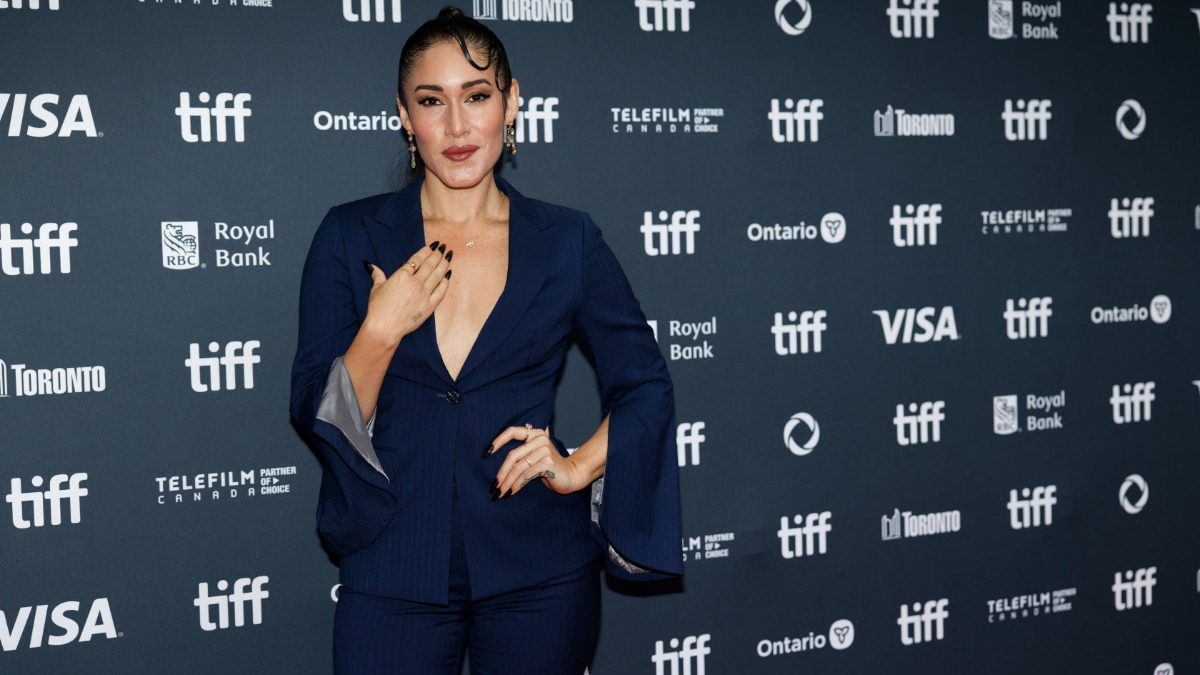
James Cameron’s Avatar movies are facing serious legal heat after a lawsuit accused the director and Disney of using a young actress’s face without permission to create the iconic character Neytiri. The complaint, filed by actress Q’orianka Kilcher, alleges that Cameron extracted her facial features from a published photograph when she was just 14 years old and used them as the foundation for Neytiri’s design, all without her knowledge or consent.
According to Variety, the lawsuit, filed in the U.S. District Court for the Central District of California, claims Kilcher’s likeness was replicated in production sketches, turned into 3D models, and integrated into the Avatar franchise’s visual effects pipeline. The result? A character that became a global phenomenon, appearing in theaters, on merchandise, and across multiple sequels, all while Kilcher remained unaware her face was being used.
“What Cameron did was not inspiration, it was extraction,” said Arnold P. Peter, Kilcher’s lead attorney. “He took the unique biometric facial features of a 14-year-old Indigenous girl, ran them through an industrial production process, and generated billions of dollars in profit without ever once asking her permission. That is not filmmaking. That is theft.”
Kilcher first met Cameron in 2009
Kilcher, who played Pocahontas in Terrence Malick’s The New World, said she first met Cameron briefly at a charity event in 2009. He invited her to his office, where she was later presented with a framed sketch of Neytiri. Attached was a handwritten note from Cameron that read, “Your beauty was my early inspiration for Neytiri. Too bad you were shooting another movie. Next time.”
At the time, Kilcher said she believed it was a personal gesture – a loose nod to inspiration tied to her activism. She had no idea her face had been systematically used in the film’s production. The truth came to light late last year when a video interview with Cameron resurfaced online. In it, Cameron stands in front of the Neytiri sketch and directly identifies Kilcher.
He says, “The actual source for this was a photo in the L.A. Times, a young actress named Q’orianka Kilcher. This is actually her…her lower face. She had a very interesting face.” Kilcher said, “It is deeply disturbing to learn that my face, as a 14-year-old girl, was taken and used without my knowledge or consent to help create a commercial asset that has generated enormous value for Disney and Cameron.”
The lawsuit doesn’t just stop at unauthorized use of likeness
It accuses the defendants of violating California’s deepfake pornography statute, a law designed to protect individuals from digital exploitation. The complaint seeks compensatory and punitive damages, disgorgement of profits tied to Kilcher’s likeness, injunctive relief, and a public disclosure correcting the record. With the Avatar franchise grossing over $2.92 billion worldwide, and more, this battle could have major financial and reputational consequences.
This isn’t the first time Avatar has faced criticism over its handling of Indigenous themes and representation. When Avatar: The Way of Water hit theaters in 2022, Indigenous viewers and activists called out the films for relying on tired tropes, including the “White savior” narrative. The original Avatar follows Jake Sully, a human who infiltrates the Na’vi people of Pandora, falls in love with Neytiri, and ultimately leads them against colonial forces.
Critics argue that centering a White-coded protagonist in a story about Indigenous resistance reinforces a problematic dynamic – one where Indigenous people are saved by an outsider rather than driving their own narrative. Yuè Begay, a Navajo artist and activist, even called for a boycott of The Way of Water, while Autumn Asher Blackdeer, a scholar from the Southern Cheyenne Nation, compiled a list of Indigenous-led sci-fi films as alternatives.
Crystal Echo-Hawk, president and CEO of IllumiNative, told CNN that Cameron’s decision to frame the story through a White male lens was a missed opportunity. “It’s a level of arrogance once again that a White filmmaker can just somehow tell a story that’s based on Indigenous peoples better than Indigenous peoples ever could,” she said.
Avatar has faced backlash for lack of authentic Indigenous representation
While The Way of Water introduced the Metkayina clan, a nod to the Māori, many of the film’s Indigenous-coded characters were still voiced by non-Indigenous actors. Adam Piron, a filmmaker and director of the Indigenous program at Sundance Institute, criticized the franchise for projecting a White filmmaker’s vision of Indigeneity rather than involving Indigenous creators in meaningful ways.
Cameron’s past comments haven’t helped. In 2010, he compared the struggles of the Xingu people in the Amazon to those of the Lakota Sioux, saying, “I felt like I was 130 years back in time watching what the Lakota Sioux might have been saying at a point when they were being pushed and they were being killed.”
The remarks resurfaced during the backlash to The Way of Water. Critics said Cameron’s perspective, rooted in White privilege, failed to fully grasp the complexities of Indigenous experiences.
The Kilcher lawsuit adds another layer to representation issue
If the lawsuit succeeds, it could set a precedent for how Hollywood handles the use of real people’s images in digital creations, especially when those people are minors or members of marginalized communities. For now, Disney and Cameron have yet to respond publicly.
Kilcher’s team’s issue is that her likeness was extracted and used as a foundational element in a billion-dollar franchise without her consent. That’s not just a creative choice; it’s a legal and ethical violation. The fact that this happened to a 14-year-old girl, who later discovered the truth through a viral video, only makes it worse.
(featured image: Kevin Payravi)
Have a tip we should know? [email protected]
Follow The Mary Sue:
