


NYC Bakery Customer Orders a $12 Pistachio Croissant. Then Spots Boxes That Look Suspiciously Familiar: ‘They’re From Costco?’
‘Highway robbery at its finest.’
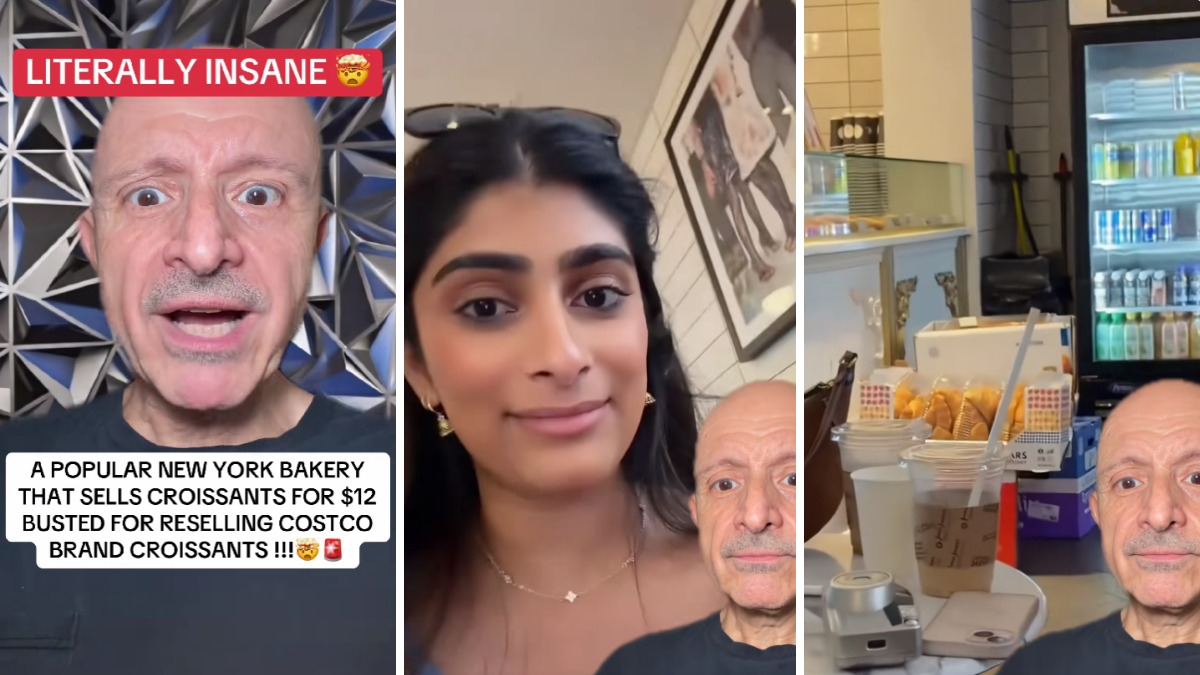
A New York City bakery has come under fire after a viral TikTok video accused it of reselling Costco croissants for a massive markup. The original clip, posted by creator Sreenitya, @tallbrowngirlll on TikTok, alleges that Le Parisien Bakery near Times Square was charging customers $12 for pistachio croissants that were actually from Costco. In Sreenitya’s video, a delivery driver is seen dropping off boxes that have Costco branding, including Kirkland Signature products.
The video sparked outrage over what many see as deceptive pricing. The controversy continued when reaction-style content creator Joe D., @JoeD69 on TikTok, posted his own 91-second take on the video, breaking down the footage. He zoomed in on the boxes, pointing out Costco Organic Spring Mix and Kirkland packaging on the bakery floor.
His math was brutal: a 12-pack of Kirkland butter croissants sells for under $7 at Costco, meaning each one costs about 50 to 60 cents. Charging $12 for the same product, he argued, is “highway robbery at its finest.” The video has since racked up nearly 120,000 views, over 2,500 likes, and more than 1,000 comments, with many users calling out similar experiences at other cafes.
The bakery has denied the claims
Le Parisien Bakery, which markets itself as an “authentic French bakery” specializing in house-made pastries, has pushed back against the allegations. According to the New York Post, an employee said that the bakery bakes its croissants fresh at a production site in Coney Island and delivers them daily. The boxes in the video, they claimed, are simply reused Costco packaging.
“They just re-use the boxes. They’re not Costco croissants,” the employee said. A Costco worker backed up this explanation, noting that businesses often repurpose boxes for deliveries, especially for items like cold drinks.
The bakery’s website maintains an artisanal image, stating that its “skilled artisans create a symphony of flavors with our house-made pastries, crafted with the utmost care and using only the finest ingredients.” But the viral video tells a different story, one that resonates with customers who expect transparency when paying premium prices. The disconnect between the bakery’s branding and the reality of its sourcing has left many feeling misled.
The debate taps into broader frustrations about food pricing and authenticity
This is especially seen in high-cost cities like New York. Customers often assume that higher prices at specialty bakeries reflect fresh, in-house preparation and quality ingredients. When that illusion is shattered, it can feel like a betrayal.
Some commenters on @JoeD69’s video defended the practice, arguing that reselling wholesale products is standard for small businesses. “That was the whole reason that Costco and Sam’s Club opened – to offer small businesses a place to shop for goods they would resell,” one user wrote.
Others, however, saw it as a clear case of deception. “A lot of people are missing the point,” another commenter argued.
“Yes, business owners buy from warehouse clubs and resell, but when you go to a bakery and pay a substantial markup, you would expect that the items are made fresh. You don’t expect to be served mass-produced and resold bread at a bakery.” The sentiment reflects a growing demand for honesty in how food is sourced and sold, particularly when diners are paying top dollar for what they believe is a handcrafted product.
Le Parisien’s defense of reusing Costco boxes has done little to quell the criticism. If anything, it just added another layer to the conversation about transparency. Many businesses do repurpose packaging, but the optics of seeing Costco-branded boxes in a bakery that charges $12 for a croissant are undeniably bad.
Costco’s own pricing adds fuel to the fire
The warehouse giant sells its butter croissants for about 57 cents each, making the $12 markup at Le Parisien seem even more egregious. While the bakery claims its plain croissants sell for $5 or $6, the pistachio version in question still carries a steep premium. For customers who could buy the same product for a fraction of the price, the experience feels less like a treat and more like a scam.
The incident also highlights the role of social media in holding businesses accountable. TikTok, in particular, has become a powerful tool for exposing questionable practices, from food sourcing to pricing. Creators like Joe and Sreenitya calling out these issues gives other consumers a platform to share their own stories. The video’s virality forced Le Parisien to respond publicly, something that might not have happened in the pre-social media era.
For now, the bakery’s explanation hasn’t satisfied everyone. Sreenitya’s caption, “Should this be considered a crime?” reflects the anger many feel when they realize they’ve overpaid for a product they could have bought themselves. While reselling wholesale items isn’t illegal, the lack of transparency is what stings. The viral video has left a lasting impression, one that could hurt the bakery’s reputation long after the controversy fades.
The bigger question is whether this incident will change how customers view specialty bakeries and cafes. In an era of inflation and rising food costs, people are more skeptical than ever about what they’re paying for. Videos like this one encourage that skepticism, pushing businesses to be more transparent about their practices.
(Featured images: JoeD69 @thejoed69 on TikTok)
Have a tip we should know? [email protected]
Follow The Mary Sue:
