


Trump Threatens to Turn Off the Taps in Iran as His Defense Secretary Dismisses Questions About the Legality of Targeting Civilian Infrastructure
‘Disingenuous question.’
Donald Trump threatened to unleash a “bigger, more powerful” military strike on Iran on Thursday, June 11, 2026, days after reopening airstrikes against the country’s civilian infrastructure. He later allegedly called off the strikes. According to The Hill, the escalation followed Iran’s downing of a U.S. Army helicopter near the Strait of Hormuz, an incident that left two service members rescued but triggered a sharp response from American forces.
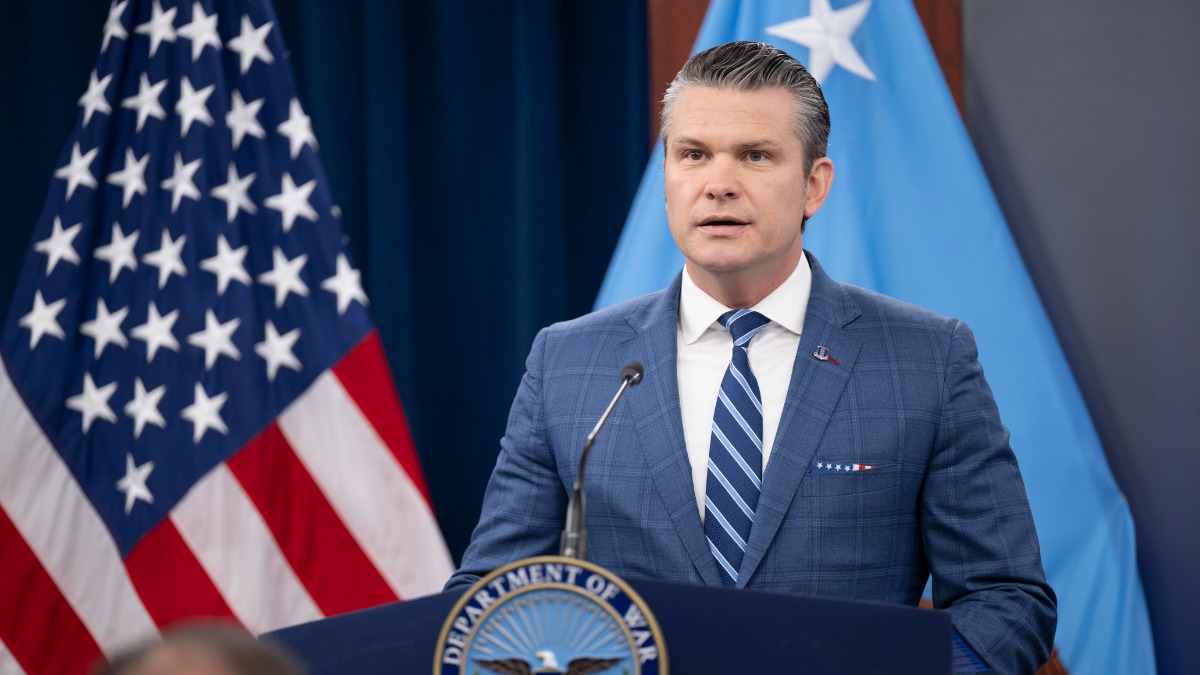
Defense Secretary Pete Hegseth dismissed concerns about the legality of targeting civilian sites, calling questions about war crimes “disingenuous” and accusing the media of impugning the military’s motives. The latest round of hostilities began after U.S. Central Command confirmed “self-defense strikes” against Iran’s surveillance, communications, and air defense systems earlier this week.
Trump had taken to Truth Social on Thursday to warn that Iran would face severe consequences, saying the U.S. would strike “VERY HARD TONIGHT” and even seize Kharg Island, the hub for 90% of Iran’s crude oil exports. Later, he claimed the military had already “dropped $250 million worth of bombs” on Wednesday and promised an even more devastating attack. “They’re really in submission,” he said. “They just don’t know it yet.”
Trump also revisited his earlier threats to cripple Iran’s bridges and power plants
He did acknowledge the humanitarian fallout of such actions. “I’d rather not do it because once you do that, the people suffer,” he said. “Like, I heard you mentioning water. Water is really a devastating loss for them. I could do that in one minute, but the problem is the people won’t be able to drink water.”
His comments underscore the fine line the administration is walking between military pressure and the risk of civilian casualties, a balance that has drawn scrutiny from legal experts and human rights advocates.
Secretary of War Hegseth pushed back hard against any suggestion that targeting civilian infrastructure could violate international law. When asked whether such strikes would constitute a war crime, he called the question “precisely the kind of disingenuous” framing he’s come to expect from the media.
“We will hit them hard, on our terms, on the targets that improve the environment for us to operate in and undermine the capabilities that Iran wants to have,” he said. “Again, they can’t do that to us meaningfully, the way that we can to them.” His remarks reflect the administration’s broader strategy of leveraging overwhelming military superiority to force Iran into concessions, particularly over the Strait of Hormuz, a critical chokepoint for global oil shipments.
The Strait has become a flashpoint in the standoff
Iran announced its closure this week and threatened to fire on any ships attempting to pass through. The waterway typically handles about a fifth of the world’s oil and liquefied natural gas, making its disruption a major concern for energy markets. Despite Iran’s threats, the U.S. military confirmed that commercial vessels were still transiting the area, though traffic has been severely limited.
The uncertainty has sent oil prices on a rollercoaster, with Brent crude and West Texas Intermediate (WTI) both plunging more than 4% on Friday after Trump called off additional strikes, citing progress in peace talks, according to Reuters. Analysts warn that even if a deal is reached, the market’s relief could be short-lived.
Tamas Varga of PVM Oil Associates noted that global oil stocks are still dangerously low, and it would take time to restore uninterrupted flows. “Headlines are driving the market once again, as confidence grows that an eventual deal will be struck and the Strait reopens,” he said.
But ING analysts cautioned that if oil shipments don’t resume by late July, prices could spike to $120-$130 per barrel as inventory levels dwindle and seasonal demand ramps up. The Organization of the Petroleum Exporting Countries (OPEC) has already revised its 2026 demand growth forecast downward, citing weaker-than-expected consumption, though it expects a rebound in 2027.
Goldman Sachs added another layer of complexity to the outlook
It lowered its 2027 average Brent forecast to $80 a barrel due to higher supply and lower demand. However, the bank still expects prices to exceed 2025 averages as countries stockpile oil and a “security premium” gets baked into the market to account for potential disruptions. The shifting forecasts highlight the fragility of the current situation, where military posturing and economic calculations are deeply intertwined.
For now, the immediate focus remains on the Strait of Hormuz and the looming threat of further strikes. Iran’s Mehr news agency reported that negotiations with the U.S. are centering on nuclear and economic issues, though Tehran has made it clear that its missile program is non-negotiable.
The memorandum of understanding under discussion could reopen the Strait as soon as this weekend, but the path to a lasting agreement is far from certain. With Trump promising “bigger” attacks and Iran digging in, the risk of miscalculation is higher than ever.
The administration’s approach has drawn criticism
Many question the ethical and legal implications of targeting civilian infrastructure. International law generally prohibits attacks on objects indispensable to the survival of the civilian population, such as water treatment plants or power grids.
Trump’s own comments about the “devastating” impact of cutting off water suggest he’s well aware of the consequences, even as he frames the strikes as a necessary show of strength. Hegseth’s dismissal of war crime concerns as “disingenuous” only adds to the controversy, raising questions about how far the U.S. is willing to go to force Iran’s hand.
For ordinary Iranians, the situation is already dire. Trump’s threats to target water supplies and power plants aren’t abstract, they’re existential. Even if the U.S. holds back from the most extreme measures, the psychological toll of living under the threat of airstrikes is immense. The administration’s calculus seems to be that inflicting enough pain will force Iran to the negotiating table.
(Featured image: SECWAR)
Have a tip we should know? [email protected]
Follow The Mary Sue:
