US warship sails near disputed Sabina Shoal in the South China Sea, triggering immediate response from Chinese Navy
More military posturing?
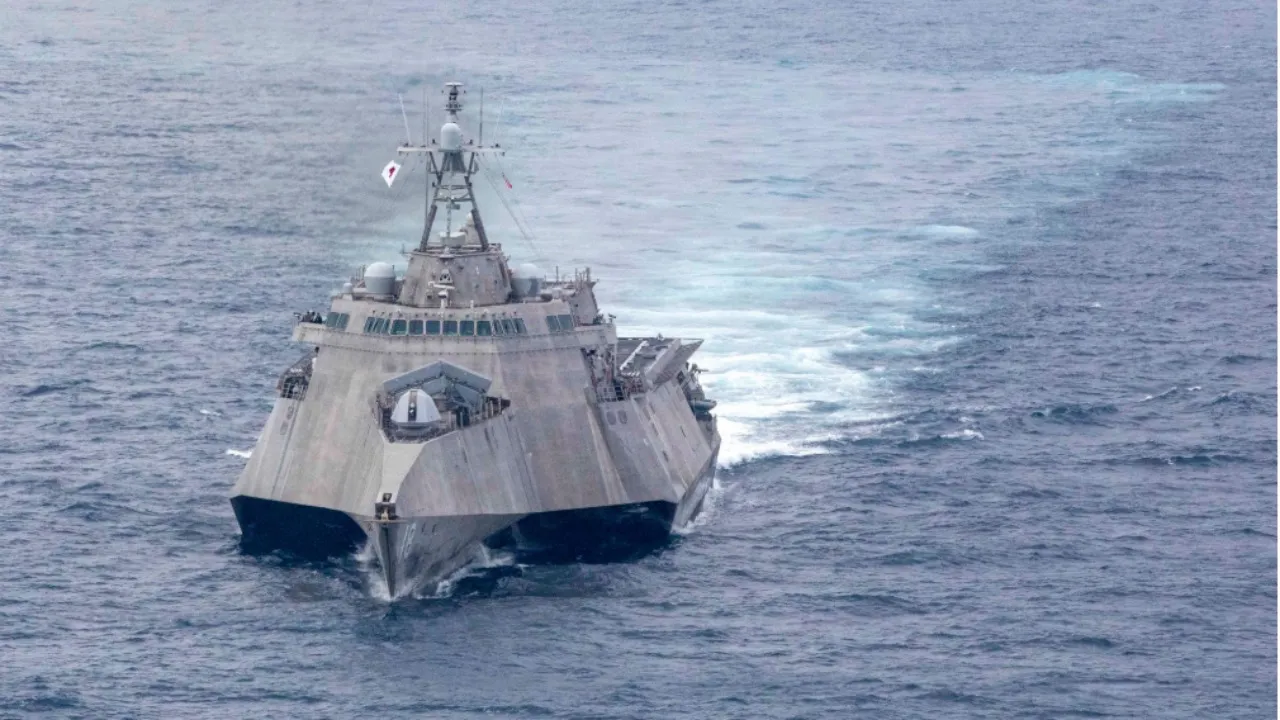
The United States Navy recently sailed a warship near the disputed Sabina Shoal in the South China Sea. This move triggered an immediate response from the Chinese Navy. Beijing officials accused the United States military of entering these waters without proper authorization. According to The Hill, the vessel involved is the USS Charleston, an Independence-class littoral combat ship. This ship currently operates out of Singapore as part of the Seventh Fleet.
Chinese officials claim that this action violates their sovereign rights. The Southern Theater Command Navy stated that they sent forces to track the American vessel. They claimed the ship “illegally intruded” into the area early on Tuesday, October 20, 2026. Yin Gang, who serves as the spokesman for the Southern Theater Command Navy, provided these details. He stated that the Chinese navy monitored and followed the USS Charleston during the patrol.
China asserts that it holds “indisputable sovereignty” over the Spratly Islands. They argue that the United States presence is “detrimental to regional peace and stability.” Beijing has demanded that Washington stop these activities immediately. This situation highlights the ongoing friction in the South China Sea. China claims roughly 90% of the sea as its own territory. This position leads to frequent disputes with nations like Malaysia, Vietnam, and the Philippines.
China has said the US’ presence in the disputed area is detrimental to regional peace and stability
The United States maintains that it conducts these missions to protect international shipping lanes. They call these actions freedom of navigation operations. The goal is to show that the region is not under the sole control of Beijing. This mission marks the first time this year that China has publicly accused a United States warship of entering these specific waters. Similar incidents have occurred in the past, such as in 2020 with the USS Montgomery.
The Philippines offers a different perspective on the event. According to the South China Morning Post, military spokesperson Vincent Trinidad denied that the American ship trespassed into Chinese territory. He stated that “no single nation has the authority to require prior permission for lawful transit through international waters.” This statement reflects the ongoing disagreements regarding maritime borders in the region.
Sabina Shoal sits about 145 kilometers northwest of the Philippine island of Palawan. It has become a significant flashpoint between Beijing and Manila since 2024. The Philippines stationed a coastguard vessel there for five months during that year. They were concerned about potential land reclamation efforts by China. That vessel eventually withdrew in September 2024. The withdrawal followed multiple confrontations between the two nations.
These tensions have included dangerous maneuvers and collisions between coastguard ships. One such altercation happened just last month near the same shoal. The Philippine Coast Guard claims that a Chinese ship rammed their boat. China disputes this account and blames the Philippines for the collision. The area is known as Xianbin Jiao in China and Escoda Shoal in the Philippines.
The United States remains a treaty ally of the Philippines
They have increased joint naval patrols and military exercises with Manila in recent years. This partnership aims to challenge what Washington considers excessive territorial claims by China.
Both the US and Philippines reaffirmed their relationship during the 12th United States-Philippines Bilateral Strategic Dialogue in February. They confirmed that the 1951 Mutual Defence Treaty covers armed attacks against public vessels. This treaty protection extends to coastguard ships operating anywhere in the Pacific, including the South China Sea.
The presence of the USS Charleston appears to be a calculated move by the United States. It comes ahead of a planned visit by President Donald Trump to Manila. Trump is expected to attend the ASEAN Summit in November. The Pentagon and the Navy did not immediately respond to requests for comment on the situation. The Seventh Fleet also remained silent on the specific details of the patrol.
Regional experts may view this incident as a sign of rising instability. The use of water cannons and physical collisions has become more common lately. Both sides seem firm in their conflicting interpretations of international law. China often demands that foreign vessels seek permission before entering these zones. The United States often rejects those demands as inconsistent with global maritime norms.
The situation at Sabina Shoal remains fluid
It seems unlikely that either side will back down from their stated positions soon. As the tensions rise, the international community watches with concern. Any further escalation could threaten the safety of vessels in this vital economic corridor. For now, the USS Charleston continues its deployment under Destroyer Squadron 7.
The incident serves as a reminder of the complex geopolitical reality in the South China Sea. Both Beijing and Washington continue to assert their influence in the region. The outcome of these naval encounters often shapes the broader diplomatic relations between the involved nations. It seems the reliance on military posturing will continue for the foreseeable future.
Have a tip we should know? [email protected]
Follow The Mary Sue: