US bans Chinese AI startup DeepSeek from federal systems over ‘multiple threat vectors.’ Then China warns of ‘all necessary measures’
Global race for AI dominance.
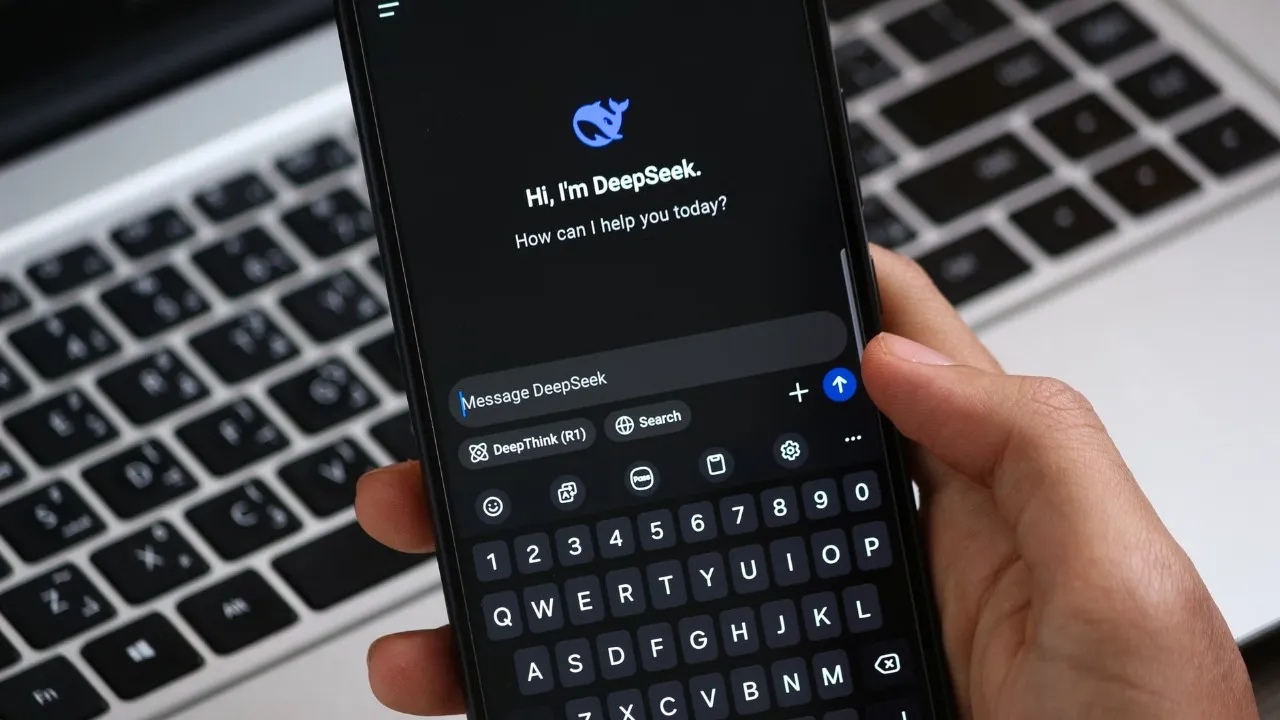
The Department of Homeland Security (DHS) recently issued a directive banning the use of AI tools from the Chinese startup DeepSeek across federal systems. According to The Hill, this order, which stems from concerns over multiple threat vectors, mandates the removal of these products from all government IT devices.
The official notice was published to the Federal Register on Monday, October 19, 2026, though the directive itself dates back to July. It specifically targets both the primary models developed by DeepSeek and any third-party tools built using that underlying technology. The agency has highlighted significant risks associated with the startup.
The DHS warned that these models can collect personally identifiable information from users. It also expressed concern that the software could track or digitally fingerprint individuals who interact with the systems. Furthermore, the agency noted that these applications might contain malware or other hidden security vulnerabilities.
There are many concerns regarding data flow with DeepSeek
The DHS stated that the prompt and response process in widely used DeepSeek applications could lead to the transfer of sensitive data to the People’s Republic of China. This risk is particularly acute if the tools are used by U.S. government employees or vendors. The department noted that the servers for these models are located within China. The legal system there grants the government extensive authority to access private company infrastructure.
Chinese officials responded to the ban with sharp criticism. On Tuesday, Chinese Foreign Ministry spokesperson Mao Ning addressed the order during a briefing in Beijing. She stated that Beijing “consistently opposes overstretching the concept of national security and politicizing tech and trade issues.” She added that they “will resolutely safeguard Chinese businesses’ lawful rights and interests.”
The Ministry of Commerce in China also expressed its stance on the matter. It voiced strong dissatisfaction and firm opposition regarding the U.S. decision. The ministry argued that the U.S. disregarded an agreement previously reached between President Xi Jinping and President Donald Trump.
It further claimed that the U.S. is attempting to suppress China under the guise of national security. The ministry warned that “China will closely monitor the situation and take all necessary measures to firmly defend its legitimate rights and interests.”
DeepSeek gained significant attention in the tech world last year
The release of its R1 model created anxiety in Silicon Valley and on Wall Street because it offered high performance for a fraction of the cost of U.S. models. The company continued its momentum in April 2025 by releasing a new version called V4. According to The Guardian, it then updated a faster and more lightweight version of that model earlier in October.
The U.S. government has previously accused DeepSeek and other top Chinese AI firms of engaging in the systematic theft of capabilities from American rivals. This competitive tension exists despite recent diplomatic efforts to manage the relationship. During a visit by President Xi Jinping to Washington, D.C., last month, the two leaders discussed the future of AI. President Trump has taken to calling the technology super intelligence.
Both nations previously agreed to launch new talks on AI. They also committed to establishing a channel for handling AI-related incidents. The first of these AI-specific talks is scheduled for November. This topic is expected to arise again when the two leaders meet at a summit in the Chinese city of Shenzhen.
The DHS order applies specifically to civilian agencies
The directive does not cover military or intelligence services. The U.S. defense department did not respond to requests for comment regarding the situation. DeepSeek has also been contacted for comment on the recent ban.
The competition between the two countries remains intense. Beijing continues to pour significant resources into open-source models. While these models are often cheaper to produce, they are viewed as less secure by U.S. officials. DeepSeek offers both proprietary and open-source models that are available for use around the world, including within the United States.
The situation highlights the complex balancing act between technological innovation and national security. The U.S. government clearly views the integration of foreign-made AI into federal workflows as a potential liability. Meanwhile, China views these restrictions as a political maneuver meant to hinder its economic and technological growth. The upcoming talks will likely serve as a major test for whether both nations can maintain a communication channel despite these escalating tensions.
The reliance on servers located in jurisdictions with different legal standards for data privacy is a central point of this conflict. It seems the U.S. is prioritizing the protection of internal data pipelines above all else. This move may influence how other countries view the adoption of Chinese AI tools in their own government sectors.
Have a tip we should know? [email protected]
Follow The Mary Sue: