


Trump Claims He Forced Netanyahu to Stand Down After a Massive Exchange of Ballistic Missiles With Iran
Friendship in turmoil?
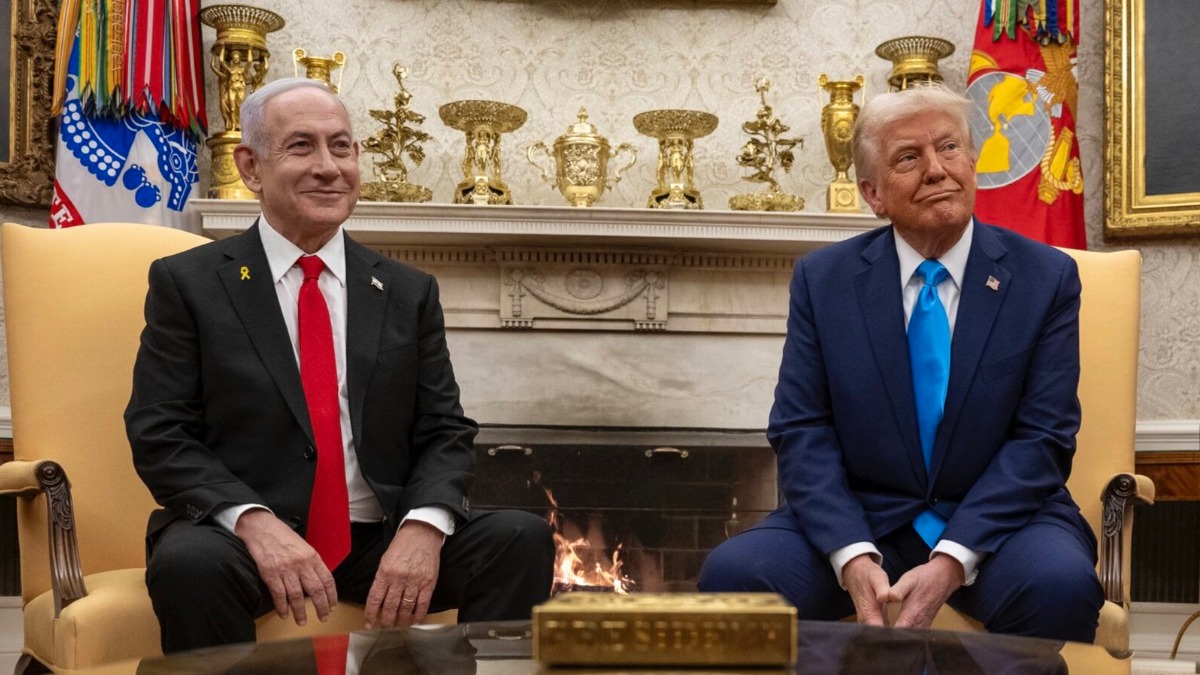
Israel and Iran both agreed to pause their missile attacks on each other, just hours after a tense exchange that had the whole region on edge. The sudden de-escalation came after President Donald Trump stepped in, claiming he personally ordered Israeli Prime Minister Benjamin Netanyahu to stand down. But neither side is fully backing off, and the conditions they’ve set could reignite the conflict at any moment.
Trump took to Truth Social early Monday, June 8, 2026, to announce the ceasefire, writing, “Both sides, Israel and Iran, are looking to do an immediate CEASEFIRE! Final negotiations on ‘Peace’ are proceeding, subject to ignorance or stupidity getting in its way.” He later told the Financial Times that Netanyahu had no choice but to comply. “He won’t have any choice,” Trump said. “I call the shots. I call all the shots. He doesn’t call the shots,” he said, per NPR.
But Israel’s response suggested otherwise. Within hours of Trump’s remarks, Israel launched its own missile strikes against Iran, targeting air defenses and a major petrochemical plant. The back-and-forth began when Iran fired nearly 30 ballistic missiles at Israel, aiming for military air bases in the center and north of the country.
Israel said it intercepted incoming missiles, though falling debris sparked brush fires
Schools were closed as a precaution, but no injuries or major damage were reported. Iran claimed the attack was retaliation for Israel’s ongoing strikes against Hezbollah in Lebanon, which Tehran sees as a direct provocation. Iran’s military declared it was halting further attacks for now, but warned that if Israel kept targeting Hezbollah, the response would be “much harsher and more forceful than before.”
Israel wasn’t about to let Iran’s strikes go unanswered. In the early hours of Monday, dozens of Israeli warplanes hit Iranian air defenses and a petrochemical complex in Mahshahr, a key site linked to weapons production. Iranian media reported explosions in Tehran, Isfahan, and Tabriz, along with temporary airport shutdowns. Workers at the targeted petrochemical plant were evacuated before the strikes, according to local reports.
Netanyahu made it clear Israel wouldn’t be deterred, saying that while the current operation was “on hold,” any further attacks from Iran would be met with force. “Should the [Iranian] terror regime make the mistake of returning to attack us, we will respond with force – because Israel has every right to self-defense,” he said.
The latest flare-up marks the 100th day of a war that began on February 28
The initial ceasefire, declared on April 8, has been unraveling for weeks, with missile and drone attacks picking up across the region. Most of the violence had been between Israel and Hezbollah, or the U.S. and Iran, but the direct strikes between Israel and Iran took things to a new level. The U.S. has been trying to broker a lasting peace, but Trump’s frustration with Netanyahu has been growing.
Reports suggest Trump cursed at Netanyahu last week for escalating tensions in Lebanon, and he reportedly told the Israeli leader not to retaliate after Iran’s drone strikes. Netanyahu, however, ignored the warning and ordered the strike on Iran anyway. The divide between the two leaders reflects a broader split between U.S. and Israeli priorities.
Trump is under pressure to secure a deal that would reopen the Strait of Hormuz, a critical shipping route that Iran has effectively shut down for the past 100 days. The closure has sent global energy prices soaring, and Trump is eager to ease the economic strain. But Iran is demanding major concessions, including the unfreezing of $24 billion in assets as a “test of trust.”
According to The Hill, Secretary of State Marco Rubio has pushed back, saying sanctions relief is only on the table if Iran takes steps to dismantle its nuclear program. Meanwhile, Israel remains deeply skeptical of any deal that doesn’t fully neutralize Iran’s nuclear and missile capabilities.
Trump’s approach to Iran has drawn comparisons to the Obama-era nuclear deal
He famously abandoned this in 2018. Critics argue that the current negotiations are even weaker, sidestepping Iran’s missile program and failing to secure firm commitments on uranium enrichment.
Yaakov Amidror, a former national security adviser to Netanyahu, warned that the U.S. might be repeating past mistakes. “I hope we’re not facing the same problem with this administration,” he said. “Postpone and monitor – that’s what we saw with the Obama administration, and it didn’t work.”
The fighting in Lebanon has been particularly brutal. Israel’s recent invasion of southern Lebanon, the deepest in 26 years, has killed over 3,600 people, including hundreds of women and children, according to Lebanon’s Health Ministry. Israel says only two of its civilians have died in Hezbollah attacks.
Last week, Israeli and Lebanese officials met in Washington to revive a collapsed ceasefire, but Hezbollah rejected the terms, calling them a surrender. The deal would have required Hezbollah to stop attacks while allowing Israel to remain in occupied territories. With neither side willing to back down, the conflict shows no signs of ending soon.
For now, the immediate threat of all-out war between Israel and Iran seems to have eased, but the underlying tensions are as volatile as ever. Trump’s claim that he called the shots might have played well on Truth Social, but Netanyahu’s defiance suggests Israel isn’t ready to follow orders.
(Featured image: Dan Scavino)
Have a tip we should know? [email protected]
Follow The Mary Sue:
