


Trump arrives in Manila as ASEAN summit winds down. Protesters oppose US-backed AI project over Indigenous land concerns
'Trump out!'
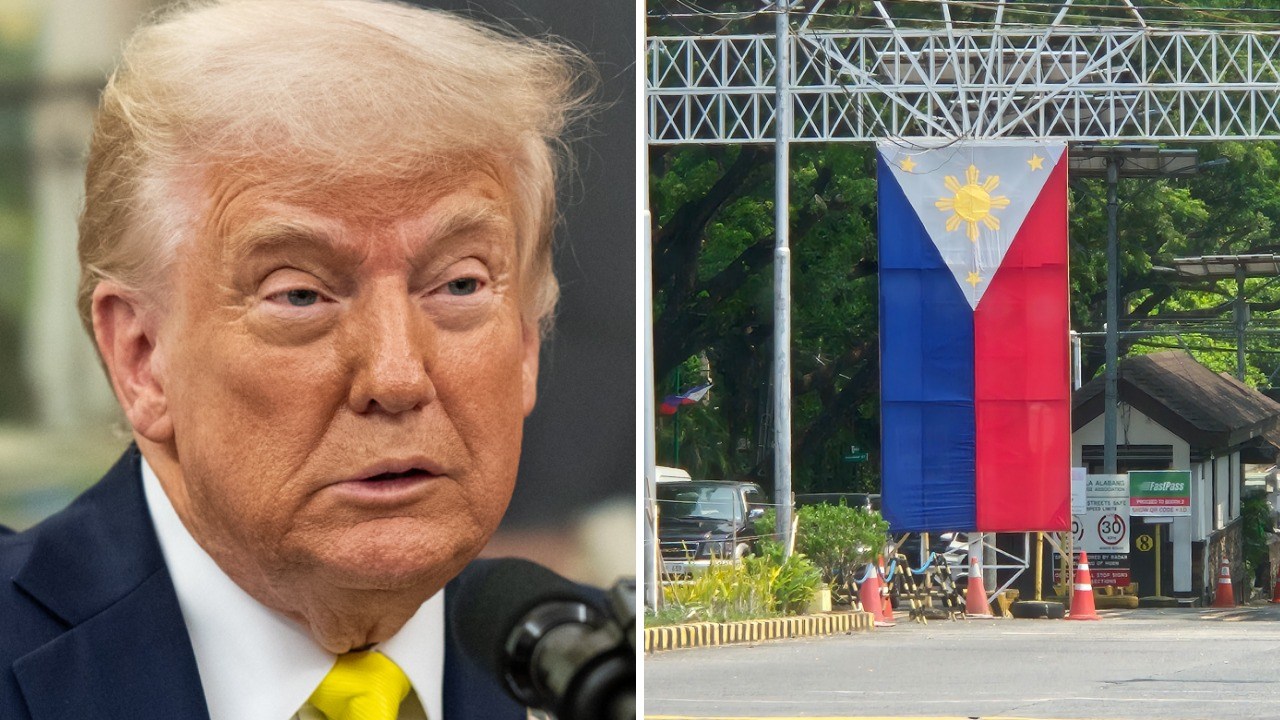
US President Donald Trump arrived in Manila on Tuesday, as the 49th Association of Southeast Asian Nations (ASEAN) Summit drew to a close. His visit has brought renewed attention to the Philippines’ economic and security ties with Washington. At the same time, demonstrations against Pax Silica, a proposed US-backed technology development, led to the detention of 245 protesters, including children and journalists.
Trump’s arrival at Ninoy Aquino International Airport coincided with the summit’s closing proceedings, where the Philippines formally concluded its ASEAN chairmanship. The Inquirer reported that Trump met with Philippine President Ferdinand Marcos Jr. at Malacañang on Wednesday, where the two leaders discussed expanding cooperation in defense, energy, and technology.
According to Reuters, Trump highlighted more than $5 billion in approved arms sales, potential cooperation on civilian nuclear energy, and a proposed natural gas export partnership. Protesters continued mobilizing against Trump’s visit, calling for the protection of Indigenous ancestral lands, an end to the displacement of farming communities, and greater accountability over the project’s environmental and social costs.
Farmers and Indigenous groups say they’d lose their land
Pax Silica is a US-led initiative intended to secure critical technology supply chains, including semiconductors, artificial intelligence, and advanced manufacturing. The Philippines joined the initiative in April 2026 and agreed to host a proposed 4,000-acre semiconductor hub in Capas, Tarlac, within New Clark City.
Indigenous Aeta communities and small farmers, however, fear losing access to ancestral territories and agricultural land. Human Rights Watch (HRW) explained that the proposed hub would displace hundreds of Indigenous people and farmers, some of whom have cultivated the affected land for generations.
The Bases Conversion and Development Authority (BCDA), which oversees the development, has maintained that the project will not displace Indigenous communities and that the designated site is public land. According to project figures cited by the BCDA, the proposed development could consume between 17 million and 24 million gallons of water daily and require up to three gigawatts of electricity.
Concerns over the environmental and infrastructure costs of AI development have also surfaced in the US, where residents have pushed back against large data center projects. One New Jersey woman, for instance, raised concerns over a proposed AI facility projected to consume as much electricity as 200,000 homes.
Crackdown follows protests over Trump’s visit
Thousands of Indigenous people, students, and activists took to the streets in their calls against “U.S.-Imperialist propaganda,” according to the Inquirer. On the day of Trump’s arrival, demonstrators attempted to march from Liwasang Bonifacio toward the Philippine International Convention Center, where the ASEAN Summit was being held. Police barricades prevented them from reaching the venue, while authorities deployed additional personnel around key government buildings and areas hosting foreign delegates.
The human rights group said that Philippine police had arrested and illegally detained at least 245 people in connection with the demonstrations. Those detained reportedly included 29 farmers, among them members of the Indigenous Mangyan community, 19 journalists, nine environmental defenders, and six human rights workers. Ephraim Cortez of the National Union of Peoples’ Lawyers said at least 19 children were detained.
The proposed Pax Silica agreement was not signed during the ASEAN Summit. US Ambassador to the Philippines Lee Lipton had previously said there was no scheduled announcement on the initiative during the gathering, Inquirer reported, with decisions to be made in consultation with the Philippine government at an appropriate time.
The Trump administration has also moved against Chinese-developed AI. In October, the administration ordered federal civilian agencies to remove DeepSeek products, citing national security concerns, prompting Beijing to accuse Washington of unfairly restricting Chinese technology companies.
Have a tip we should know? [email protected]
Follow The Mary Sue:
