


New Jersey Woman Flags a $1.8 Billion AI Plant Being Built in Her Neighborhood. Says It Will Use 200,000 Homes’ Worth of Energy
Expansion of AI infrastructure.
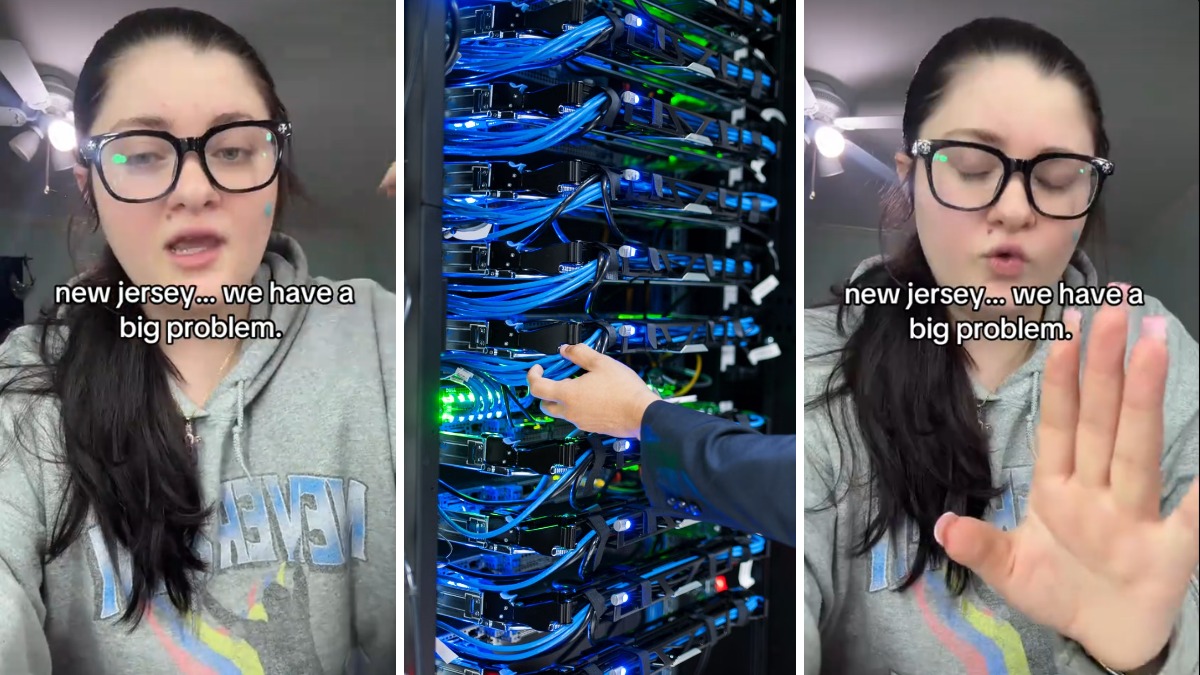
A $1.8 billion AI data center is being built in Kenilworth, New Jersey, and one resident is making sure everyone knows about it. Jordan Panno, a Gen Z Union County resident, posted a TikTok video in mid-April 2026 calling out the massive project, which she says will consume as much energy as 200,000 homes. The video has already racked up 330,000 views, 25,800 likes, and over 4,000 reposts.
The site is a 400,000-square-foot facility replacing a former Merck pharmaceutical plant next to a strip mall. Construction began in September, and the plant is expected to be operational by 2027. Panno’s video is a mix of frustration, facts, and a call to action, blending local concerns with debates about sustainability, corporate influence, and the priorities of technological growth. The Merck facility had its own issues but at least produced medications and research, she says.
A typical Merck site uses about the same amount of power as 4,000 homes annually. The new AI facility is projected to use as much as 200,000 homes’ worth of energy – double the demand of large AI plants in other states like Kentucky. Panno also raises concerns about water consumption, pollution, and strain on local infrastructure in a densely populated suburban area.
Her video isn’t just about the numbers, though
Panno ties the project to New Jersey’s push to become an AI hub, questioning who really benefits from the $250 million tax credit the state is offering. She points to overdevelopment in Union County, like luxury apartments with “marble contact paper and shitty water pressure,” and calls out what she sees as “internal investment corruption.” Her message is clear: residents aren’t being consulted, and the long-term environmental and social costs are being ignored.
One small win she highlights is a recent New Jersey bill requiring AI plants to cover their own energy costs, though she notes this doesn’t address the broader issues of water use, pollution, or infrastructure strain. Panno’s video ends with a blunt call to action, urging viewers to sign her petition and use their voices. “F**k AI,” she says, wrapping up a rant that’s informative and motivational.
The response to her video has been overwhelmingly supportive. Comments likely include a mix of agreement, debate over economic benefits, and calls for more awareness. Some may push back on the anti-AI stance, but the engagement metrics suggest she’s struck a nerve. Her style – raw, unpolished, and community-focused – resonates with those who feel left out of decisions that directly impact their neighborhoods.
Grassroots pushback against data centers is rising
According to The Guardian, in Lenox Township, Michigan, residents packed public meetings and even launched a recall effort against local officials after discovering plans for a data center through open records requests. The project was shrouded in secrecy, with developers initially denying any plans before emails revealed their outreach to township officials.
Residents were outraged by the lack of transparency, and their efforts reflect a broader movement of communities resisting what they see as tech infrastructure being “shoved down our throats.” In Festus, Missouri, a predominantly Republican area where Trump won 67% of the vote in 2024, residents filed a petition to recall the mayor and three council members over their approval of a $6 billion data center.
The developer, CRG Clayco, had shifted focus to Festus after facing strong opposition in nearby St. Charles. Despite the recall effort, the city council rejected the petition, leading to a legal challenge from a local resident. The case highlights the frustration of communities that feel ignored in the decision-making process.
In Yukon, Oklahoma, a Republican bank vice-president filed a recall petition against the mayor and vice-mayor over their support for a $1 billion data center. Concerns about water usage and transparency drove the effort, especially since Yukon already rations water. The vice-mayor later resigned, and nearby Luther, Oklahoma, passed a six-month moratorium on data center development after seeing the backlash in Yukon.
During the first quarter of 2026 alone, at least 75 data center projects worth about $130 billion were blocked or delayed, matching the total for all of 2025. Residents are increasingly demanding moratoriums and holding elected officials accountable for approving projects without community input.
The concerns are well-founded
Data centers are energy and water hogs. A single facility can consume as much electricity as 2,000 homes and use 300,000 gallons of water daily for cooling. Large centers can require up to 5 million gallons of water a day, equivalent to the daily usage of a town with 10,000 to 50,000 residents. This strain on local resources can lead to higher utility bills for residents and infrastructure upgrades that communities may not be prepared for.
Neighbors of data centers often complain about constant noise from cooling systems and air pollution. The secrecy surrounding many projects only adds to the frustration. In Virginia, 80% of localities with existing, approved, or proposed data centers had non-disclosure agreements with developers, making it difficult for residents to know who is behind the projects or what their long-term impacts might be.
The opposition isn’t just about NIMBYism – an acronym for ‘Not In My Backyard’. It’s about transparency, sustainability, and the right of communities to have a say in their future. Panno’s video and the broader movement against data centers highlight a growing anxiety about AI and its unchecked growth. People are questioning whether the benefits like jobs and economic growth outweigh the costs to their communities and the environment.
For Panno, the answer is clear. She’s not just fighting against one AI plant in Kenilworth; she’s advocating for a future where technology development aligns with the needs and values of the people it affects.
(Featured images: Jordan Panno on Tiktok and panumas nikhomkhai on Pexels)
Have a tip we should know? [email protected]
Follow The Mary Sue:
