


Pump Prices Offer a Rare Reprieve for Drivers, Yet the Volatile Trade-off With Tehran Could Force Consumers to Pay in Other Ways
Long road to recovery.
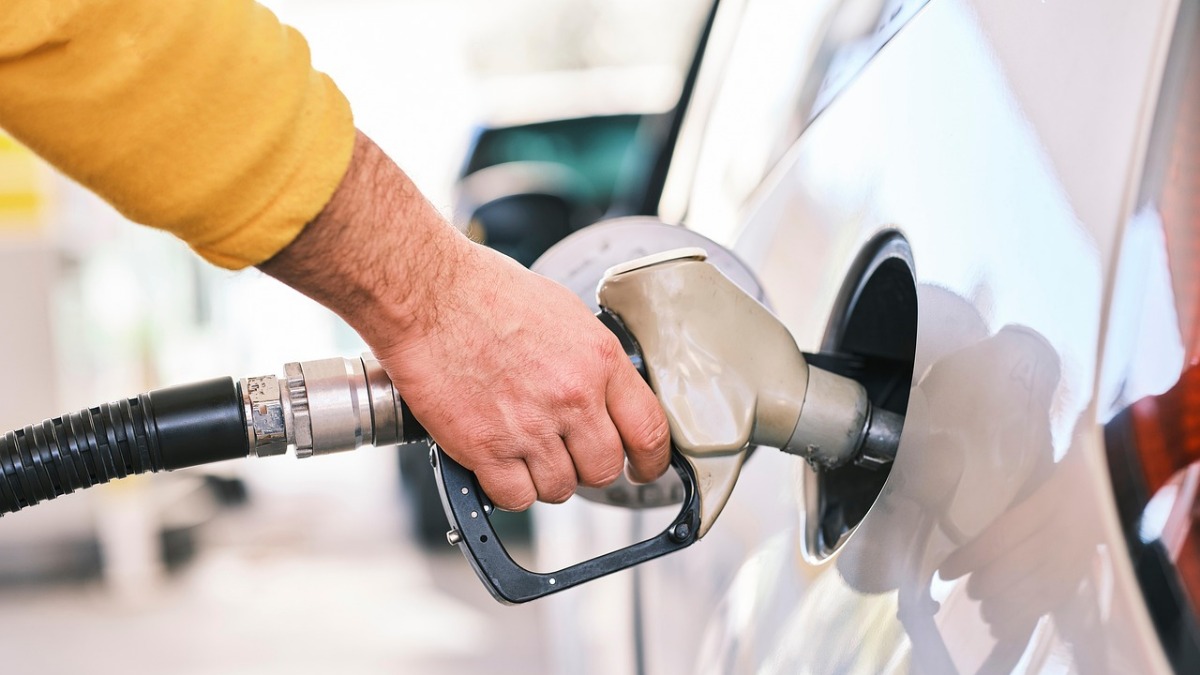
Pump prices just dipped below $4 a gallon for the first time since March, giving drivers a rare break at the gas station. The drop follows a preliminary agreement between the U.S. and Iran to end their war and reopen the Strait of Hormuz, a critical chokepoint for global oil shipments. While the relief is welcome, experts warn the savings might not last long and the trade-offs could hit consumers in other ways.
The national average for regular gasoline hit $3.999 on June 18, 2026, according to AAA, marking the first time in months prices have fallen this low. The decline aligns with cooling crude oil costs, with Brent crude slipping below $78 a barrel and U.S. benchmark crude dropping to just over $74, per The Guardian. That’s still higher than the pre-war level of around $70 but a far cry from the $100-plus prices seen just weeks ago.
The reopening of the Strait of Hormuz, confirmed by U.S. Central Command on June 18, has allowed some shipping traffic to resume, though experts say it could take weeks or months for flows to return to normal. Even with the recent dip, drivers are still paying about $1 more per gallon than they were before the U.S. joined Israel to attack Iran in February. Prices are also roughly 25% higher than they were a year ago, squeezing household budgets across the country.
The pain isn’t limited to the pump, either
Higher fuel costs have pushed up airline fares, grocery prices, and even the cost of consumer goods like shoes, thanks to ongoing supply chain disruptions. Patrick Penfield, a professor of supply chain practice at Syracuse University, said product prices are projected to keep climbing through the end of 2026. Farmers, for example, have already absorbed higher costs for fertilizer and other supplies this spring, which will likely translate to steeper food prices by autumn.
The price drop isn’t uniform across the country, either. In California, drivers are still paying an average of $5.64 a gallon, while Hawaii sits at $5.57. Meanwhile, states like Indiana and Texas are seeing averages closer to $3.40 and $3.49, respectively. The variation comes down to factors like proximity to supply and state tax rates. Even with the recent relief, many consumers are still filling up for well over $4 a gallon, and the broader economic impact of the war is far from over.
The U.S. strategic petroleum reserve, which hit its lowest level since 1983 earlier this week, will need to be refilled, adding pressure to supply chains already strained by rerouting, higher insurance premiums, and manufacturing bottlenecks. Tammy Kulesa, director of product marketing for supply chain execution at Blue Yonder, told Al Jazeera that even if oil stabilizes, the elevated cost base across the supply chain won’t normalize overnight.
Mark Jones, a professor of political science at Rice University, predicts prices won’t return to pre-war levels until late 2027, noting that it will take months for tankers to replenish stocks even after the Strait of Hormuz fully reopens.
Inflation has already surged to its highest level in three years
Consumer prices are up 4.2% and energy costs rising nearly 8% in just the last two months. Grocery prices have also climbed, with bakery products, cereals, nonalcoholic beverages, and fresh produce seeing some of the steepest increases.
Michael Klein, a professor of international economic affairs at Tufts University, pointed out that wages haven’t kept up with rising prices, eroding consumers’ purchasing power. The disconnect between stock market highs and everyday costs is stark, with nearly 40% of Americans not invested in the market at all.
Kroger, the largest supermarket chain in the U.S., has announced plans to cut prices on thousands of products across its 3,000 stores. The move comes as the company faces pressure from competitors like Costco and Walmart for value-conscious shoppers. Kroger CEO Greg Foran acknowledged that customers are being more selective with their spending, noting that the chain is seeing more promotional trips but fewer full baskets.
The shift reflects broader economic anxiety, with layoffs on the rise and job growth slowing. The U.S. economy added 172,000 jobs in May, down from an average of 300,000 under the previous administration, and February saw a net loss of 92,000 jobs.
The recent peace deal has also sparked debate over its economic impact
The President took to Truth Social to celebrate the agreement, claiming “OIL IS FLOWING,” “THE STOCK MARKETS ARE ROARING,” and “PRICES ARE DROPPING.” Al Jazeera states that while some of those claims hold water, others are misleading. The Dow Jones Industrial Average did hit a record high earlier this week, but the Nasdaq and S&P 500 have since slipped.
Meanwhile, job growth is far from record levels, with layoffs jumping 16% between April and May – the most since May 2020. AI-driven cuts have played a role in the job market’s volatility, with nearly 97,000 people losing their jobs in May alone.
Oil shipments through the Strait of Hormuz have started to rebound, with 12.5 million barrels of crude traveling through the waterway overnight, according to Vice President J.D. Vance. However, data from Kpler shows that traffic is still well below pre-war levels, with only six verified crossings on June 17.
For now, drivers can enjoy the temporary reprieve at the pump, but the bigger picture remains uncertain. Supply chains are still fragile, inflation is stubbornly high, and the cost of living continues to climb. The peace deal might have eased some immediate pressures, but the ripple effects of the war will be felt for years to come.
(Featured image: Engin_Akyurt on Pixabay)
Have a tip we should know? [email protected]
Follow The Mary Sue:
