


Paramount Accused Mark Ruffalo of Antisemitic Rhetoric After His Criticism of the Warner Bros. Deal
Mark Ruffalo pushed back after Paramount accused him of antisemitic rhetoric over his criticism of the Warner Bros. merger.
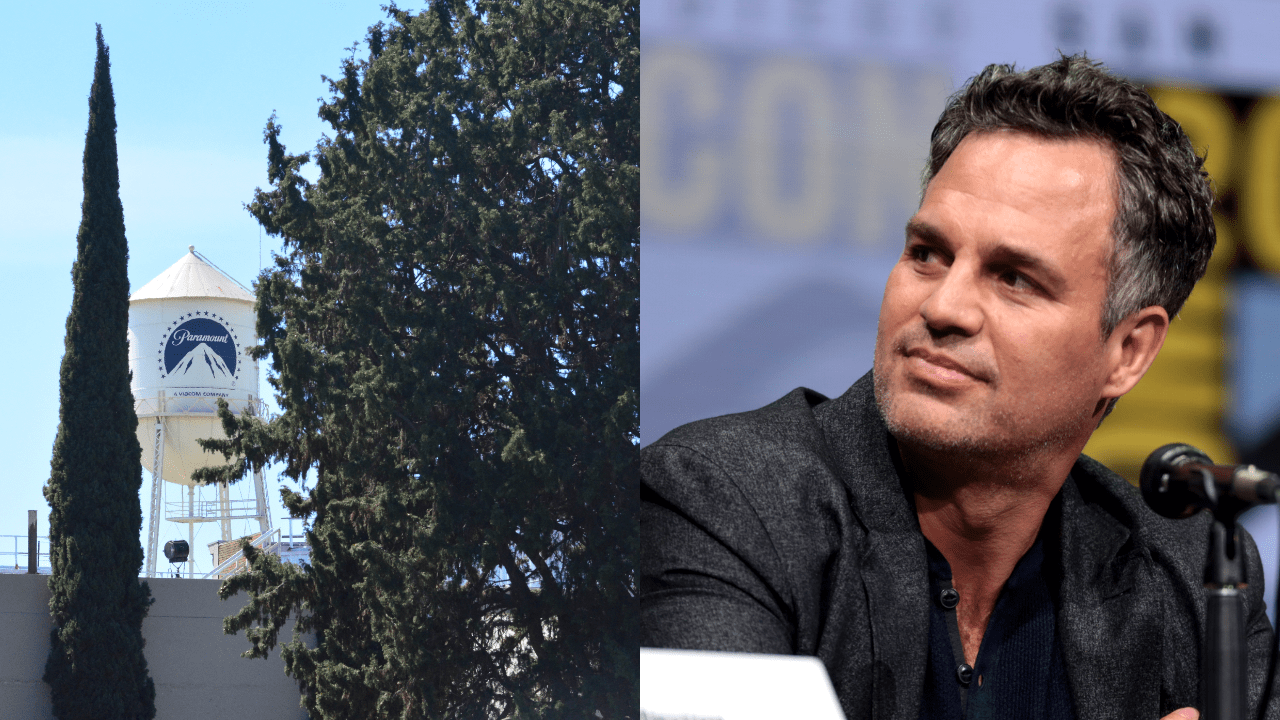
Paramount has accused Mark Ruffalo of using antisemitic rhetoric while criticizing the company’s proposed $111 billion acquisition of Warner Bros. Discovery. The actor connected the deal to Oracle’s business relationship with Israel and questioned the Ellison family’s involvement in the proposed merger.
Ruffalo shared an Instagram Story Friday featuring comments from Oracle executive vice chair Safra Catz about technology the company provided to Israel following the October 7, 2023, attacks. He then argued that Oracle’s relationship with the Israeli military, combined with the Ellison family’s involvement in the merger, warrants scrutiny.
Paramount responded by saying it was troubled by what it called “antisemitic tropes” being used in connection with a business dispute. Ruffalo has since rejected the accusation, arguing that his criticism concerns Israeli government policy, corporate practices, and the proposed merger rather than Jewish people.
Ruffalo’s Post Took Aim At More Than Just The Merger
Ruffalo’s criticism went beyond his concerns about Paramount gaining control of Warner Bros. Discovery. After sharing Catz’s comments, he argued that Oracle’s involvement with Israel should factor into discussions about Larry Ellison’s connection to the proposed acquisition through his son, David Ellison.
He also raised concerns that have little to do with Israel, including the potential effect of the deal on Hollywood workers and competition. Ruffalo cited estimates of 4,500 direct filmmaking jobs and another 10,000 ancillary jobs being at risk, while arguing that further consolidation could mean fewer choices for audiences and more control over the industry.
It was Ruffalo’s references to Israel, however, that prompted Paramount’s strongest response. In its statement, the company objected to his description of Israel’s actions as “genocide” and “apartheid” and argued that bringing those terms into a corporate dispute was inappropriate.
Paramount said the language “cheapens” the suffering associated with those words and urged regulators to judge the proposed merger on its legal merits. The company also said it would rather focus on building its business than engage further with what it described as inflammatory rhetoric.
The disagreement is not entirely new. In 2025, Paramount pushed back against a Film Workers for Palestine pledge that called for a boycott of Israeli film institutions that organizers considered implicated in the treatment of Palestinians. Ruffalo was among the thousands of Hollywood professionals who signed the pledge.
Ruffalo Has Now Responded To Paramount’s Accusation
The celebrity addressed the accusation directly in a new Instagram Story, writing that calling him antisemitic is “appalling and fundamentally dishonest.” He said criticizing an Israeli prime minister, a military technology contract, or corporate executives involved in those matters is not the same as criticizing Jewish people.
The actor also addressed his personal connection to the Jewish community, saying Jewish friends, colleagues, and loved ones have been an important part of his life and have influenced his views on acting, activism, and humanism. He argued that his political convictions do not reflect hostility toward Jewish people.
From there, Ruffalo returned to the proposed acquisition and the questions he believes still surround it. He pointed to Oracle’s work involving data, surveillance technology, and government contracts, while also raising concerns about editorial freedom and the potential effect of the merger on thousands of workers.
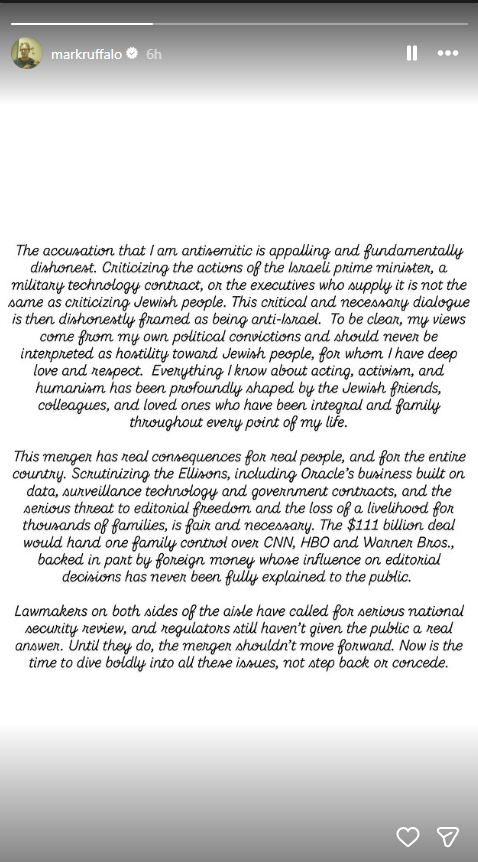
Ruffalo further questioned the deal’s financing and said the public has not received enough information about the role of foreign money in the transaction. He argued that lawmakers and regulators should address those concerns before the merger moves forward.
The two sides now disagree not only over the Warner Bros. deal, but also over how criticism of Israel and companies connected to it should factor into the acquisition.
Have a tip we should know? [email protected]
Follow The Mary Sue:
