


Media houses slam Israel’s ‘no journalists allowed’ policy in Gaza as a cover-up and the death toll of reporters tells a chilling story
Violent attack on press freedom.
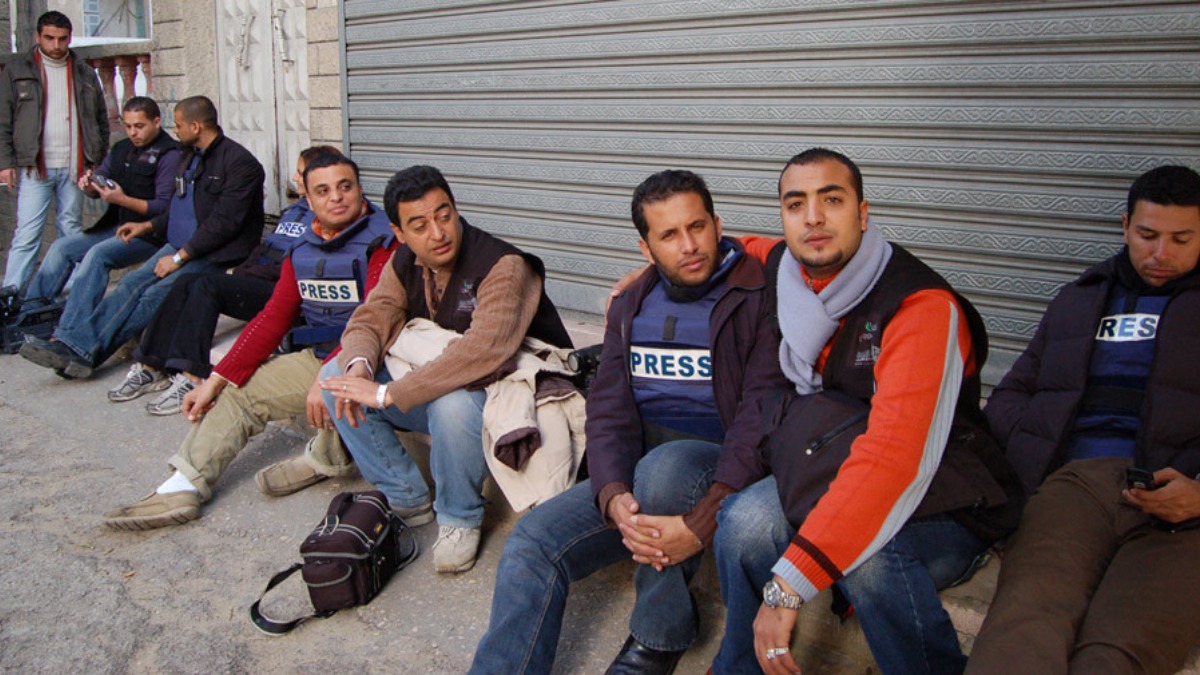
Israel’s blockade on foreign journalists entering Gaza has just sparked a major backlash from the world’s biggest media organizations. On April 30, 2026, top editors of more than two dozen news outlets, including the BBC, CNN, Reuters, and The Associated Press, signed a joint letter demanding Israel lift its ban and allow independent reporting from inside the territory. Their message was blunt: “Let us into Gaza.”
According to Al Jazeera, the letter argued that on-the-ground reporting is essential for verifying official accounts and giving civilians a voice. Right now, Israel is the only side controlling the narrative. Foreign journalists have been barred from Gaza since October 7, 2023, with Israel initially claiming the restriction was necessary to protect troop positions.
Other excuses followed, including safety concerns in an active war zone. The military has occasionally allowed tightly controlled press tours, but independent access has never been granted.
The timing of the media pushback is hard to ignore
A ceasefire has been in place for months, and the editors pointed out that aid workers are still allowed in and out of Gaza under a restrictive mechanism. Their argument is that if humanitarian staff can enter, why can’t journalists? The Foreign Press Association even filed a petition with Israel’s Supreme Court in 2024 demanding access, but the case is still unresolved. So far, Israel hasn’t responded to the latest request for discussions.
The ban isn’t just an inconvenience. It’s a crisis for press freedom. Palestinian journalists have been left to cover the war alone, often while living through it themselves. The toll has been devastating. Since October 2023, more than 200 journalists and media workers have been killed in Gaza, according to the Committee to Protect Journalists.
The Gaza Government Media Office puts the number even higher, at 262. For comparison, that’s far more than the number of journalists killed in Russia’s war on Ukraine. The deaths aren’t just statistics. They are a chilling pattern.
Take Mohammed Wishah, an Al Jazeera correspondent killed earlier in April in an Israeli drone strike. Wishah was traveling in a car on al-Rashid Street, a main coastal road west of Gaza City, when the attack came. The vehicle burst into flames.
Al Jazeera called his death “a new and flagrant violation of all international laws and norms,” part of what it described as a “systematic policy of targeting journalists and silencing the voice of truth.” Wishah was the 12th Al Jazeera journalist killed in Gaza since the war began. The others, including Samer Abudaqa, Hamza al-Dahdouh, and Ismail al-Ghoul, were all killed in similar circumstances.
The Gaza Government Media Office has been vocal in its criticism
The Gaza Government Media Office calls the killings “systematic targeting and assassination.” It has documented around 2,000 violations by the Israeli military since the ceasefire took effect.
The office is urging global media organizations, including the International Federation of Journalists and the Arab Journalists Union, to condemn the attacks and push for accountability. It’s also calling on the international community to prosecute those responsible in international courts and apply serious pressure to end what it describes as “the crime of genocide.”
The numbers are staggering. More than 72,000 people have been killed in Gaza since October 2023, with over 171,000 injured. Even after the US-backed ceasefire began last October, Israeli attacks have killed at least 733 Palestinians and injured 2,034 more, according to Gaza’s Health Ministry.
For journalists, the danger is constant. Ibrahim al-Khalili, an Al Jazeera reporter in Gaza City, said Wishah’s killing on a main road proves how dire the situation remains. “It’s nearly six months since the ceasefire came into effect, and the Israeli violations continue,” he said. “Targeting journalists like Wishah, who was covering this war since day one, shows no one is safe.”
The media executives’ letter didn’t pull any punches
They called out Israel’s claims that journalists pose a threat to troops, pointing out that if aid workers can enter Gaza under restrictions, reporters should be able to as well. The message is clear: this isn’t about safety but about control. Without independent journalists on the ground, the world is left relying on official statements and tightly managed press tours. That’s not journalism. It’s propaganda.
The question now is whether Israel will budge. So far, there’s been silence. The Supreme Court hasn’t ruled on the Foreign Press Association’s petition, and the government hasn’t responded to the latest demand for access. Meanwhile, Palestinian journalists keep dying. Wishah’s death wasn’t an accident – it was part of a pattern.
(Featured image: Al Jazeera English)
Have a tip we should know? [email protected]
Follow The Mary Sue:
