


Mother tries to excuse her disabled child from school to get intensive rehab, only to get penalized because it’s not ‘exceptional circumstances’
A medical condition isn't an exceptional circumstance, it seemed.
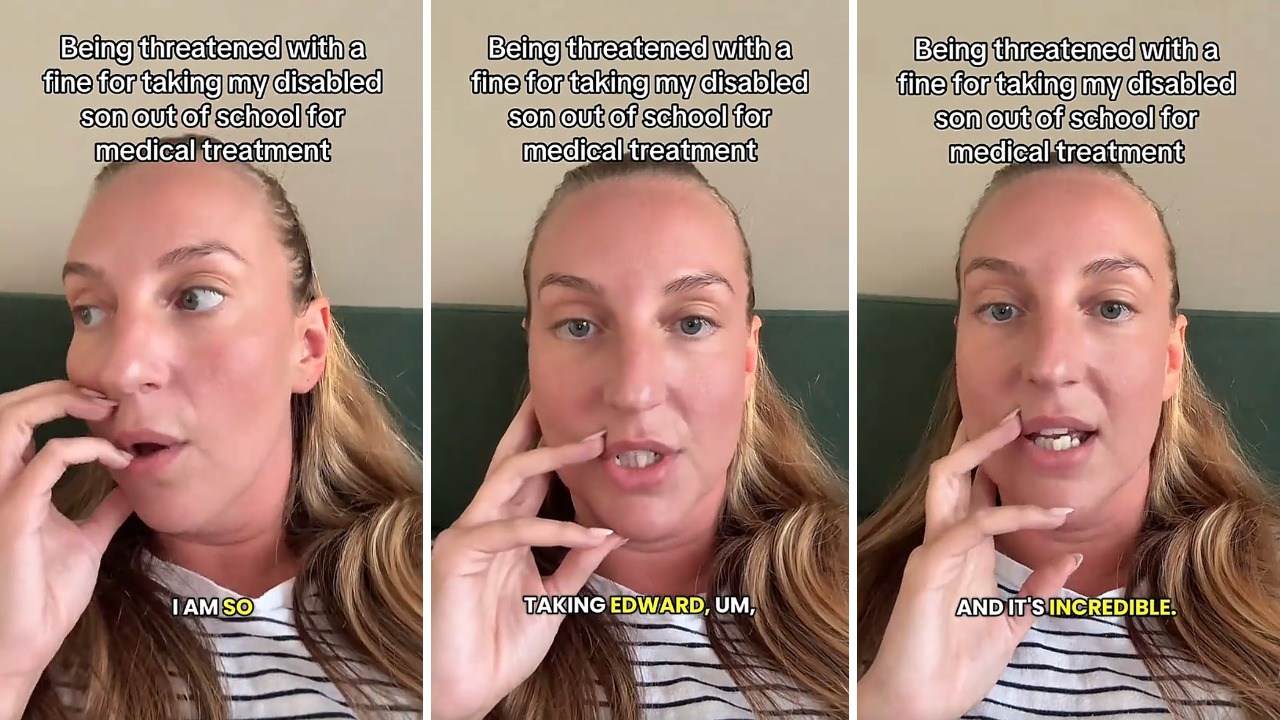
Those with disabilities are often left to suffer the repercussions of others’ ignorance, and it’s just as difficult for parents of children with disabilities. That was the case for one mother in the United Kingdom (U.K.), who said her disabled son’s school fined her for trying to excuse him from classes to get intensive rehabilitation.
“Being threatened with a fine for taking my disabled son out of school for medical treatment,” Meg (@sma_mumma), a disability advocate, wrote in her video on TikTok. She later expressed her frustration with the education system: “I am so unbelievably done with the systems built in the U.K. I just felt like they are set up to make disabled people and families of disabled children fail.”
According to Meg, her son Edward has spinal muscular atrophy (SMA), a genetic disease that damages and kills motor neurons, leaving the muscles weak and wasting away. There are no cures for SMA, and the disease can only be alleviated through therapies and medications, per Cleveland Clinic.
Meg’s son needs rehabilitation due to his medical condition
Meg explained that she was taking Edward out of school for several days so they could travel to Lanzarote, Spain, for treatment at Swim Lab—a facility she described as providing “intensive rehabilitation for disabled children.” Edward received treatment there the previous year, and Meg called the experience “incredible,” noting that he was able to walk from one side of the room to the other—a feat he’s never done before.
Three weeks after, however, Meg said her son had to undergo a double hip reconstruction surgery and hasn’t been able to walk since. With Edward’s SMA, it’s crucial for him to be able to get physiotherapy and rehabilitation to prevent his health from deteriorating. Yet, Edward’s school allegedly didn’t see the importance of the treatment and denied Meg’s request to excuse him from classes.
“I just got an email from the school to say that the request hasn’t been authorized. Even though it was authorized last year,” Meg said. She was later left stunned by the school’s supposed reasoning: “It’s not exceptional circumstances.”
The school allegedly told Meg that her son’s “attendance needs to be the same as non-disabled people,” which the mother believes isn’t realistic because her son has a medical condition that requires regular treatments and care. She went on to accuse the school system of being against disabled children. Now, Meg is left facing the threat of a fine from the school, with the matter referred to local authorities because she plans to take her son out of school for 10 days without authorization.
U.K. parents need authorization to excuse student from school
In the U.K., local councils and schools are legally allowed to intervene in a student’s attendance. Absences are only allowed under “exceptional circumstances,” when the student is sick, or when the parents receive explicit permission from the school in advance.
When students fail to attend school without authorization, schools can take legal action against the parents, which may include issuing a Parenting Order, Education Supervision Order, School Attendance Order, or a fine. Each parent can be fined between £80 and £160 (approximately $106 to $212). In more serious cases, if the matter goes to court, parents may each face a fine of up to £2,500 (about $3,311), a community order, or a jail sentence of up to three months.
Students with medical conditions, however, must be given “reasonable adjustments” to prevent discrimination. Based on Meg’s video, it’s unclear why Edward’s absence to receive medical treatment was deemed “not exceptional circumstances.”
Meg’s comment section leaned heavily towards her side, and many pointed out that the school misconstrued the U.K.’s Equality Act 2010. “Perhaps remind the school about the Equality 2010 Act, where they have to make reasonable adjustments for people with disabilities & chronic health conditions?” one commenter wrote.
Others advised Meg to seek legal advice. “Get a disability rights solicitor. Have them send a letter to the school. They will change their tune,” a commenter said. Some discouraged her from taking the penalty, saying, “Don’t pay. Let them take you to court. No court is going to discriminate against a disabled child.” It is yet to be seen what steps Meg will take following the alleged fine threat.
Have a tip we should know? [email protected]
Follow The Mary Sue:
