


Paleontologists Just Identified New Four-Winged Predators That Dominated the Canopy and Forced Ancient Birds to Fear the Trees
New dinosaur alert!
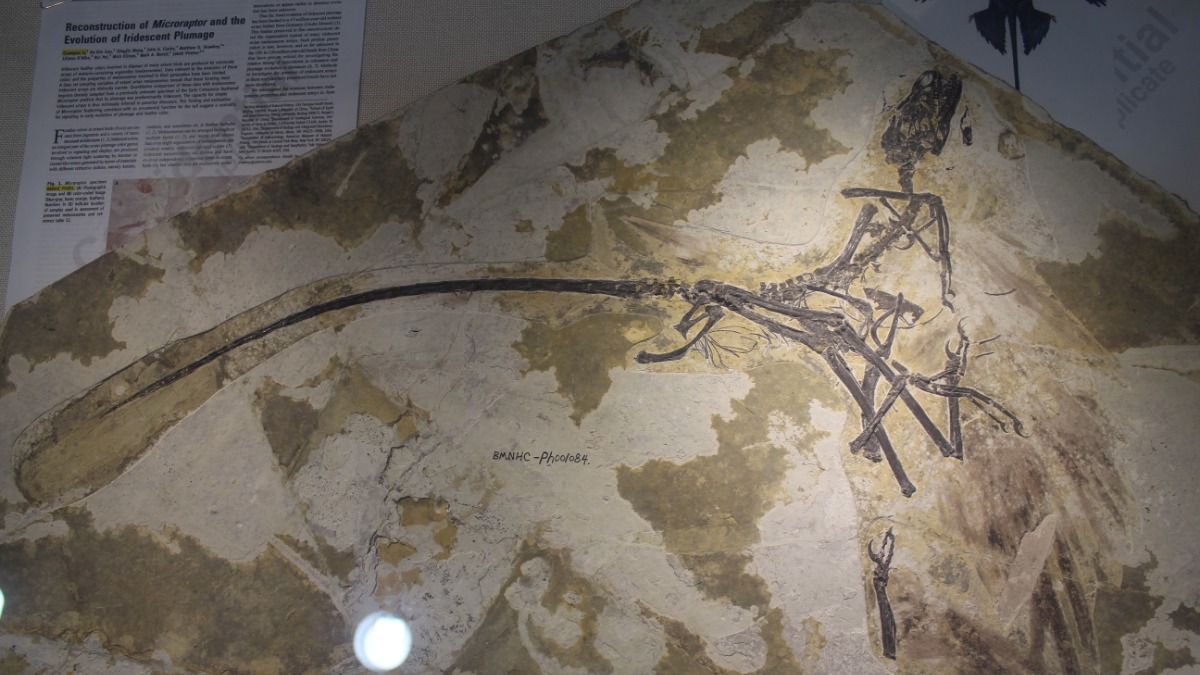
Paleontologists just dropped a discovery that rewrites the rulebook on ancient predators. Meet Jian changmaensis, a newly identified four-winged dinosaur that ruled the treetops 120 million years ago and likely turned the canopy into a no-fly zone for early birds. According to CNN, this gliding hunter, unearthed in northwestern China’s Changma Basin, is the latest addition to the microraptor family.
Microraptors are feathered dinosaurs that look more like a cross between a bird and a flying squirrel than the terrifying velociraptors from Jurassic Park. The fossil, described in a new study published in Annals of Carnegie Museum, marks the first definitive microraptor specimen found outside northeastern China, expanding both the species’ known range and its timeline. It’s also the youngest microraptor fossil on record, proving these creatures stuck around longer than scientists thought.
Jian is special because it’s a rare 3D-preserved fossil, giving researchers an unprecedented look at the dinosaur’s shoulder and forelimb structure. Most microraptor fossils are crushed flat, but this one kept its shape, offering fresh clues about how these creatures glided between trees.
If you’re imagining a tiny, harmless bird, think again
Jian changmaensis was likely the size of a barn owl, with feathers covering not just its arms but also its legs, giving it the appearance of four wings. That’s right, four wings. Lamanna described it as “an extraordinarily birdlike dinosaur that could take to the air to some degree,” but don’t let the feathers fool you. This was a predator, and its menu probably included the ancient birds that shared its habitat.
The discovery team, led by Dr. Matt Lamanna of the Carnegie Museum of Natural History, named the species after Jian, a one-winged bird from Chinese mythology, and the Changma Basin where it was found. The Basin is famous for its bird fossils, with over a hundred specimens recovered by Lamanna’s team since 2004. But until now, no one knew what was hunting them. Jian changes that.
Lamanna suspects microraptors evolved to dominate the treetops to avoid larger ground-based predators, turning the canopy into their own personal hunting ground. Evidence from other microraptor fossils, including one found with bird bones in its stomach, backs up the idea that these dinosaurs were snatching their meals mid-air.
The fossil’s shoulder structure is the real smoking gun here
A distinctive hole called the supracoracoid fenestra nearly splits the bone in half, a feature unique to microraptors. No other creature has it, and researchers are still puzzled by its purpose. Lamanna thinks it might be tied to flight, especially since Jian’s shoulder bone is unusually long. “It could have something to do with gliding or something about animals that are on the line to birds changing their shoulder structure to become more suited to flight effectively,” he said.
Steve Brusatte, a paleontologist at the University of Edinburgh who wasn’t involved in the study, called the discovery “neat,” noting that Jian sits right on the evolutionary line between dinosaurs and true birds. “This is a new fossil of those dinosaurs that were basically on the cusp of becoming true birds,” he said. The find also hints at the diversity of microraptors, which ranged from crow-sized to barn owl-sized, with some possibly growing even larger.
So why haven’t more microraptors been found in the Changma Basin?
Lamanna has a theory. “If you could take a time machine back 120 million years ago, you’d be on the shore of a vast lake with vegetation surrounding it,” he said. “It stands to reason that maybe if you’re looking in a lake, you might find the animals that are living there more than you would find the animals that are living around the margins.”
In other words, Jian and its kin might have been rare visitors to the lake’s edge, while birds were the main residents. The discovery also raises questions about the origins of flight. Microraptors like Jian blur the line between dinosaurs and birds, showing how flight might have evolved in stages.
T. Alexander Dececchi, a paleontologist at Dakota State University, pointed out that the fossil’s 3D preservation is a goldmine for studying wing evolution. “It also expands the geographic range and helps show the diversity in anatomy of this group,” he said, “all of which is important in determining where, when and who among them could use aerial locomotion.”
Next up, Lamanna’s team plans to scan Jian’s wing to uncover more secrets about its gliding abilities. For fans of prehistoric oddities, this is the kind of discovery that makes you wish time machines were real. A four-winged predator lurking in the trees, picking off birds like a feathered assassin? That’s another Jurassic Park-like blockbuster waiting to happen.
(Featured image: Jonathan Chen)
Have a tip we should know? [email protected]
Follow The Mary Sue:
