


Boston Woman Ready to Spend $5K+ at Cartier After a Career Win. She Allegedly Gets Fat Shamed by the Salesman: ‘The Audacity’
Fat shaming in a jewelry store?
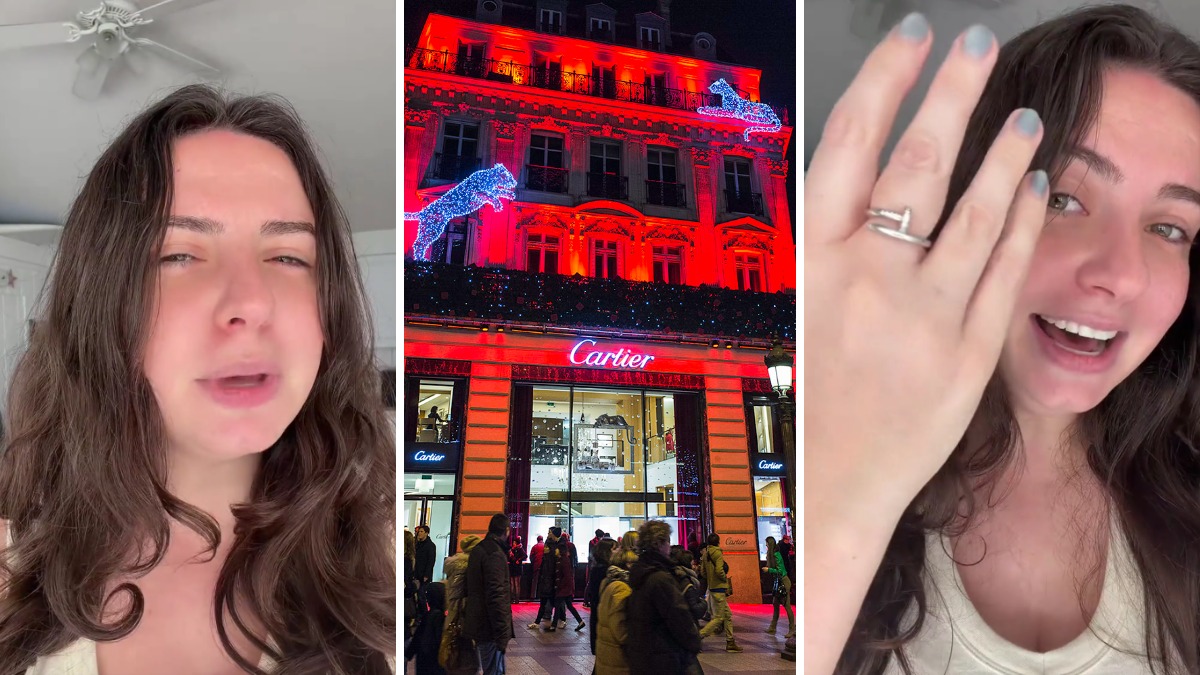
A Boston woman is speaking out after she says her mother was fat-shamed by a Cartier salesman while trying to spend over $5,000 on jewelry to celebrate a major career milestone. The story, shared by Mollz, @mollzfahdays on TikTok, in a viral video, has reignited conversations about body shaming in luxury spaces and how quickly harmful language spreads from social media into real life.
The incident happened in December 2022 at Cartier’s Newbury Street location in Boston, but Mollz says the experience was so upsetting that she’s still talking about it. She explains that her mother had just closed a major business deal and wanted to mark the occasion with a special purchase. The plan was to buy matching Juste un Clou rings in white gold with diamonds, just like they had done years earlier at Cartier’s San Juan store.
That trip, Mollz recalls, was a dream – champagne, a warm salesperson, and an experience that felt celebratory. This time, things went very differently. When they told the salesman exactly what they wanted, he looked at her mother’s hand and allegedly said, “Ooh, I don’t think we make it in your size.” Her mother, wearing a Cartier ring at the time, responded by asking if he could bring the ring in the same size as the one she was already wearing.
The salesman wasn’t done
Instead of checking, he allegedly offered to look in the men’s section to see if any of those sizes would fit. Mollz couldn’t believe his audacity. She suggested he bring the smallest bracelet size so her mother could at least try it on as a ring. The salesman left to check, and her mother turned to her and asked, “Am I literally being fat shamed at Cartier right now?” Mollz responded, “Yes, you’re being fat shamed at Cartier right now. Like this is crazy.”
Mollz said they considered leaving but decided to stay because they’d been looking forward to the moment. In the end, they got the rings, but the experience left a bad taste. Mollz wonders if the salesman was using some kind of reverse psychology tactic, like suggesting a customer can’t afford something to push them toward a bigger purchase. But fat-shaming in a jewelry store? That was a first.
The story has struck a nerve, especially as body-shaming language makes a comeback online and in real life. According to The Washington Post, phrases like “big back” and “fat Sunday” have gone mainstream on TikTok, where over half a million videos use the #bigback. What started as slang in African American Vernacular English and Caribbean English has morphed into an insult.
Radio host Charlamagne Tha God helped popularize the derogatory use in 2024 when he criticized a TikTok creator’s marriage content as “big-back behavior.” Now, it’s everywhere.
For some, the phrases are just jokes
Influencers like Ishani Paul, who has worked with brands like Valentino, make “fat Sunday” videos where friends try different restaurants and indulge in food. She calls it a lighthearted way to enjoy a weekend meal, though she admits she was hesitant at first. Annabelle Treadwell, another creator, says her “fat Sunday” videos are playful, not harmful. “It’s called ‘fat Sunday’ just because you’re almost pigging out,” she explains.
But not everyone sees it that way. Zahara Umar, a 19-year-old content creator and Spelman College student, argues that the trend equates fatness with a lack of control. “Being fat doesn’t mean that you don’t care about yourself, you have no self-control, or you eat super bad, unhealthy food,” she says. She’s noticed more criticism of bigger bodies online, where creators post “What I Eat in a Day” videos with extremely low-calorie meals and joke about “unhealthy” goal weights.
When Umar posted about the rise of fatphobia, she got hate comments – including from someone she knew personally. She has asked her friends to stop using phrases like “big back,” but says the language is so embedded in everyday speech that they still slip up.
It’s ironic, she notes, because the same friends who tell her not to call herself fat are the ones using the term as an insult. “We’re prioritizing collectively to be thinner,” she says. “We’re using language like this because people are thinking all the time, ‘Oh my gosh, I need to be thinner, I need to be thinner.’ So when they eat a lot, they’re thinking, ‘I really don’t want to be fat.’”
The shift in language isn’t just happening online
Cindy Noir, a 30-year-old substitute teacher in Atlanta, says she heard middle school students throwing “big back” around like it was nothing. Kids called themselves the phrase for eating lunch or avoided picking up pencils off the floor for fear of being mocked.
Fights broke out in hallways over the joke, while students also seemed self-conscious, constantly adjusting their outfits to avoid drawing attention to their bodies. “Fatphobia never went away,” Noir says. “But people who were fatphobic and quiet now feel emboldened to be loud.”
The rise of weight-loss drugs has also played a role, narrowing the range of acceptable body types and making fat-shaming language feel more acceptable. For people in bigger bodies, the resurgence of these phrases is a reminder of how quickly old biases resurface. Many already avoid in-person shopping to escape judgment. The fact that it happened at a luxury store like Cartier makes it even worse.
Mollz’s video ends with a question: “What sort of tactic was he using here?” But the real question might be why, in 2026, fat-shaming still feels like an acceptable sales strategy – or an acceptable joke. Whether it’s a Cartier salesman or a TikTok trend, the message is the same: some bodies are still seen as less worthy of respect.
(Featured images: Mollz @mollzfahdays on TikTok and Jakub Szypulka)
Have a tip we should know? [email protected]
Follow The Mary Sue:
