


Over 160 Troops Are Sidelined by a Flu Outbreak at Lackland Air Force Base, Fueling a Fierce Debate Over the Pentagon’s New Voluntary Vaccine Policy
Science versus politics.
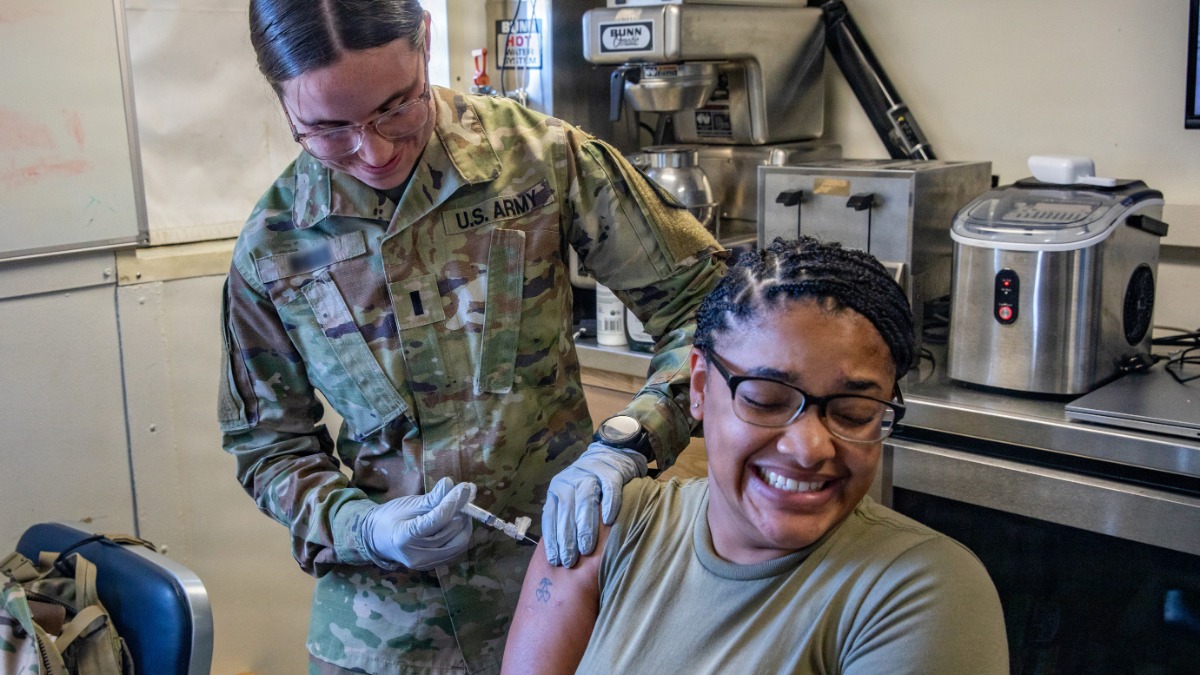
Over 160 troops at Lackland Air Force Base in Texas have been sidelined by the flu, just months after the Pentagon scrapped its mandatory flu vaccine policy. The decision to make flu shots voluntary for service members has sparked a heated debate over military readiness and public health, with critics arguing the move has left recruits vulnerable at one of the largest basic training hubs in the country.
According to The Hill, the outbreak hit the 37th Training Wing, where more than 36,000 recruits cycle through basic military training each year. Air Force officials confirmed the situation is being closely managed, with symptomatic trainees isolated and treated with antiviral medications like Tamiflu. Public health teams are also monitoring those who had close contact with sick individuals, but the number of cases has already climbed past 160. Some reports suggest it could be over 200.
This isn’t just a numbers game. Keon McDaniel, a trainee in his sixth week of basic training, died earlier this week at Brooke Army Medical Center after experiencing a medical emergency. The cause is still under investigation, and the Air Force has launched a “comprehensive” medical review, but the timing has raised uncomfortable questions.
The coincidence is hard to ignore
The policy shift that led to this came in April, when Defense Secretary Pete Hegseth announced the end of mandatory flu vaccines for troops. His reasoning? Medical autonomy and religious freedom. In a video announcement, he called the previous mandate “absurd, overreaching” and claimed it forced service members to choose between their conscience and their country.
“Your body, your faith are not negotiable,” he said. The new rule made flu shots voluntary for all active-duty, reserve, and civilian personnel, though exemptions could be granted on a case-by-case basis. Not everyone was on board. Sen. Roger Wicker, chair of the Senate Armed Services Committee, called the decision a “mistake” and pointed out that flu vaccines have a long track record of safety.
“When I was on active duty and a reservist, I dutifully took my flu shot every year. And as a whole, it made for a healthier armed forces,” he said. When asked if ending the mandate would hurt military readiness, he admitted it would, “marginally.”
Rep. Joaquin Castro, whose district includes Lackland, didn’t mince words. “After Secretary Hegseth scrapped the military’s flu vaccine mandate, it was only a matter of time before an outbreak occurred,” he said in a statement. “It was a reckless decision that put troops in harm’s way and undermined our military readiness.”
Castro has since demanded a full accounting of the outbreak and an investigation into McDaniel’s death, framing the issue as one of science versus politics. “For the wellbeing of our servicemembers and community, public health policies must be guided by science, not politics,” he said.
The Pentagon seems to be sticking to its guns
While the flu shot is now voluntary across the board, Hegseth has granted exemptions to the policy for the Army, Navy, Air Force, NSA, and Defense Health Agency. These exemptions, according to Pentagon spokesperson Sean Parnell, are based on “thorough risk assessments” and are meant to “maximize operational readiness, lethality, and force generation.”
In other words, if a branch decides it needs mandatory vaccines to keep its troops healthy, it can ask for permission. That’s exactly what the Air Force did at Lackland.
After the outbreak, the base requested and received an exemption to mandate flu vaccines locally. It’s a small victory for public health, but it doesn’t erase the fact that the policy change left a gaping hole in prevention efforts. The base has since started vaccinating trainees, but the damage is already done.
This isn’t the first time vaccine requirements have been a political football
The Pentagon has spent the last year walking back some of the strictest COVID-19 vaccine mandates, offering back pay and reenlistment opportunities to thousands of service members who were discharged for refusing the shot. More than 8,000 troops were separated from the military over the mandate, and earlier this year, an executive order paved the way for them to return.
The flu vaccine rollback feels like a natural extension of that shift, but the consequences are playing out in real time at Lackland. The argument for voluntary vaccines usually boils down to personal freedom, but in a military setting, that freedom comes with trade-offs. Basic training is a petri dish for illness.
Recruits live in close quarters, share facilities, and have limited ability to isolate when sick. Flu vaccines don’t just protect the individual – they protect the entire unit. When you’re training the next generation of warfighters, every sick day is a day lost, and every outbreak is a distraction from the mission.
Hegseth’s policy change was framed as a win for individual rights, but the Lackland outbreak is a stark reminder that those rights don’t exist in a vacuum. The military isn’t a democracy. It’s a high-stakes environment where readiness is everything, and public health decisions can’t afford to be ideological. If the goal is to keep troops healthy and missions on track, then science, not politics, should be calling the shots.
(Featured image: U.S. Army photo by Pfc. Tyrin Saunders)
Have a tip we should know? [email protected]
Follow The Mary Sue:
