


Netanyahu Insists Israel Isn’t as Isolated as Vance Suggests, Dropping a Hint About the Secret Deals Keeping His Nation Afloat
A warning?
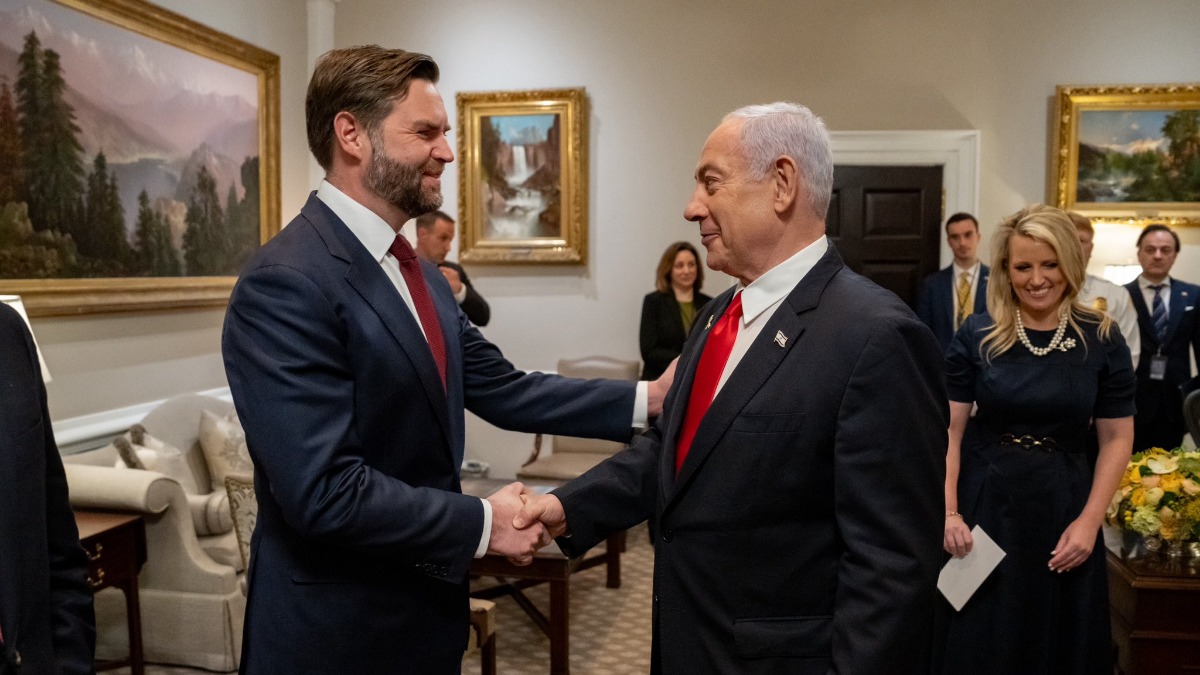
Benjamin Netanyahu just pushed back hard against claims that Israel is isolated on the global stage, dropping a few hints about the secret deals and alliances keeping his nation afloat. According to The Hill, in an interview with Fox News, the Israeli prime minister brushed off Vice President J.D. Vance’s warning about criticizing the Trump administration’s peace deal with Iran, insisting Israel has “many, many friends” who are quietly lining up for military and tech partnerships.
Vance had suggested recently that Israeli officials should think twice before attacking their “only powerful ally,” but Netanyahu wasn’t having it. “Many leaders call me up and say, ‘Hey look, I’ve got this problem with public opinion, but I want you to know, we respect you and can we make some deals? And can you teach us some of the things that your military does? And can we have some of your AI and cyber expertise?'” he said.
It’s a flex that doubles as a reality check – Israel isn’t just surviving on U.S. support, it’s thriving as a tech and military powerhouse. “Israel is the No. 2 country in cyber in the world, and our technology is – it’s so good,” Netanyahu added, almost sounding like he was pitching investors.
The Israeli PM had more to say
Netanyahu made it clear he respects Vance but isn’t about to agree with everything the vice president says. “Donald Trump is a great friend, the greatest friend we’ve ever had in the White House, and I stand by that completely,” he said, walking a careful line between loyalty and independence.
Then came the curveball: “We have other friends like the small country of India,” followed by a vague but telling remark about “this Facebook thing” that had him laughing. “I’m just flooded by the overwhelming support there,” he said, leaving it up to listeners to connect the dots. If you’ve ever scrolled through pro-Israel comments on social media, you know exactly what he’s talking about.
The tension between Netanyahu and the Trump administration isn’t new, but it’s getting harder to ignore. Clashes flared after the U.S. and Iran signed a memorandum of understanding, with Trump reportedly cursing Netanyahu for continuing strikes on Lebanon, which he said threatened the deal. Netanyahu, ever the pragmatist, fired back that Israel’s security comes first, even if it means disagreeing with Trump.
“We don’t always see eye to eye,” he admitted, but he framed it as a minor hiccup between allies. Iran, meanwhile, has made it clear that a ceasefire between Israel and Lebanon is non-negotiable for the MOU to hold, putting Netanyahu in a tight spot. His response? “We have no restrictions” when it comes to targeting Hezbollah, a statement that’s done little to ease tensions.
Netanyahu’s latest media blitz is a strategic reminder that Israel has options
Al Jazeera reports that on July 6, he doubled down on the strength of the U.S.-Israel alliance, calling America “a tremendous force for good” and insisting that without it, “there won’t be any democracy in the world, and there won’t be any freedom in the world.” He also took aim at Turkiye, warning that giving Ankara F-35 jets would “upset the power balance in the Middle East,” a balance he says is “ultimately guaranteed by Israeli air superiority.”
It’s a not-so-subtle dig at Turkiye’s President Recep Tayyip Erdogan, who has been vocal about Israel’s actions in Gaza and warned against undermining the U.S.-Iran deal. The prime minister’s messaging is clear: Israel isn’t just a client state relying on U.S. goodwill. It’s a global player with its own network of alliances, from cybersecurity partnerships to military collaborations.
His mention of India is a nod to the growing defense ties between the two nations, including arms deals and intelligence sharing. And his laugh about “this Facebook thing” suggests a coordinated effort to shape public opinion, whether through official channels or grassroots support.
If you’ve ever wondered how Israel maintains its influence despite global criticism, this is your answer. It’s not just about diplomacy. It’s about leveraging every tool at its disposal, from cutting-edge tech to social media savvy.
His confidence doesn’t erase the very real strains in the U.S.-Israel relationship
The Trump administration’s peace deal with Iran has put Netanyahu in an awkward position, forcing him to balance domestic security concerns with international pressure. His refusal to back down on Lebanon, even as civilian casualties mount, shows just how high the stakes are.
A recent Israeli strike in southern Lebanon killed four civilians, including a teacher, a grim reminder of the human cost of this geopolitical chess game. Netanyahu’s response? “We’re the model ally that fought next to your great soldiers,” a line clearly aimed at Trump’s base but one that rings hollow for those caught in the crossfire.
The prime minister’s upcoming visit to the U.S. will be closely watched, especially as Trump prepares to meet with Erdogan at a NATO summit. Netanyahu’s lobbying against F-35 sales to Turkiye isn’t just about military hardware. It’s about sending a message that Israel won’t tolerate rivals gaining an edge.
Erdogan, for his part, has warned that Israel’s “war-addicted” government must not be allowed to “drown our geography in the smell of gunpowder and blood again.” It’s a stark contrast to Netanyahu’s portrayal of Israel as a stabilizing force, and it underscores the growing divide between Israel and its critics in the region.
(Featured image: Office of the Vice President of the United States)
Have a tip we should know? [email protected]
Follow The Mary Sue:
