


YouTube Grifter Shows His Sexism In a ‘Daredevil: Born Again’ “Critique”
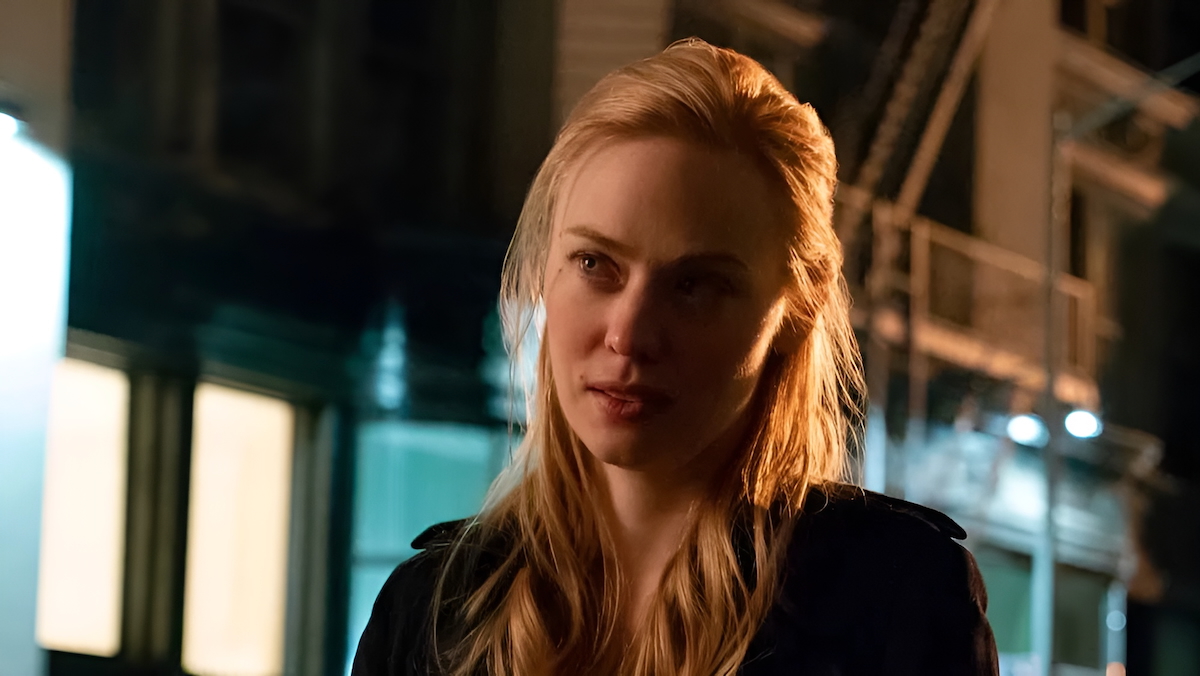
There are genuine critiques of Daredevil: Born Again season 2, and then there is whatever Gary Buechler — better known to his audience as Nerdrotic — keeps mistaking for one.
The self-described former comic book retailer has built a career out of selling outrage to people who feel personally injured by the existence of diverse characters in media. People who have been drip-fed culture-war content long enough to assume that just because the demographics of a cast have shifted slightly, society is in danger of total collapse, and that the appropriate response is to spend an hour a day decrying a TV show on YouTube, lest it contribute to the slow fall of Western civilization.
In a new podcast episode that ran for almost 2 hours, Nerdrotic talked about how Daredevil: Born Again is emblematic of everything that’s wrong with Hollywood and Disney these days. But the pièce de résistance was a tweet on X saying that the show’s season 2 finale wnoas “comically bad” with a clip attached of Deborah Ann Woll’s Karen Page throwing hands an AVTF officer.
As one user aptly put it, the finale was 60 minutes long, but Nerdrotic just “chose to hyper focus on one 11-second scene.”
Not that the scene in question proves anything. The thing Buechler keeps refusing to say out loud is that the women of Born Again were the stars of the hour. Heather Glenn, BB Urich, and Karen Page carried the season’s most charged arcs, and Murdock’s story moves because theirs do. For some people, that’s apparently a dealbreaker in their make-believe superhero show about a blind lawyer who beats people up at night.
Criticism that’s not criticism
To understand why this matters beyond yet another reply-guy meltdown, it helps to know who Buechler is. He runs the Nerdrotic YouTube channel out of San Antonio, Texas, where he relocated from California after, by his own telling in a Fandom Pulse interview, the state’s “regime” became too much for him.
He has a memoir called Waiting for Nerdrotic, a podcast network with co-hosts who share his grievances, and a business model that depends on convincing his audience that Hollywood is being ruined by women, by people of color, and by anyone insufficiently devoted to the idea that pop culture peaked sometime around 2008.
The reason I call this a grift, and not just bad taste, is that Buechler’s whole model depends on the kind of bias that leaves no room for nuance.
Born Again season 2, much like many other movies and TV shows these days, is genuinely flawed in places. In fact, there’s a real conversation to be had about formulaic storytelling, budget-driven episode counts, or how the streaming economy is reshaping storytelling, but we can’t have that conversation as long as the loudest voices in the room are peddling sexism and similar rhetoric as media criticism.
The economics of social media content reward exactly this kind of work. Algorithms rewards engagement. People may not tune in to a 2-hour podcast about pacing, but they will definitely want to hear how a specific group is ruining showbiz.
Wherever did film criticism go?
This used to be a job people took seriously. Back then, it was someone’s job to watch the thing and draw from their knowledge of film theory and comparative analysis to write a few hundred words for a magazine. They’d then get paid a modest sum, and go home. A job well done and an audience well informed. At least partially, or when it worked.
Pauline Kael fought with Andrew Sarris in print for decades and the fight produced ideas about what movies were for. Roger Ebert gave thumbs up and thumbs down on television and somehow this did not corrode the discourse, because the discourse had bones underneath it, meaning editors, fact-checkers, a working theory of what criticism was supposed to do.
Then it all changed. Print collapsed, staff critics were thinned, and outlets began churning out algorithm-friendly content. The vacuum was filled by a new species; the man with a webcam and a grievance. Around the late 2010s, a whole subculture coalesced around the idea that mainstream entertainment had been captured by some shadowy cabal and only a vigilant amateur with a Patreon could see it clearly.
The genre has its own conventions now. The thumbnail with the angry red arrow. The collaborative livestream where four people with identical politics agree with each other for ninety minutes and call it discourse. We didn’t just lose professionalism in the process. We lost the standard, creating a feedback loop with an industry that became increasingly reactionary to what we had to say online. If enough people want diversity, then Hollywood will pick diversity. If enough people want the opposite, well, the producers are just going to make sure that they base their entire project around what the algorithm says is selling that week.
Lastly, it was the sense that engaging with art might require some humility, that the critic or the audience or even the creator might be wrong. That sitting with discomfort is part of how we human beings learn anything at all.
Now, the work is always wrong, the “Critical Drinker” is always right, the audience is being lied to, and the only people who can be trusted are a Scottish alcoholic, an ex-felon, and whoever they had on as a guest last Tuesday — you know, the people monetizing the panic.
(featured image: Disney+)
Have a tip we should know? [email protected]
Follow The Mary Sue:
