


From Bomb Threats Against Messi to a Ronaldo Hotel Breach, a Secret Dossier Reveals How Close the World Cup Came to Being a Catastrophe
Life, death and football.
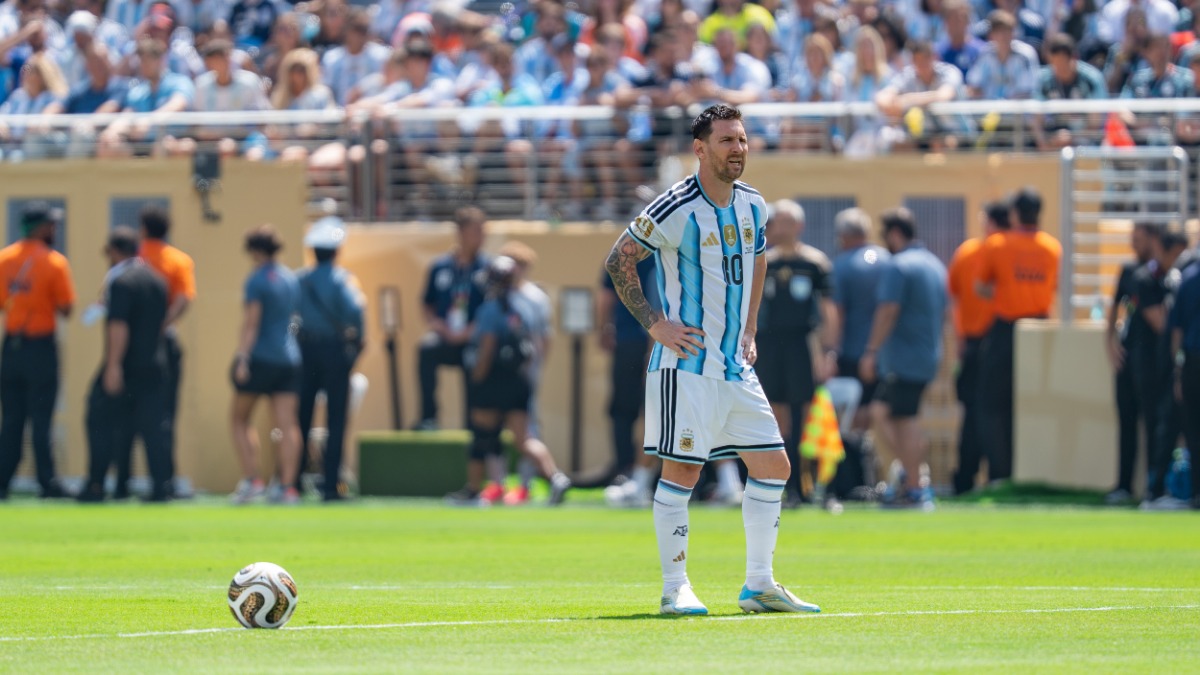
From bomb threats targeting Lionel Messi to a stalker breaching Cristiano Ronaldo’s hotel, a leaked police dossier has exposed just how close the 2026 FIFA World Cup came to disaster. According to The Sun, the chilling document, obtained by Informacion.es, reveals a wave of terror plots, death threats, and security breaches that turned the tournament into a high-stakes game of cat-and-mouse with extremists, overzealous fans, and even disgruntled referees.
The most alarming threats centered on Argentina’s national team, with Messi bearing the brunt. Before Argentina’s match against Jordan, a man called Dallas airport and declared he and two accomplices would storm the stadium armed with “homemade bombs and an AR-15.” The caller threatened police, players and singled out Messi, vowing to make the superstar his primary target.
During Argentina’s game against Egypt, another suspected terrorist posted online, “I’m about to enter Atlanta’s stadium and blow up Messi with four bombs strapped to my body.” Minutes later, a separate caller claimed to have planted “three bombs” in trash cans across the stands, triggering a full-scale evacuation and a sweep by bomb squads and sniffer dogs. The double threat left officials scrambling, and while no explosives were found, the psychological toll was undeniable.
Messi wasn’t the only global icon in the crosshairs
Cristiano Ronaldo’s World Cup experience was marred by two separate security incidents. A FIFA employee sounded the alarm after a “suspicious man” began probing for details about Ronaldo’s accommodation. Then, in a bizarre breach, a superfan managed to infiltrate the Portuguese star’s hotel and attempted to share an elevator with him. When police intervened, the man insisted he only wanted a selfie.
Referees also found themselves in the line of fire. François Letexier, the official who oversaw the controversial Argentina-Egypt match, received over 6,000 “threatening messages” on his personal WhatsApp. Egyptian fans, furious over his decisions, didn’t stop there. Video assistant referee Willy Delajod was bombarded with death threats, turning what should have been a neutral role into a high-risk assignment.
The abuse wasn’t limited to officials, either. After France’s victory over Paraguay, fans burned an effigy labeled “Mbappe,” after Kylian Mbappe. The disturbing visual protest underscored the volatile mix of passion and violence surrounding the tournament.
The threats extended beyond the pitch
Norway’s Alexander Sorloth and his wife received death threats after he failed to set up Erling Haaland for a goal in their quarter-final loss to England. But no player’s ordeal captured the dark side of fandom quite like Colombia’s Jaminton Campaz. After missing a crucial chance in extra time during Colombia’s penalty shootout defeat to Switzerland, Campaz became the target of a vicious online campaign.
The Colombian Football Federation (FCF) condemned the threats in no uncertain terms, demanding legal action against those responsible. Their statement was a stark reminder of the country’s painful history with football-related violence.
According to The Athletic, in 1994, defender Andrés Escobar was murdered after scoring an own goal in a World Cup match, a tragedy that still looms large over Colombian football. The FCF’s plea for unity and respect felt like a necessary but grim echo of the past, a call to protect players from the same fate that befell Escobar.
Colombia’s exit from the tournament was particularly heartbreaking. They topped their group, went unbeaten in normal time, and even knocked out Ghana with a first-half goal from John Arias. Their penalty shootout loss to Switzerland denied them a quarter-final clash with Argentina, a match that could have rewritten their World Cup story.
Instead, Campaz was forced to stay behind while the rest of the team returned home, a precautionary measure that spoke volumes about the real dangers players face. The FCF’s statement didn’t mince words, “No sportsman, nor any member of their camp, should be subjected to intimidation for representing their country in a sporting context.”
The England team’s experience offered a glimpse into the extreme safety measures taken
Their media center became the scene of a security scare when a man wielding a wrench wandered in, shouting incoherently. While the incident was quickly contained, it underscored the vulnerabilities even in the most fortified environments. England’s base in Prairie Village, Kansas, was transformed into a “virtual fortress,” complete with concrete barriers, sniper screens, a no-fly zone to prevent drone attacks, and a command center monitoring every angle of the 54-room hotel.
Armed police, private security, and a three-ring security perimeter ensured the squad remained isolated from potential threats. It’s a level of protection that feels more akin to a presidential visit than a football tournament, but given the dossier’s revelations, it’s clear why officials weren’t taking any risks.
South Korea’s national team also found themselves under heavy police protection after their group-stage exit. The backlash against exiled coach Hong Myung-bo was so intense that authorities launched an investigation into his hiring process. The public anger was a stark reminder that in some corners of the world, football isn’t just a game. It’s a matter of national pride, and failure comes with consequences.
What’s most unsettling about the leaked dossier isn’t just the scale of the threats, but how close some of them came to becoming reality. The bomb threats in Atlanta, the hotel breach involving Ronaldo, the effigy burning – these were real, tangible dangers that forced officials to act. The fact that no major incident occurred is a testament to the security measures in place.
(Featured image: Bryan Berlin)
Have a tip we should know? [email protected]
Follow The Mary Sue:
