


Florida woman says she paid $250 for a 100% silk dress, then she noticed the tag and realized why the store has strict policies: ‘I feel scammed’
She says the store would not take it back, and her takeaway is 'always check the tags before leaving the store.'
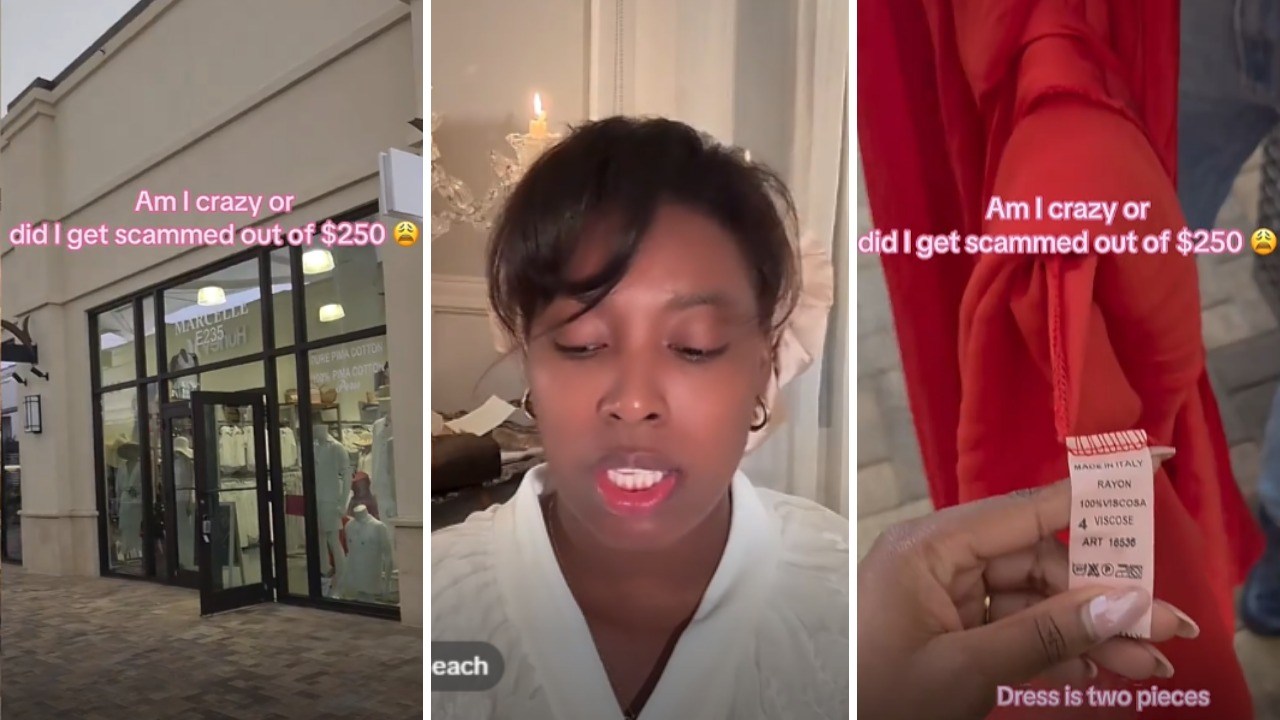
A Florida woman says she paid $250 for a red dress that an employee described as 100% silk, only to find later that the tag listed viscose. She shares her account in a TikTok video, where she says she felt “scammed” after the store declined to help with a return.
In the video, she explains that she needed a red dress for an event the next day. At an outlet mall in Palm Beach Lakes shortly before closing, a dress she tried on was priced at $250. She states that she was about to put the dress back until the employee told her it was 100% silk, a claim she says appears on signs throughout the store. The fabric made the price seem reasonable, she adds, so she bought it.
At home, she says, she tried the dress on for her sisters over FaceTime and checked the tag, which listed 100% viscose. She felt deceived and decided to return it, buying a different dress at a consignment shop first. When she went back to the outlet mall, she says, an employee pointed to a sign stating that the store accepts no returns. She told the employee she felt misled and asked to speak with a manager. By her account, the employee stated that the manager was not in and could not be reached by phone.
She says the employee offered only an exchange
The employee then offered an exchange at most, she says, while noting that the lack of an original receipt was a problem. The employee printed a copy of her receipt, she adds. She then decided to accept the exchange and went back in.
Back inside, she says she overheard the employee on the phone with a manager. She alleges that the manager told the employee not to speak with her and to pretend to hang up. The employee then told her the store would not deal with her at all and asked for the receipt copy back, which she refused to return.
As they were leaving, she says, a manager asked what had happened. After seeing the tag, the manager stated that nothing could be done without the original receipt. She says the store would review camera footage and contact her on Sunday or Monday. All details are based on her account in the video, which presents only her version of events. The video does not include a response from the store, and the store’s side has not been heard.
Silk and viscose are different fibers. Silk is a natural fiber taken from the silkworm cocoon, while viscose is chemically extracted from wood pulp and is considered semi-synthetic, according to Fabriclore. It adds that silk is made of fibroin protein, which makes it more durable than viscose.
Federal labeling rules enforced by the Federal Trade Commission require most clothing to carry a label listing its fiber content and country of origin. The label must also identify the business responsible for marketing or handling the item. Care labels are covered by a separate rule.
Some stores enforce strict return policies to prevent retail fraud involving returned used or stolen goods, according to a Michigan consumer protection alert. It cites National Retail Federation figures showing that over $11 billion of the $219 billion in merchandise returned each year is fraudulent. The alert adds that a store may be able to locate a lost receipt in its system if the purchase was made by credit card.
A missing receipt can leave shoppers stuck on a return, as a Best Buy tripod return dispute showed. Best Buy’s standard return window is 15 days for most products. The Textile Fiber Products Identification Act deals with mandatory content disclosure in the labeling, invoicing and advertising of textile fiber products. Under the act, misbranding is unlawful under the FTC Act, as is falsely or deceptively invoicing or advertising those products.
Disputes over outlet store return rules have surfaced before, including a Coach outlet return refusal. In that case, the customer claims she was told she could not return an item as a reseller. Florida’s Deceptive and Unfair Trade Practices Act covers deceptive practices in trade. It declares unfair methods of competition, unconscionable acts and unfair or deceptive acts unlawful. A separate provision directs that interpretations by the FTC and federal courts be given great weight when the law is applied.
Florida also has a statute on return policies. It requires a retail sales establishment that offers no cash refund, credit refund or exchange to post a sign stating so at the point of sale. According to the Florida Senate, a store that fails to post that sign is treated as having a refund or exchange policy. It must present that policy in writing when a customer asks.
Have a tip we should know? [email protected]
Follow The Mary Sue:
