


Elon Musk’s AI ‘Odyssey’ is a soulless answer to a question nobody asked
Just stick to making flying cars Elon.
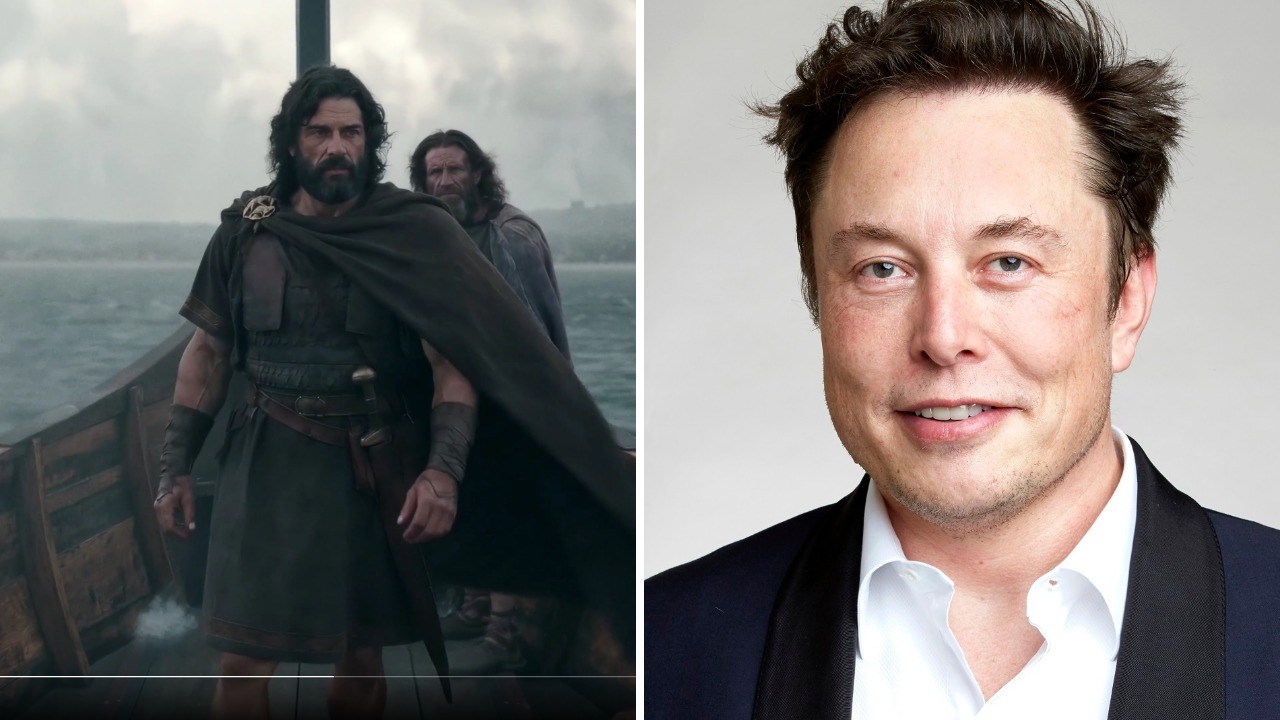
A few months ago, the world’s richest man, Elon Musk, threatened to release something nobody asked for, and no, it wasn’t a new Cybertruck. In the wake of Christopher Nolan’s The Odyssey, Musk vowed to bring us his very own “historically accurate” version of the Greek epic using the power of AI.
Of course, to call it “historically accurate” is a bit of a stretch, considering it was a fictional poem written by Homer, but I’m just using the words Musk himself used when he pitched the idea back in July.
At the time, very few of us probably believed that he would actually follow through on his wild idea, but here we are: it’s been three months, and we’re finally getting a peek at what Musk and Grok have been cooking up in the form of a seven-minute short. And we have some notes.
The AI-generated film looks bizarre
Let’s start with an easy one: Musk’s use of AI. While the idea of computers being able to generate entire movies is a terrifying thought, thankfully, we’re not quite there yet. Grok’s interpretation lacks any real flair; the colors are flat, the dialogue awkward, and Penelope’s delivery of “my love you must go” feels completely devoid of emotion despite the AI-generated music trying its best to impress upon us the weight of this moment.
The animation itself is filled with flaws. The way the rain falls defies the laws of physics, and sometimes it isn’t raining at all, despite what’s being shown supposedly taking place at the same time, in the same place. About halfway through, you can see the waves somehow appearing inside the boat despite there being nowhere for the water to get in. Characters also appear visibly different shot-to-shot within the same scene. Is all of this a bit nitpicky? Yes. But Musk set a high expectation which he has failed to meet.
Then there is the ethical argument against this bizarre adaptation. AI is not well-liked, and with good reason; not only does it pose a threat to human-made art by essentially stealing the work of others to generate this slop, but it also poses an environmental threat too. I dread to think how much water was wasted in the creation of just these seven minutes alone. AI data centers use a hell of a lot of the stuff, according to CBS News, and stuff like this only makes it more appealing to people who think like Musk.
Overall, it’s soulless, gross to look at, and downright uncanny whenever one of those so-called “actors” opens their mouth. Hardly what I had in mind when I imagined a perfect adaptation of The Odyssey.
Elon Musk doesn’t know the meaning of ‘historically accurate’
One of the biggest qualms the Tesla CEO had with Nolan’s vision was the casting. All the way back at the start of this year, Musk criticized what he labeled “woke” casting choices, particularly Lupita Nyong’o as Helen of Troy. “Chris Nolan has lost his integrity,” he whined as he publicly agreed with far-right commentators like Matt Walsh.
So how did Musk remedy this in his version? Well, for one, the cast are all white, but would I go as far as to say historically accurate? Not exactly. Sticking exclusively to white people doesn’t necessarily make Musk’s version “historically accurate.” According to Greece-is.com, ancient Greeks were thought to look much like modern Greeks do today, that is, the typical dark hair, brown eyes, and olive skin.
Okay, to be fair to Elon, most of the characters do fit that description; actually, all of them do. There’s not a single Black character in the whole short. This in itself isn’t exactly accurate because black people existed in Ancient Greece, so a little representation wouldn’t have hurt the accuracy; in fact, it might have helped. But this is Elon’s “anti-woke” version, made to appease his right-leaning fans.
Shall we mention the costumes too? Why not. The costumes aren’t quite what the Ancient Greeks would have worn, with tunics from the medieval period and even belt buckles being visible throughout, all things Ancient Greeks wouldn’t have worn.
And then there’s the fact that none of the characters speak in Ancient Greek; instead, they speak with an eloquent English accent. One character tells Penelope, “You have our word, Milady,” and it feels like dialogue ripped straight from Game of Thrones. I suspect this is because that’s the kind of media that Grok AI pulled from when it churned this Odyssey adaptation out.
The AI version just isn’t a very good adaptation of the material
But the casting and the acting aren’t the only issue with Musk’s Odyssey; another problem lies with fidelity to the source material. This has been advertised as an adaptation of The Odyssey, but, like Nolan’s film, much of this first part has taken parts of The Iliad instead. The Trojan War, which we see Odysseus prepare for, was from Homer’s other poem.
But then again, the Trojan War is relevant context that is kind of necessary for the story of The Odyssey, which is probably why Nolan’s version also takes its fair share of story elements from The Iliad too. Maybe that’s why it feels like one of the only good decisions made by Musk, or Grok, or whatever made this.
Ultimately, Elon Musk set out to use AI to give us what he believed would be a superior version of The Odyssey. He played into the culture war surrounding Christopher Nolan’s version, and claimed in an X post the director just “wants the awards.” At the time, he boasted that Grok would generate a “full-length movie of The Odyssey” before the year ends.
It seemed the tech billionaire was hoping to capitalize on the right-wing fury surrounding Nolan’s film by promising to use his AI to create the version fans wanted. The first part of Musk’s Odyssey serves both as a response to Nolan and a tech demo to show what AI can do. Unfortunately for Elon, I think it failed at both.
Musk’s AI-generated movie failed to give us something meaningful like Nolan’s version did. Creating art is as much about the process as it is the product; AI cuts out the process, leaving nothing but the product. Without putting the work into it, the art loses meaning and becomes what people today refer to as “slop.”
This is an opinion piece. The views expressed in this article are those of just the author.
Follow The Mary Sue:
