DHS hired thousands of new ICE officers to ramp up deportations. Then experts looked at their files: ‘They have no business having a gun’
Let loose on the streets.
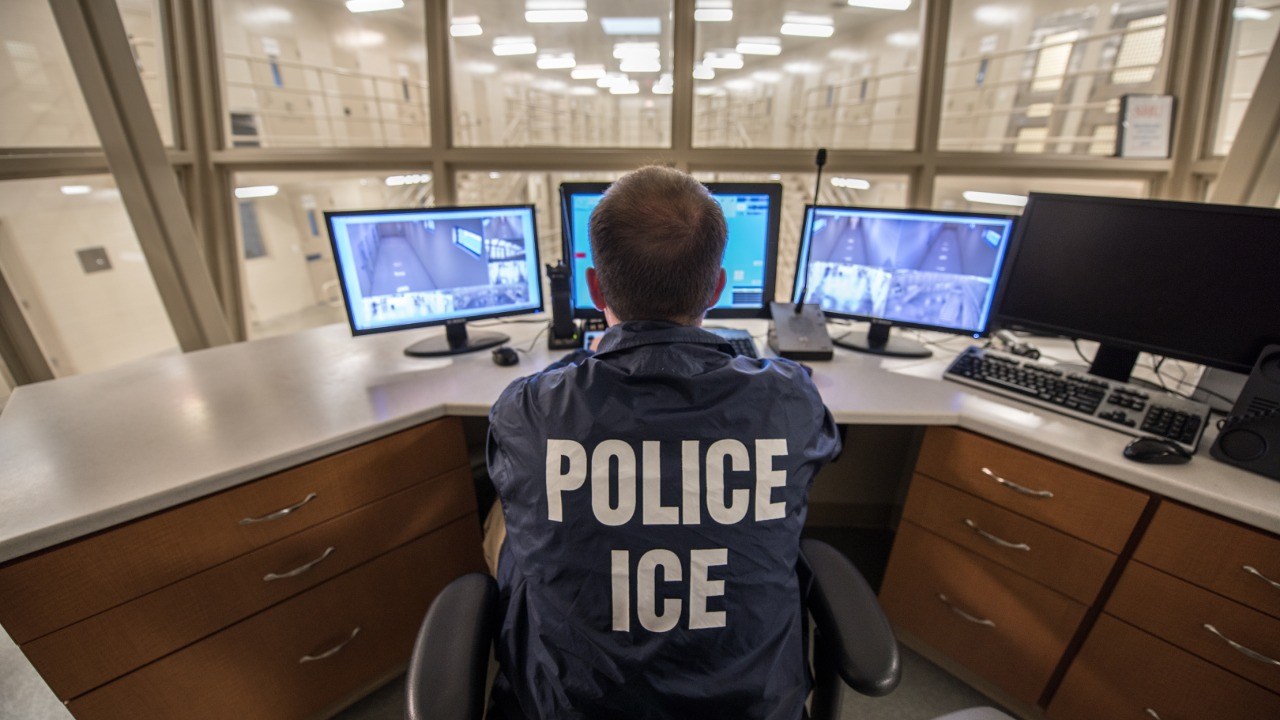
The Department of Homeland Security (DHS) has hired thousands of new U.S. Immigration and Customs Enforcement (ICE) officers to ramp up deportations, but a recent leak of internal files suggests many of these recruits have troubling backgrounds. According to The Washington Post, experts who reviewed these personnel files concluded that some of these individuals have no business having a gun.
This discovery comes after activists hacked a DHS database in late October and released information about thousands of workers. The data included about 1,500 ICE officers and agents hired since Donald Trump took office in 2025. The agency has been on a massive recruitment push, offering signing bonuses of up to $50,000 to attract people to defend the homeland. By January, the department reported hiring 12,000 new officers.
A review of about 300 of these files revealed at least 19 officers with histories involving misconduct allegations, criminal charges, or other employment red flags. The findings indicate that in at least six cases, the officers had been fired, decertified, or resigned under the threat of dismissal from previous law enforcement roles.
‘DHS should prioritize most qualified candidates, who pose the lowest risk’
John Roth, a former DHS inspector general, reviewed the cases and expressed concern over the hiring standards. He noted that while not every incident is disqualifying, the agency should prioritize the most qualified candidates who pose the lowest risk.
Roth told the Post, “This is a pretty bad list of conduct.” He added, “Absent some other kinds of facts that would exculpate some of these people, they have no business having a gun and a badge in the federal workforce.”
One concerning example involves JeJuan Jetter, a former Detroit police officer. Records show Jetter was involved in a fatal shooting of a teenage suspect in 2021. The incident resulted in a $2.5 million settlement with the family.
Jetter’s disciplinary history also includes a suspension for using a Taser on a handcuffed detainee and another for using profane language toward his child’s mother. He was also reprimanded for turning off his in-car camera at a scene. Despite this history, he was hired as an ICE deportation officer last year.
Another recruit, Dnae Reo Blow, was fired from a police department in Arkansas after a supervisor expressed concerns about his behavior. The supervisor noted that Blow showed unreasonable anger and worried about what might happen when he faced a civilian he felt had disrespected him. Another officer reported that Blow clenched his fists and threatened to do bad things during a confrontation. Blow later joined ICE in October 2025.
Social media and public records highlighted other recruits
Joseph Joffrion, a former Mississippi police sergeant, gained attention when he admitted under oath that he did not recall core rights protected by the First or Fourth Amendments. He resigned from his local department in late December 2025 and was working as an ICE deportation officer the following Monday. Similarly, Wojciech Czech, a former New York City detective, was hired by ICE after pleading guilty to petty larceny. He had been charged with grand larceny for stealing high-end champagne at a music festival.
The rapid pace of hiring appears to be a factor in these oversight failures. An ICE whistleblower warned the DHS Office of Inspector General in August 2025 that the agency was overwhelmed and hiring officers without checking fingerprints or identities.
Peter Mina, a former official in the DHS Office for Civil Rights and Civil Liberties, pointed out that rushing the process leads to avoidable mistakes. He stated, “When you have a hiring process like this – where it’s quick and you’re missing stuff, as we’ve seen – inevitably that results in hiring people that probably shouldn’t have been.”
DHS has defended its practices, stating that the ICE Office of Professional Responsibility applies proper vetting regulations. The department claims it is hiring the best of the best, though it acknowledged that some officers receive temporary status while background checks remain pending. The agency declined to confirm the identities of the officers named in the hack or comment on specific allegations of past misconduct.
The consequences of these hiring choices have already manifested in the field
At least two of the new hires have been involved in shootings in recent months, including a fatal incident in Maine involving a 25-year-old Colombian father. While the agency has fired some recruits after discovering undetected red flags, the scope of the issue remains a point of contention. Activists and critics argue that the push for mass deportations has come at the expense of necessary vetting, putting both the public and the agency at risk.
The leaked database offered the first comprehensive look at the new workforce. It remains unclear how many of the 12,000 new hires might have similar histories that were never caught by the agency. The lack of transparency from DHS regarding these hires continues to fuel concerns among those who monitor law enforcement standards.
Have a tip we should know? [email protected]
Follow The Mary Sue: