


A Customer’s Tirade at a Dollar Tree Worker Was Caught on Camera. Her Defense: ‘Speak English! That’s Not Being Racist, You’re in America!’
"The job is considered to speak bilingual."
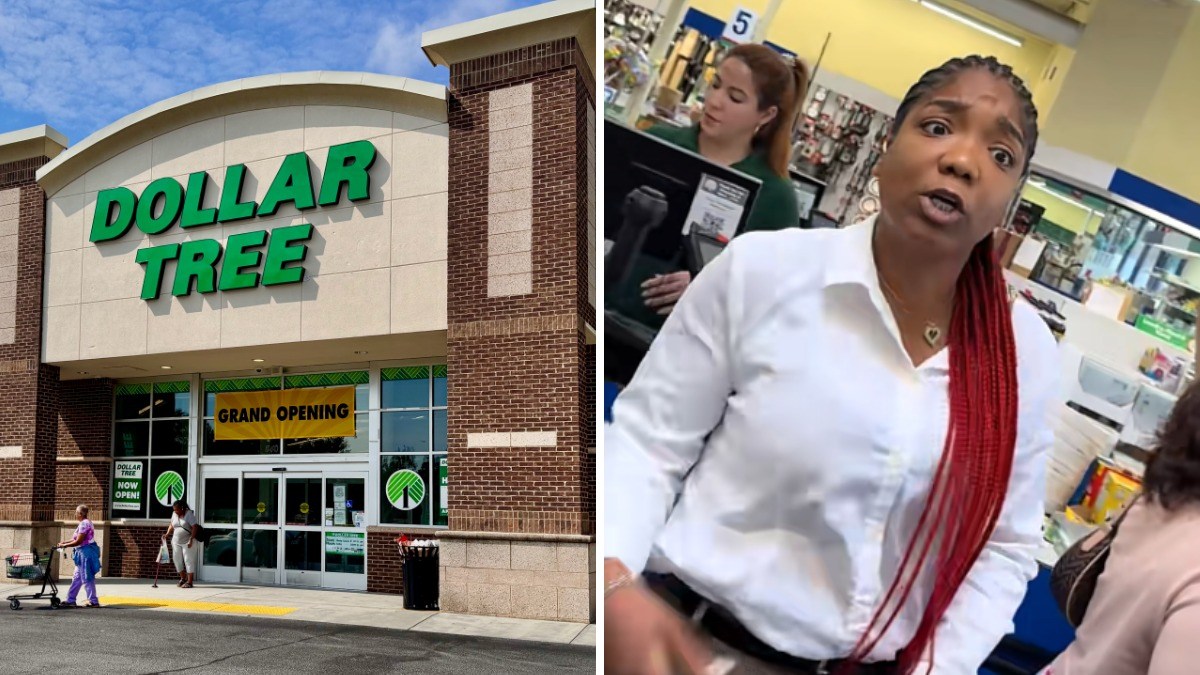
A Texas woman filmed a customer confronting a Dollar Tree employee over the worker’s English proficiency, and the exchange escalated into a threat directed at the person recording. According to The Nerd Stash, the creator, who posts as Bunny, said she intervened after hearing the customer tell the worker to go back to her own country.
When Bunny spoke up, the customer turned her attention toward her instead. “Speak English! That’s not being racist, you’re in America!” the customer said, adding, “The job is considered to speak bilingual. Both languages!” The customer then approached Bunny, stating that if she continued recording, she would put her hands on her. Bunny said she would call the police, and the customer repeated, “Call ’em! Call ’em!” The customer also asserted that Bunny was not permitted to record her without consent.
Whether Bunny had the legal right to record the encounter is a question with a clear answer under state law. Texas is a one-party consent state under Section 16.02 of the Texas Penal Code, meaning a participant in a conversation can record it without informing the other party, and recordings made in public places generally carry no expectation of privacy at all. The customer’s claim that her consent was required to be recorded does not reflect current Texas law.
The Threat Itself Carries Its Own Legal Weight
The alleged threat to physically confront Bunny for filming raises a separate legal question. Under Texas Penal Code Section 22.01(a)(2), a person commits assault by threat when they intentionally or knowingly threaten another person with imminent bodily injury, regardless of whether any physical contact occurs. This offense is typically classified as a Class C misdemeanor, punishable by a fine of up to $500.
The customer’s claim about the job requiring bilingual ability touches on real employment law, though not in the way she framed it. Employers can lawfully require bilingual skills for a position when it reflects a genuine business necessity, such as serving a customer base that includes non-English speakers. However, under EEOC guidance interpreting Title VII of the Civil Rights Act, workplace rules requiring employees to speak only English at all times are presumed to violate federal law unless justified by a specific business necessity.
An employer also cannot lawfully use language ability as a pretext to discriminate based on national origin. On the broader claim that English is required because “you’re in America,” the United States has no federally recognized official language codified in law that requires businesses or the public to communicate exclusively in English, and any such rule for private conversations between customers has no legal basis regardless of location.
Confrontations centered on a worker’s or bystander’s use of a language other than English have surfaced in other viral incidents as well, including one where a woman was allegedly told to “speak English” during a restaurant visit, and another involving a customer who directed similar remarks at a couple speaking Spanish in public.
Have a tip we should know? [email protected]
Follow The Mary Sue:
