

Colman Domingo says Elon Musk’s AI Odyssey will be ‘whiter than Christmas at Cracker Barrel’
AI slop – the reel deal.
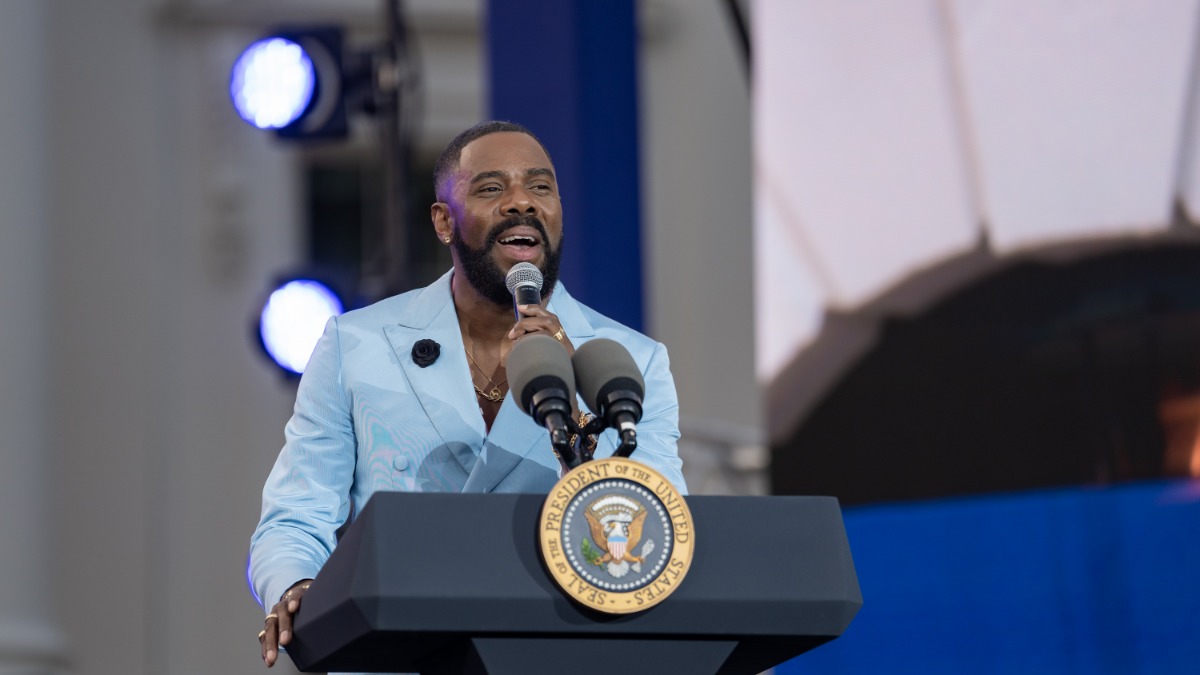
Colman Domingo just took a sharp, hilarious swing at Elon Musk’s latest AI obsession, and honestly, it’s the kind of roast that sticks. While guest-hosting Jimmy Kimmel Live! on July 22, 2026, the Oscar-nominated actor tore into Musk’s plan to use his AI tool Grok Imagine to generate a “historically accurate” version of The Odyssey by the end of the year. Domingo’s punchline? “By historically accurate, he means whiter than Christmas at Cracker Barrel.”
The joke lands hard because it cuts straight to the heart of Musk’s recent complaints about Christopher Nolan’s Odyssey adaptation. According to Variety, Musk has been vocal about his disdain for the film’s diverse casting, particularly Lupita Nyong’o as Helen of Troy, which he called an “insult” to Homer.
Domingo didn’t hold back, calling out the absurdity of Musk’s definition of historical accuracy. “And I don’t want to get technical here,” he said, “but you can’t make a historically accurate version of something that is totally made the f— up.”
It’s a fair point
The Odyssey is, after all, a work of ancient Greek mythology, not a documentary. Domingo’s comparison to The Hunger Games or “the president’s cognitive exams” drives home just how ridiculous the whole debate is. If you’re arguing over the skin color of characters who may or may not have existed in a story written thousands of years ago, you’ve already lost the plot. And yet, here we are, watching one of the world’s richest men throw a tantrum over a movie he didn’t make.
Musk’s AI-generated Odyssey is a direct response to Nolan’s film, which has already raked in over $300 million at the box office. The tech mogul has been on a months-long crusade against the adaptation, even going so far as to call Nolan an “anti-White racist” for casting Nyong’o.
It’s a bizarre hill to die on, especially when you consider that Musk’s own AI project is essentially a high-tech version of fan fiction. The three-minute clip he shared, generated by a Grok user, is less “historically accurate” and more “uncanny valley meets ancient Greece.”
Musk’s Odyssey plans have been mocked before
Earlier this week, Doctor Strange director Scott Derrickson took to X to call out Musk directly, writing, “Clearly @elonmusk doesn’t know s— about cinema & he stopped reading in his 20s.” It’s a sentiment that’s been echoed by others in Hollywood, who see Musk’s AI ambitions as more of a publicity stunt than a legitimate creative endeavor. Nolan himself has dismissed Musk’s complaints as “irrelevant,” focusing instead on the bigger picture of AI’s role in storytelling.
According to Deadline, Nolan compared AI to a “glass Trojan horse.” “I think AI is a Trojan horse that everybody knows the Greeks are inside,” Nolan said. “It’s a transparent horse, it’s made of glass. Everybody can see what’s going on inside of there.” His skepticism is refreshing, especially in an industry that’s often quick to embrace new technology without questioning its long-term implications.
The renowned director’s comparison is particularly apt when you consider how AI has already “taken over Wall Street” and infiltrated creative fields like filmmaking. He praised Gen Z for their “very healthy skepticism” of AI, noting how younger audiences immediately call out AI-generated content as “AI slop.” It’s a term that’s caught on quickly, and for good reason.
The debate over AI in Hollywood isn’t just about The Odyssey or Musk’s ego
It’s a clash about the future of creativity itself. SAG-AFTRA, the union representing actors and performers, has thrown its support behind the current administration’s AI policy framework, which calls for stronger intellectual property protections and parental controls. The framework also pushes for legislation that would allow AI companies to operate more freely, including removing legal barriers that limit innovation.
Last month, an executive order was signed to create a voluntary review process where AI companies would give the government access to new models for 30 days before release. It’s a complicated issue, and one that’s only going to get more contentious as AI tools like Grok become more advanced.
For now, though, it’s hard not to see Musk’s AI Odyssey as anything more than a petulant response to a movie he doesn’t like. Domingo’s joke about Musk’s version being “whiter than Christmas at Cracker Barrel” might be funny, but it also highlights a deeper problem. When billionaires start dictating what “historical accuracy” looks like, we’re all in trouble.
Nolan’s Odyssey is a reminder that storytelling has always been about interpretation
In this space, there’s no room for rigid adherence to some imagined past. The best adaptations take risks, challenge norms, and reflect the world we live in today. Musk’s AI project, on the other hand, feels like a step backward – a desperate attempt to cling to a version of history that never really existed.
Domingo’s roast is the perfect response to Musk’s antics. It cuts through the noise to remind us what’s really at stake. The next time someone talks about “historical accuracy” in a work of fiction, just remember: if it’s whiter than Christmas at Cracker Barrel, it’s probably not history, but just another billionaire’s ego trip.
(Featured image: The White House)
This is an opinion piece. The views expressed in this article are those of just the author.
Follow The Mary Sue:
