


Trump’s Attempt to Stir Outrage Over a School Graduation Video Backfires as a Massive Children’s Icon Intervenes With a Pointed Message
Fueled by kindness.
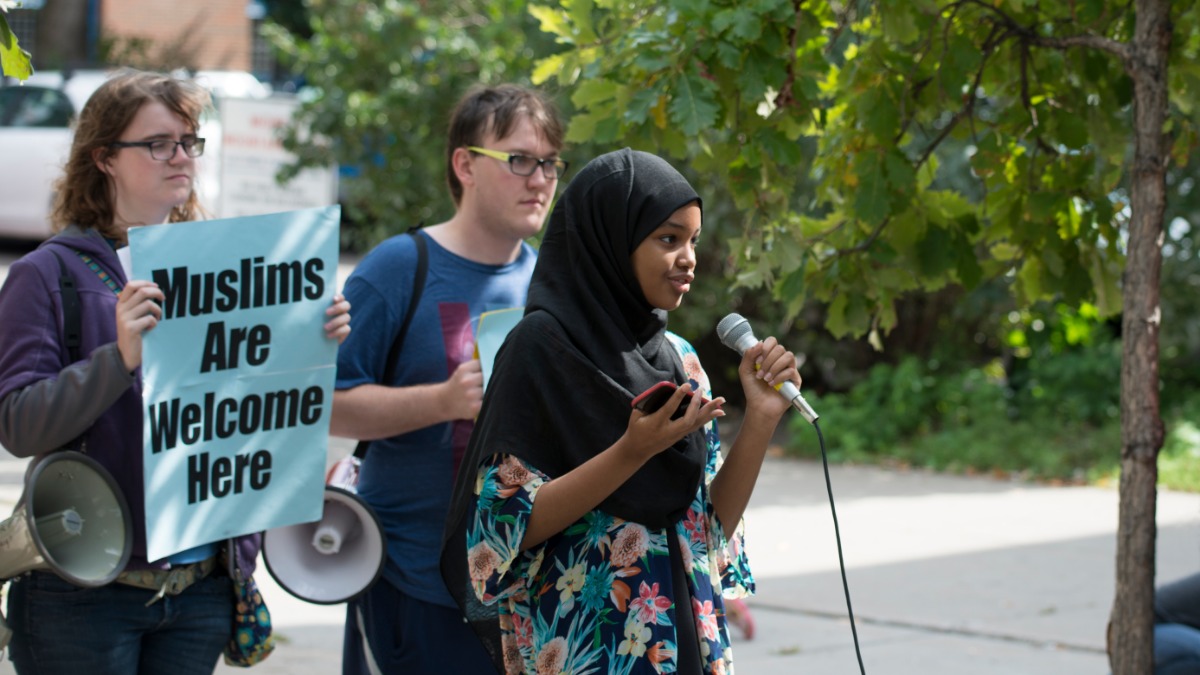
Donald Trump’s attempt to stir controversy with a kindergarten graduation video has backfired after one of the internet’s most beloved children’s entertainers stepped in with a powerful message. Ms. Rachel, the creator behind the massively popular YouTube channel that millions of kids adore, posted a heartfelt message to videos of Minnesota kindergarteners wearing hijabs, calling the headscarves “beautiful” and reminding her young audience that everyone belongs.
According to The Hill, the video in question, shared without a caption, showed a group of kindergarteners in graduation caps and gowns singing together. Many of the girls wore hijabs, a detail that Trump highlighted by reposting a screenshot from the End Wokeness account, which described the scene as “a public school in St. Paul, Minnesota. Every girl is in a hijab… in kindergarten.”
In her Instagram post, Ms. Rachel congratulated the graduates, writing, “I saw some of you wore a hijab to your graduation. I am glad you wore something meaningful and special to you and your family. I think hijabs are beautiful.” She explained that kids wear all kinds of things to represent their cultures and religions, from kippahs to cross necklaces, while others don’t wear anything religious at all. Her message was simple: “No matter what we wear, we all belong.”
Ms. Rachel didn’t call out Trump by name. She didn’t have to
Instead, she framed the issue in terms kids could understand, saying, “Just because someone says something does not mean it’s true!” She even encouraged them to talk to a trusted adult if someone says something hurtful about what they wear. It’s the kind of message that resonates because it’s both protective and empowering.
This isn’t the first time Ms. Rachel has used her platform to stand up for kids facing discrimination. Last month, she visited the Delaney Hall immigration detention center in Newark, New Jersey, to meet with families separated by detainment. She’s also been a vocal advocate for children in Gaza, facing criticism for speaking out about their suffering.
In April, she posted on Instagram that “all children have the right to food, water, medical care and education. All children should be protected from violence.” When backlash came, she doubled down, saying, “The idea that caring for a group of children in an emergency situation means you don’t care about other children is false.”
Ms. Rachel’s stance on Gaza has been particularly bold
Last year, she wore a dress featuring artwork by children from Gaza to the Glamour Women of the Year Awards, a move that drew both praise and criticism. But Ms. Rachel has made it clear she won’t stay silent. In an interview this past May, she said, “It’s sad that people try to make it controversial when you speak out for children that are facing immeasurable suffering.” For her, it’s not about politics but about humanity.
Trump’s decision to highlight the kindergarteners’ hijabs didn’t come out of nowhere. Minnesota, and specifically its Somali and Muslim communities, has been a frequent target of his administration’s rhetoric. Since retaking office in January 2025, Trump has repeatedly singled out the state’s Somali population with inflammatory language.
According to USA Today, in December 2025, he called Somalis “garbage” and said he didn’t want them in the country, claiming they “contribute nothing.” During his State of the Union address in January, he referred to Somalis as “pirates” who bring “bribery, corruption and lawlessness” to the U.S. through immigration.
His administration has also taken concrete actions against the Somali community. Earlier this year, it ended Temporary Protected Status for Somali immigrants, a move that put thousands at risk of deportation. Federal immigration officers were deployed to Minnesota, a decision that prompted the state to sue the administration.
Trump responded with a post promising “RECKONING & RETRIBUTION.” Most recently, his administration denied entry to a Somali referee who was supposed to officiate a 2026 World Cup match, a decision that drew international criticism.
Trump’s post has been criticized
The Council on American-Islamic Relations (CAIR) and its Minnesota chapter didn’t hold back in their response to Trump’s kindergarten video. They called it an “inflammatory, anti-Muslim social media post” that “puts a target” on the students and their school.
Citing a recent attack on a mosque and private school in San Diego by two white supremacists, CAIR warned that Trump’s rhetoric gives bigots a “green light” to target minority children. “Children deserve to feel safe in their schools and communities,” the organization wrote. “When a political leader validates hate speech, it gives bigots a green light to target minority children.”
It’s a stark reminder of how high the stakes are when public figures use their platforms to amplify division. For parents and educators, Ms. Rachel’s post is a great example of how to talk to kids about diversity and inclusion. She didn’t shy away from the fact that people might say hurtful things, but she also didn’t let that overshadow the joy of the moment.
Instead, she celebrated the kids’ achievements and reminded them that their worth isn’t defined by anyone else’s words. “No one’s hurtful words can take away our worth and our value!” she wrote. It’s a lesson that goes far beyond this one graduation video.
(Featured image: Fibonacci Blue from Minnesota, USA)
Have a tip we should know? [email protected]
Follow The Mary Sue:
