


Trump’s Approval Rating Just Tanked to 37% After He Admitted He Doesn’t Care About Your Wallet
All about priorities.
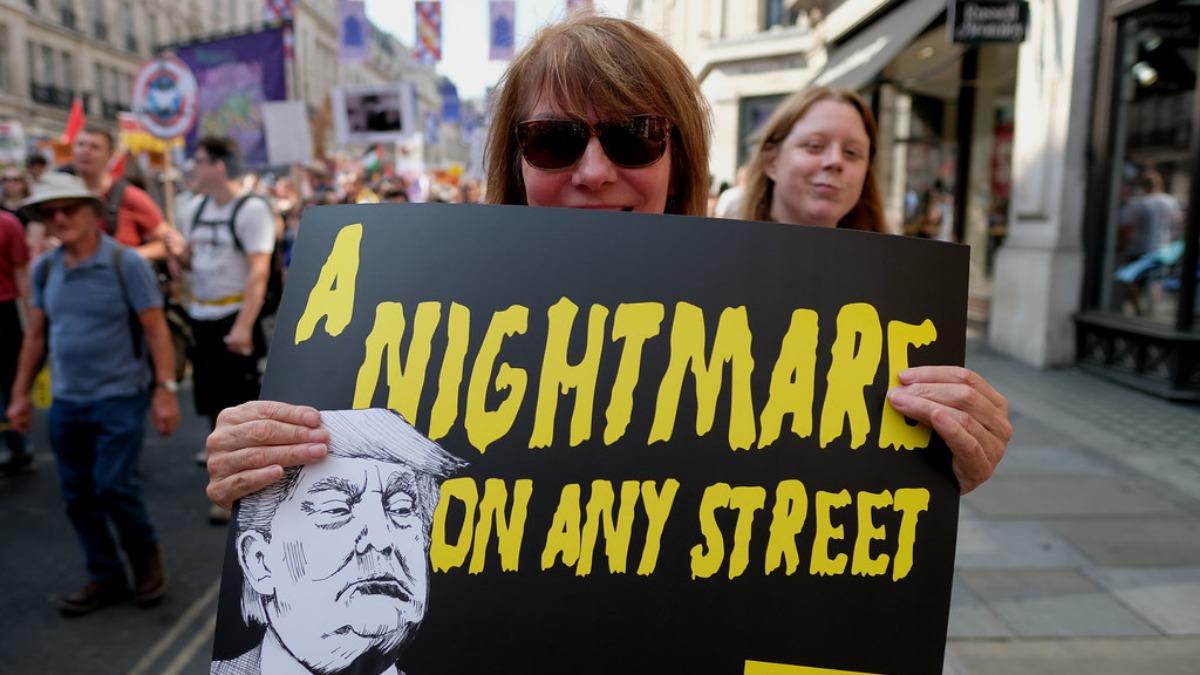
Donald Trump’s approval rating just hit a new low, dropping to 37% as voters grow increasingly frustrated with his handling of the economy and the ongoing United States-Israeli war with Iran. The latest New York Times/Sienna poll shows this is the lowest point of his second term. With gas prices soaring, inflation climbing, and the president himself admitting he doesn’t care about Americans’ financial struggles, it’s no surprise confidence in his leadership is cratering.
The numbers paint a grim picture. According to The Guardian, nearly two-thirds of voters now say the decision to go to war with Iran was the wrong call, and fewer than one in four believe the conflict has been worth the cost. That’s a brutal indictment of a president who built his political brand on economic strength.
Now, 64% of Americans disapprove of his handling of the economy, a sharp reversal from the days when his supporters touted him as a master dealmaker who could protect their wallets. Independent voters, in particular, are feeling the pinch as 47% say his policies have personally hurt them, up from 41% last fall.
The economic fallout from the war is impossible to ignore
Gas prices have skyrocketed to nearly $4.52 per gallon, up from $3.18 a year ago, and inflation has jumped to 3.8%, the highest since 2023. Energy prices alone rose 3.8% in April, accounting for over 40% of the overall increase in the consumer price index. That’s not just a number on a spreadsheet, rather the difference between filling up your tank and choosing between groceries and rent.
Airfares are up 20.7%, food prices have climbed 3.8%, and utilities aren’t far behind with a 5.4% increase. Even core inflation, which excludes volatile food and energy costs, is sitting at 2.8%, well above the Federal Reserve’s 2% target.
The war’s ripple effects aren’t just hitting Americans. Countries like Australia, Canada, and South Korea are all reporting rising inflation, while British households brace for another cost-of-living crisis. Asia’s manufacturing sector is showing signs of strain, too, with higher costs starting to trickle down to consumers worldwide.
The closure of the Strait of Hormuz, a critical chokepoint for global oil supplies, has sent shockwaves through energy markets. When Trump called Iran’s response to peace proposals “totally unacceptable,” oil prices climbed even higher, adding more fuel to the inflation fire.
It’s not just the war that’s dragging Trump’s approval down
His administration’s aggressive deportation policies, including incidents where federal agents killed two U.S. citizens, have further eroded support. John Johnson, a 78-year-old contractor from Kentucky who voted for Trump, summed it up best, “Everybody’s suffering from gas prices.” He added, “Is it handled right? I don’t think so. It could have been handled differently, diplomatically more so.”
That sentiment is echoed across the country. Voters are questioning whether the president’s approach is making things better or worse.
The Federal Reserve is caught in the middle of this mess. The Trump administration has been pushing for lower interest rates to make borrowing cheaper, but rising inflation makes that a tough sell.
Kevin Warsh, the incoming Fed chair, has signaled he supports rate cuts, but convincing the rest of the board won’t be easy. Only one member voted to lower rates last month, with the rest citing slow job growth and uncertainty in the Middle East as reasons to hold steady. Rates currently sit at 3.5% to 3.75%, and with inflation stubbornly high, the Fed’s job is only getting harder.
For all the bad news for Trump, Democrats aren’t exactly celebrating
Only 26% of voters say they’re satisfied with the Democratic Party, and 44% of Democrats themselves are unhappy with their own leadership. That’s a sign that voters are frustrated across the board, not just with the president. The midterm elections in November could be a bloodbath for both parties if they don’t find a way to address the economic anxiety gripping the country.
Trump’s approval rating has been sliding for months. By October 2025, just nine months into his second term, it had already fallen to 42%, matching the lows Joe Biden hit more than three years into his presidency. The goodwill from his election victory has long since evaporated, replaced by frustration over rising costs and a war that shows no signs of ending. If things don’t turn around soon, his party could pay the price at the ballot box.
The question now is whether Trump can pivot. His comments about not thinking about Americans’ financial situation were a rare moment of candor, but they also underscored the disconnect between his priorities and the everyday struggles of voters.
With gas prices, inflation, and war dominating the headlines, it’s hard to see how he regains the trust of a public that’s increasingly convinced he’s out of touch. For now, the numbers don’t lie – 37% is a wake-up call, but whether the president will answer it remains to be seen.
(Featured image: alisdare1)
Have a tip we should know? [email protected]
Follow The Mary Sue:
