


Trump’s big Hormuz showdown ‘Project Freedom’ fizzled in 48 hours when the Saudis refused to let him use their airbase
A wake-up call.
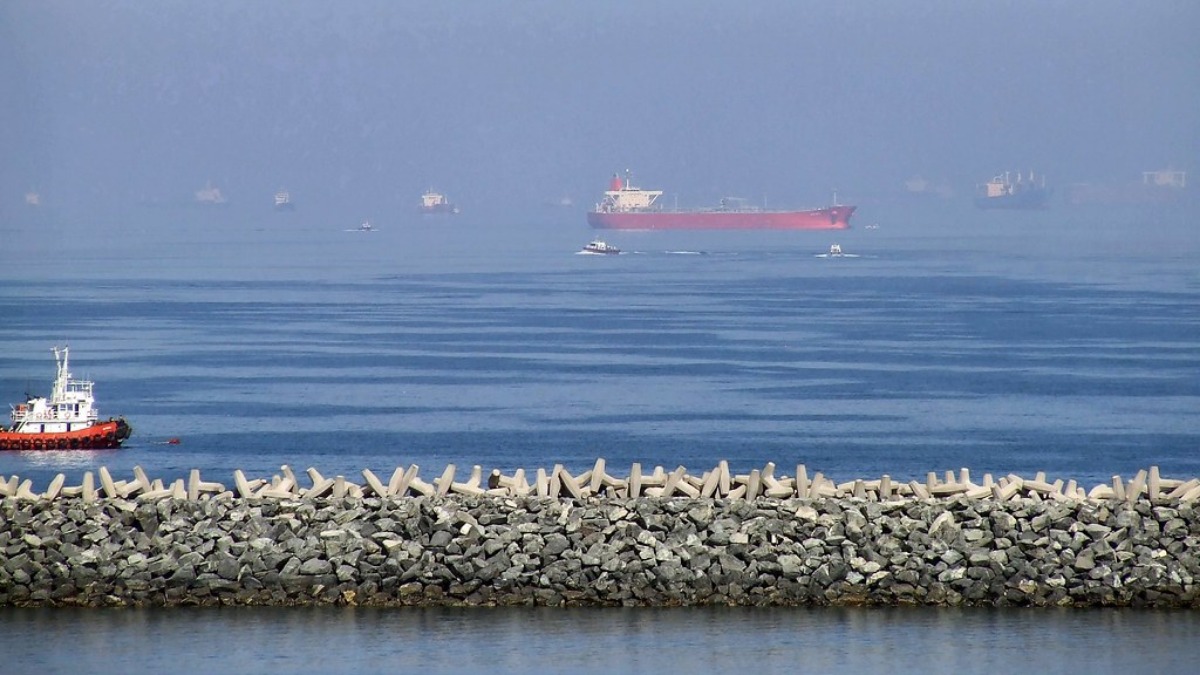
Donald Trump’s high-stakes plan to break Iran’s blockade in the Strait of Hormuz collapsed in less than 48 hours after Saudi Arabia refused to let the U.S. use its airbases. The operation, dubbed “Project Freedom,” was shelved just days after its launch when Riyadh denied access to Prince Sultan airbase and closed its airspace to American forces.
According to The Guardian, the Saudi decision came despite a direct call between Trump and Crown Prince Mohammed bin Salman. The refusal wasn’t just a logistical headache. It exposed a deep rift in Gulf alliances and left the U.S. with no viable path forward.
Without Saudi cooperation, the plan to escort oil tankers through the strait became unworkable, forcing Trump to abruptly reverse course. His public explanation – that the operation was paused due to “great progress” toward a deal with Iran – didn’t mention the Saudi blockade at all.
The fallout was immediate
A day of aggressive messaging from U.S. officials, including the Secretary of State and Defense Secretary, was undercut by Trump’s sudden about-face. The plan had promised to secure freedom of navigation for the 2,000 commercial ships stranded in the Gulf, but with Saudi Arabia digging in, the U.S. was left with no leverage.
The kingdom’s stance reflected a broader frustration with Trump’s handling of the conflict. Riyadh had grown tired of being caught in the crossfire of a war it never wanted, with little protection or strategic clarity from Washington. The objections weren’t just about the operation’s feasibility. Officials feared “Project Freedom” lacked clear rules of engagement and could spiral into a full-blown naval confrontation with Iran.
Tehran had already warned that any U.S. military escort of tankers or attacks on Iranian shipping would be treated as a ceasefire violation, risking renewed missile and drone strikes on Gulf infrastructure. Those attacks had already caused more damage than publicly acknowledged, and Riyadh wasn’t eager to invite more.
Saudi also worried about unintended consequences in Yemen
The Houthis, aligned with Iran, had been kept out of the conflict so far, but Saudi Arabia feared Project Freedom could drag them in. A Houthi intervention in the Red Sea would choke off the kingdom’s alternative export route through the Yanbu pipeline, which currently handles about half of its oil output. The Saudis had already secured a separate deal with Iran to protect that pipeline, and they weren’t about to jeopardize it.
The UAE, meanwhile, took a starkly different approach. While Saudi Arabia played it safe, the Emirates tried to sneak its tankers past the Iranian blockade by turning off their transponders. The move reflected the UAE’s frustration with Saudi Arabia’s caution, and its closer ties to Israel under the Abraham Accords. The UAE had already quit OPEC and was reportedly considering leaving the Arab League, signaling its impatience with Saudi dominance in Gulf politics.
Trump’s decision to shelve Project Freedom wasn’t just a tactical retreat; it was also a humiliation. Iran’s parliamentary speaker, Mohammad Bagher Ghalibaf, mocked the failed operation on X, writing, “Operation Trust Me Bro failed.” The snark wasn’t just for show.
Tehran had already dismissed the U.S. peace proposal as a “wishlist”
It demanded the lifting of the blockade and the release of frozen assets before any talks could begin. Trump, ever the showman, had framed the pause as a diplomatic breakthrough, but the reality was far messier.
The U.S. plan, reportedly a 14-point proposal, called for a permanent end to the war and a 30-day negotiating period to reopen the strait. It also sought compromises on Iran’s nuclear program, sanctions, and frozen assets. But Iran’s counterproposal demanded immediate relief, including the release of some of its $100 billion in frozen funds, before negotiations could even restart.
Moreover, Trump’s team, led by his son-in-law Jared Kushner and special envoy Steve Witkoff, wasn’t exactly inspiring confidence. Both men are real estate developers with little experience in nuclear diplomacy, and their ties to Israel made Tehran deeply skeptical.
The addition of Nick Stewart, an analyst from the pro-Israel Foundation for the Defense of Democracies, didn’t help. Iran’s negotiating team, hardened by years of conflict and the trauma of the U.S.-Israel surprise attack in February 2025, wasn’t in a trusting mood. As one Israeli analyst put it, “External pressure didn’t fracture the system; it reinforced the position of its most hardline figures.” The result is an Iran that’s less predictable and more dangerous than ever.
For now, both sides are stuck in a holding pattern
Trump is heading to China for a meeting with Xi Jinping and doesn’t want a war hanging over the trip. Iran, for its part, isn’t eager to reject the U.S. proposal outright but it’s not about to accept Trump’s terms either. The Saudis, meanwhile, have made it clear they’re done being Washington’s pawn in a conflict they never signed up for. The UAE is charting its own course, and the Gulf’s fragile unity is unraveling.
The collapse of Project Freedom isn’t just a setback for Trump; it’s a sign of how much the Middle East has changed. The old rules don’t apply anymore, and the U.S. is no longer the undisputed power broker it once was. Saudi Arabia’s refusal to play along is a wake-up call: if Washington wants to shape the region’s future, it’ll have to do more than just launch half-baked operations and hope for the best.
(Featured image: Michael Gaylard,)
Have a tip we should know? [email protected]
Follow The Mary Sue:
