



‘Iran won’: Piers Morgan rains on Donald Trump’s fantasy parade and mocks how Iran played him like rookie
A significant departure from the White House narrative.
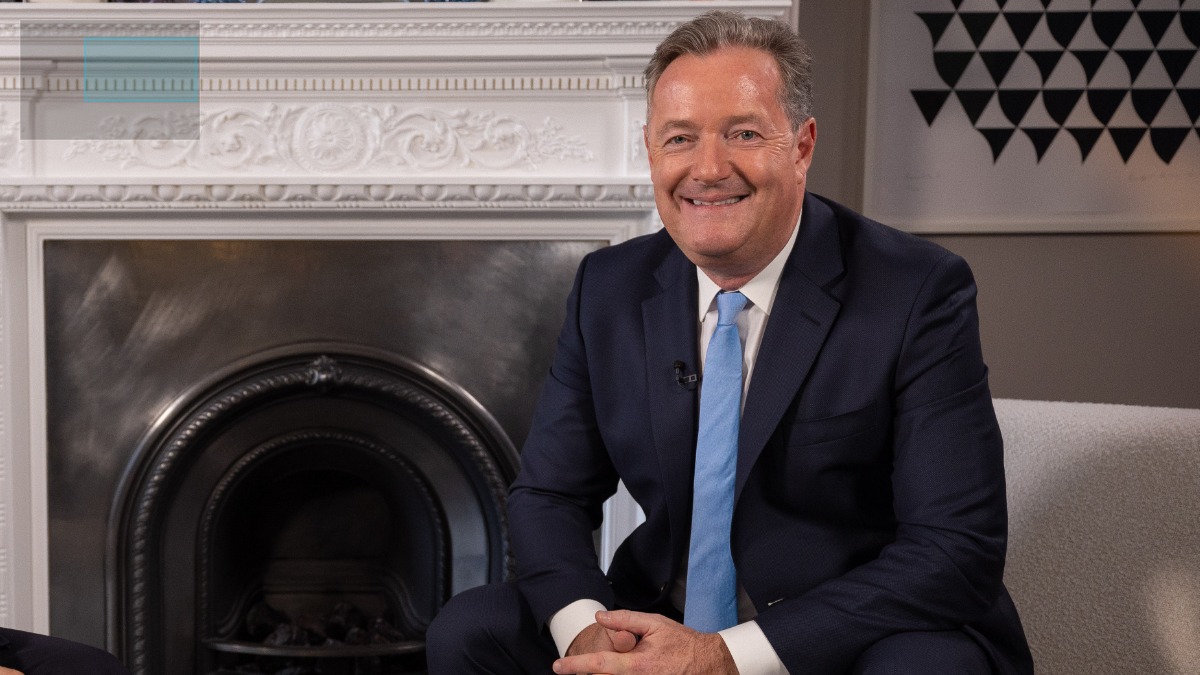
Piers Morgan recently weighed in on President Donald Trump’s declared “victory” regarding the Iran deal, offering a starkly different perspective that’s got people talking. He didn’t hold back on his show, Piers Morgan: Uncensored, effectively questioning whether the United States truly achieved its objectives in the recent ceasefire and negotiations.
According to Daily Express, Morgan kicked off his segment by posing a simple yet pointed question: did the U.S. get what it really wanted out of this situation? He then laid out his case, highlighting that the Strait of Hormuz, a critical global shipping lane, is indeed open, just as it was before the conflict. He emphasized that Iran still maintains control over the strait, a fact he believes nobody is disputing despite the recent events.
While acknowledging that Iran’s regime might be “wounded and weakened,” Morgan was quick to clarify that it’s “no doubt” the same fundamental regime. He suggested that while “several branches have been hacked off,” the “trunk and roots remain” firmly intact. This implies that any perceived victory might be more superficial than substantial, leaving core issues unresolved. He pointed out that despite some destruction, Iran still boasts multiple successes from the conflict.
Piers’ point about Hormuz directly challenges the administration’s claims of securing the waterway
Morgan then ridiculed Trump over what he described as a “multi-billion dollar windfall” coming Iran’s way. This comes as Iran is reportedly calling for the U.S. to pay reparations, a demand that would certainly complicate the “victory” narrative. When you consider the financial aspect, it’s a tough pill to swallow for those on the other side. Morgan further elaborated on the heavy costs borne by the US, stating that the nation has now spent over $30 billion on the war so far.
The human cost is even more heartbreaking, with 15 U.S. soldiers dead and thousands of Iranians also losing their lives. Beyond the immediate conflict, Morgan pointed to the domestic political ramifications for Trump. His approval ratings are at a record low, and his political base appears to be at war with itself, all as the U.S. prepares for upcoming elections that could significantly impact or even end his presidency.
Trump however, has praised the two-week ceasefire deal reached with Iran as a “total and complete victory” for the U.S. According to The Hill, in a recent interview, he asserted there was “no question” it was a US victory. He even speculated that China might have intervened to persuade Iran to negotiate. He mentioned a “15-point transaction,” with most of those points already agreed upon, though he noted that they would “see what happens” and “see if it gets there.”
He also said that Iran’s enriched uranium would be “perfectly taken care of, or I wouldn’t have settled,” without going into further detail. Stopping Iran’s nuclear program and preventing Tehran from developing a nuclear weapon was a major focus for the Trump administration throughout the conflict, even though Iran has consistently maintained its nuclear program is for peaceful purposes.
White House press secretary Karoline Leavitt echoed the president’s sentiment, stating that the “success of our military created maximum leverage, allowing President Trump and the team to engage in tough negotiations that have now created an opening for a diplomatic solution and long-term peace.” She also highlighted that Trump “got the Strait of Hormuz reopened,” emphasizing his ability to “successfully advance America’s interests and broker peace.”
The deal came about after Trump issued a stark warning to Iran
He threatened its “whole civilization” if a deal was not reached and if Tehran did not reopen the Strait of Hormuz before an 8 PM EDT deadline. The agreement was reached a couple of hours before that deadline. When asked if he would revive his threat, which had prompted significant backlash from Democrats in Congress, the president remained cagey, simply stating, “You’re going to have to see.” It’s still unclear exactly when the ceasefire is set to begin.
The plan for reopening the Strait of Hormuz includes a caveat: Iran and Oman will have vessels passing through pay fees, which are designated to go toward Iran’s reconstruction efforts. Trump also said that the US would be involved in alleviating the “traffic buildup” in the strait. He wrote that the US would be “loading up with supplies of all kinds, and just ‘hangin’ around’ in order to make sure that everything goes well,” indicating a continued US presence.
Despite the announced deal, missile attacks continued in the hours that followed
The United Arab Emirates intercepted missiles and drones, while Saudi Arabia, Kuwait, and Bahrain issued alerts for potential threats. An Iranian missile attack in southern Israel even prompted early warnings in central and northern Israel the following morning. It’s a reminder that even with an agreement, tensions can remain incredibly high.
In a final, pointed remark at Trump, Piers wrote on X, “America/Israel may have won the war on the battlefield, but Iran won the war on the waterways, paralysed the world’s energy supplies, and caused huge global economic damage. That’s why President Trump has moved to do a deal. It’s not a ‘historic victory’ or anything like it.” Though the White House is celebrating a diplomatic breakthrough, Morgan believes the true story is far more nuanced.
Have a tip we should know? [email protected]
Follow The Mary Sue:
