


We as a society have moved past the need to speculate about Billie Eilish’s body, so please find a new hobby, any hobby at all
Whether or not the rumor is true, it was never our business
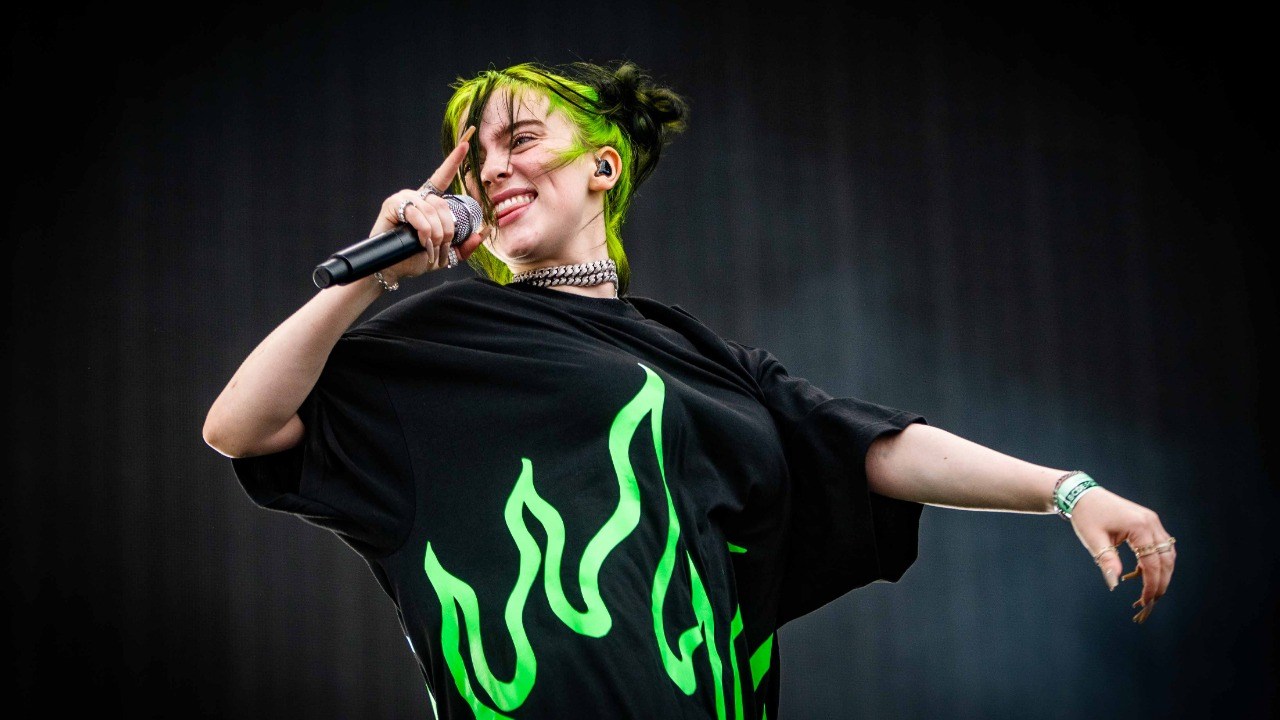
I do not care whether Billie Eilish had a breast reduction, and neither should you. And yet here we are, watching the internet convene an emergency tribunal over a twenty-something woman’s body, as if it were a matter of public record.
The latest round started in late October. Eilish debuted a strawberry blonde lob in a John Hardy campaign, and fans began pointing to differences between her photos. From there, the leap to surgery was instant. Social media users compared photographs of her in different outfits, but the posts offer no corroborating evidence of a procedure. Even outlets running the story admit there is no verified evidence she had the surgery, and she has not publicly confirmed it.
So what, exactly, are we doing? Maybe the photos show a change. Maybe it’s a different outfit, different lighting, a new hair color, or a body doing what bodies do over time. Honestly, it doesn’t matter, because none of those answers are ours to have. A woman posted a picture of herself, and a global audience treated it as evidence in a case nobody opened. If a news cycle can be built on side-by-side photos and vibes, the news cycle is the problem. The content-farm articles promising to “uncover the truth” are mining her body for traffic, and every click is a vote for treating her like public property. Even if the speculation were right, the right response would be the same: shrug, scroll, and let her tell us what she wants to tell us, if she ever does.
She already told us how this feels
This is not new territory for Eilish, and she has been clear about it. She built her early image around baggy clothes so strangers could not grade her shape. When she stopped hiding, the grading started anyway. Recent coverage has resurfaced her account of being body-shamed by a close male friend over her upper body. Her 2020 short film Not My Responsibility made the thesis plain: people will judge her body no matter what she does, and managing that judgment is not her job.
Covered up, she was a puzzle. Uncovered, she was a scandal. Now, ostensibly, she is a before-and-after. There is no outfit, no haircut, and no silence that gets her out of the scrutiny.
Both sides of the discourse are doing the same thing
Here is where I will annoy some people on my own side of the timeline. The speculation has split into camps, and the camps are mirror images. One group is mourning, as though a reduction would be a betrayal of some body-positivity pact. One fan wrote that the rumor broke their heart and asked who advised her to do it. The other group is celebrating a decision no one has confirmed, slapping “empowerment” on it like a sticker.
Both are wrong, and for the same reason: they have appointed Eilish a symbol. Neither camp is asking what she wants. They are asking what her body means for them. That is not feminism, and it is certainly not support.
Who decides what a woman’s body is for?
Let’s say the quiet part out loud — a lot of this isn’t curiosity, and it isn’t even gossip. Strip away the “concerned fan” language and a huge share of the people dissecting Eilish’s chest are doing what the public has always done to women who get famous young. Eilish became a household name as a teenager, and the commentary on her body started right alongside her first hits. That includes the audience far beyond her actual fans, the casual passersby who never streamed a song and still feel entitled to rate, rank, and fantasize about her. The same machine has chewed through pop girls for decades, from Britney Spears to Olivia Rodrigo, and it keeps running because every generation of audience operates under monogenistic entitlement over these singers.
Sexualization is not applied evenly either. Young women get it first and hardest, but it lands differently on Black and brown women, who are often cast as hypersexual from the jump, on fat women, who are told their bodies are only either a joke or a fetish, and on queer and gender-nonconforming artists, whose refusal to perform femininity for the male gaze gets read as a challenge to be corrected. Eilish, openly queer and long uninterested in dressing or posing for anyone’s approval, has drawn the kind of attention that treats her boundaries as a dare. None of this means sexuality itself is the problem. People are free to be sexy, to dress how they like, and to enjoy their own bodies. The problem is sexualization without consent, where a stranger decides what a woman’s body is for.
Consent here isn’t only about what a woman chooses to show. It’s about who gets to interpret it, and what the audience is entitled to do with it afterward. A woman posting a photo is sharing a photo. She is not signing off on a thousand strangers deciding what her body means, what it’s for, or how it should have turned out.
This is also why individual empowerment can’t be the whole answer. A culture that sexualizes pop girls on autopilot isn’t harming them one bad actor at a time. It’s a system, built on gender and kindled by race, size, sexuality, and ability, that hands the public a default entitlement to women’s bodies and then acts surprised when they use it. Those who sit at the intersections pay the steepest price. So queer and gender-nonconforming artists like Eilish or Hemlocke Springs are treated as if their boundaries are a thing to be corrected.
What we should do instead
If Billie Eilish ever wants to discuss her body, her health, or her medical choices, she has proven she can do it on her own terms, in her own words, and with more clarity than the commentators speaking on her behalf. That is her call, on her timeline. Not ours, and not the comment section’s.
Until then, the only decent response to a rumor with zero evidence is to stop passing it along. Close the side-by-side threads. Skip the “did she or didn’t she” headlines, including the ones that appear concerned. And when you feel the itch to scrutinize a stranger’s body, ask who taught you that reflex, because it was taught, and it can be unlearned.
So, please find a new hobby besides speculating about Billie Eilish’s body.
This is an opinion piece. The views expressed in this article are those of just the author.
Follow The Mary Sue:
