


US Army confirms the worst as one soldier’s body is recovered, but the fate of the other who jumped in to save him remains unknown
The U.S. Army just confirmed the worst possible outcome after one of two missing soldiers was found dead in Morocco. First Lieutenant Kendrick Lamont Key Jr, a 27-year-old platoon leader from Richmond, Virginia, was recovered along the shoreline about a mile from the cliffs where both soldiers vanished on May 2. His body was transported to a local morgue and will soon be repatriated to the U.S. The search for the second soldier is still on with no new leads.
The grim discovery came after days of intense search efforts involving ground teams, aircraft, and maritime assets from both U.S. and Moroccan forces. More than 1,000 military and civilian personnel have been combing the area near the Cap Draa Training Area, close to the city of Tan Tan, since the soldiers were last seen. The operation is massive, but so far, it hasn’t turned up any sign of the second missing serviceman.
According to the BBC, Key was part of the 10th Army Air and Missile Defense Command, and his death has left his unit in mourning. Brigadier General Curtis King, the commanding general, released a statement calling the loss devastating.
The loss is a reminder of how dangerous even routine training exercises can be
“Our hearts are with his family, friends, teammates, and all who knew and served alongside him,” King said. “The 10th Army Air and Missile Defense Command Family is grieving, and we will continue to support one another and 1st Lt. Key’s family as we honor his life and service.”
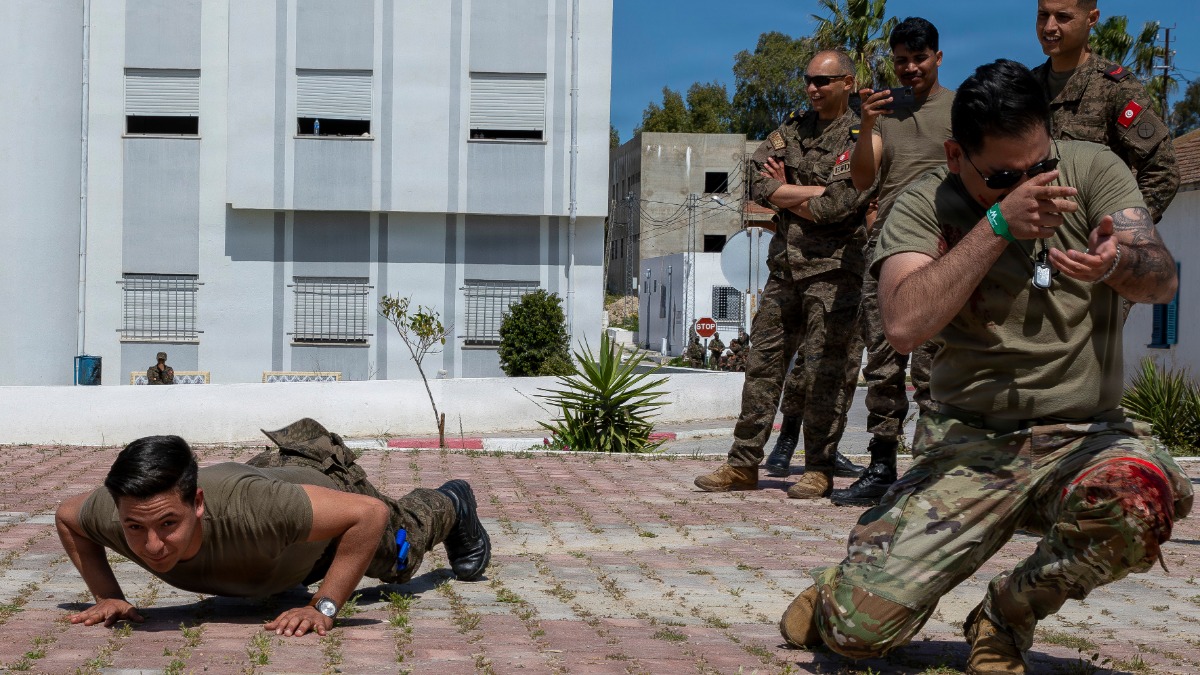
The incident happened during African Lion 2026, the largest annual joint military exercise on the continent. This year’s event involves 5,000 personnel from over 40 countries and more than 30 U.S.-based industry partners, running from April 27 to May 8. The exercise is designed to strengthen operations between U.S. forces, NATO allies, and African nations, focusing on everything from all-domain operations to crisis response.
Details about what exactly went wrong are still murky, but early reports paint a chaotic scene. The soldiers were hiking with a group to watch the sunset when one of them fell into the ocean. The others immediately sprang into action, using their belts to form a human chain in an attempt to pull their teammate to safety.
When that didn’t work, a second soldier jumped in to try to save the first, who reportedly couldn’t swim. Almost immediately, a wave hit them both, and a third soldier dove in to help. That third soldier managed to make it back to shore alone after failing to rescue the other two.
It’s not clear yet whether Key was the first to fall
He may have been the one who jumped in to save his comrade. Either way, the situation escalated fast, and the ocean’s power proved too much. The cliffs near Cap Draa are known for their rough waters and unpredictable currents, which likely played a role in the tragedy. The area is beautiful but dangerous, and even experienced soldiers can be caught off guard by the conditions.
African Lion is no small operation. Hosted across Morocco, Ghana, Senegal, and Tunisia, it’s a massive undertaking meant to prepare forces for real-world emergencies. The exercise covers everything from live-fire drills to cybersecurity training, but this year, the focus has shifted to a grim reminder of the associated risks. The search for the second soldier is still the top priority, but the recovery of Key’s body has already forced the military to confront the reality of what happened.
The U.S. Army hasn’t released the name of the second missing soldier, and officials haven’t provided any updates on his condition or whereabouts. The search is far from over, though, and every resource available is being thrown into the effort. Ground teams are scouring the shoreline, aircraft are scanning from above, and maritime units are patrolling the waters.
This kind of incident is every soldier’s nightmare
Training exercises are supposed to be controlled environments where risks are minimized, but nature doesn’t always play by the rules. The fact that multiple soldiers jumped in to help their teammate speaks to the bond these units share. That kind of loyalty is what makes the military so effective, but it also makes tragedies like this even harder to process.
The recovery of Key’s body is a devastating blow, but it’s also a step toward closure for his family and unit. The Army will continue to support them as they prepare to bring him home. Meanwhile, African Lion 2026 will go on, but this tragedy will hang over the exercise for the rest of its duration. It’s a stark reminder of the dangers that come with military service, even in what should be routine training scenarios.
(Featured image: U.S. Army photo by Spc. Johnathan Jessop)
Have a tip we should know? [email protected]
Follow The Mary Sue:
