Trump’s Board of Peace oversees Gaza aid after 1.4 million people are flooded in tents. Then it issues a rare warning to Israel
“We have nothing left...”
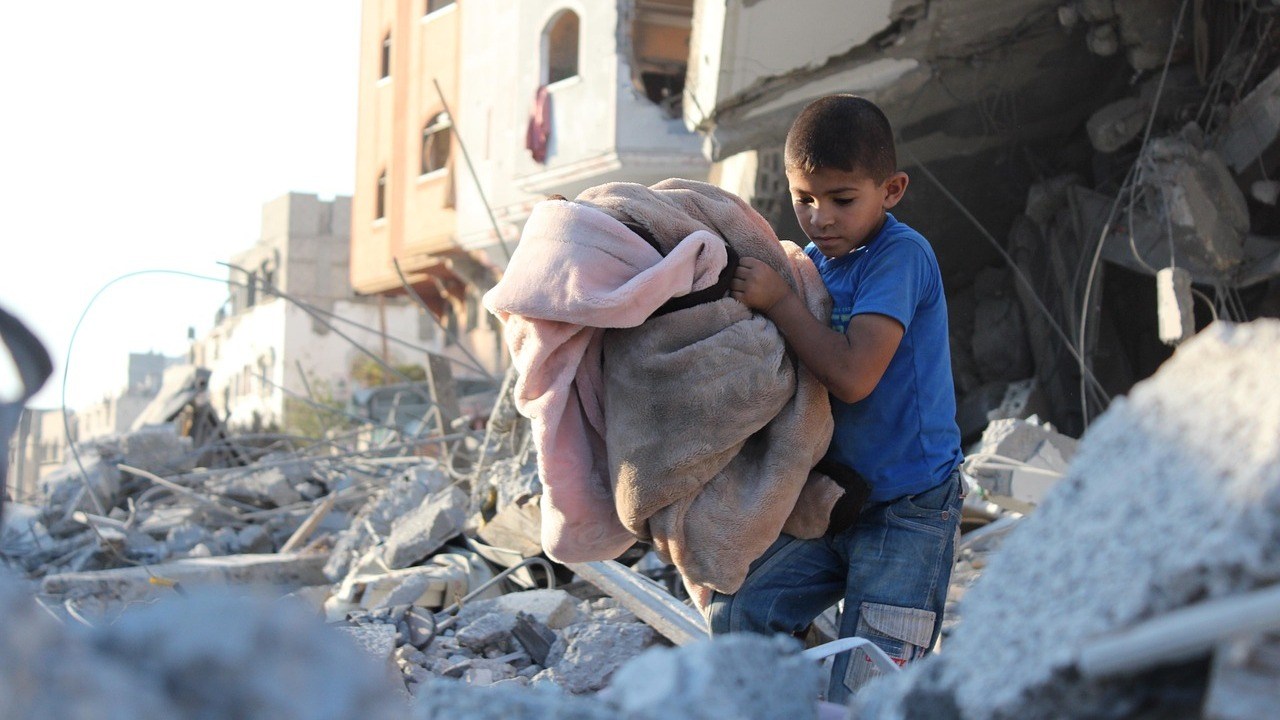
The Board of Peace has issued a rare warning to Israel, stating that its humanitarian response following recent flooding in Gaza, Palestine, is insufficient. This U.S.-backed body, formed to oversee the implementation of the peace plan established by Donald Trump, is now urging the immediate entry of all necessary supplies into the territory. Recent heavy rains have caused major issues for the population, leaving tens of thousands of tents flooded and submerged.
According to the BBC, the situation on the ground is dire for the roughly 1.4 million people living in makeshift shelters. According to data from the United Nations (UN), this group represents about 65% of the total population in Gaza. Many individuals have been displaced multiple times because of ongoing military actions.
Mohammed Jneid, a resident of Gaza City, described the scene while standing in the rain. He noted that heavy rains hit from one side while sewage overflowed on them from the other. Jneid explained that the ground and tents were no longer able to hold. He stated, “We have nothing left, no bedding, no food, nothing.”
The tragedy reached a new peak over the weekend
On November 8, 2026, a sand embankment collapsed onto tents in the central Strip. This incident resulted in the deaths of a woman and three children. Inside her own tent, Islam Al Mobayed described the misery of the current conditions. She was sitting with seven children, five of whom were very young. She said, “This is not life,” and added, “We are exhausted, we are tired of this entire life.”
Trump’s Board of Peace acknowledged the steps currently under consideration by Israel but maintained that the response remains inadequate. In a rare critique, the Board mentioned that it had been urging the Israeli government to authorize the entry of essential goods. These items are needed for temporary shelter, water, and sanitation infrastructure.
The Board noted that delays in approving these supplies exacerbated the consequences of a foreseeable humanitarian challenge. It also claimed that these delays hindered the process of decommissioning weapons and transferring authority to a transitional government.
According to the UN humanitarian agency Office for the Coordination of Humanitarian Affairs (OCHA), more than 150,000 tents are currently waiting outside of Gaza. These items are ready to enter, but aid efforts face constraints from Israeli restrictions and funding shortfalls.
Ramiz Alakbarov, the UN humanitarian coordinator, said that stocks of winter items and essential shelter inside Gaza have been exhausted. He warned that Israeli authorities must lift all restrictions on the entry of these supplies immediately, noting that “we have run out of time.”
Israel has a different perspective on the matter
Its military agency, Cogat, is responsible for coordinating aid into the territory. Cogat stated that it had already allowed in tens of thousands of tents along with trucks carrying winter supplies. However, the agency insisted that reconstruction “can only begin after Hamas fully disarms.” Michal Maayan, a spokeswoman for the Israeli foreign ministry, said that Israel had coordinated a winter plan with the Board of Peace and various international charities over recent months.
According to Cogat, this plan has resulted in the delivery of over 91,000 tents and more than 8,200 trucks. These vehicles carried blankets, tarpaulins, winter clothing, and other necessary equipment.
Maayan argued that Hamas is responsible for the delays in making progress within the Strip. She claimed that winter-related hardships are a consequence of the actions and policies of Hamas, accusing the group of hoarding aid. Cogat added that it would not allow the entry of equipment that could be used for military purposes.
Hamas has denied these allegations
In a statement published on Palestinian media, Hamas argued that the comment from the Board of Peace “presents a distorted account of the causes of the disaster.” Hamas pointed to a statement from August involving mediators from Turkey, Qatar, and Egypt that accused Israel of violations.
The group claimed that Israeli restrictions prevent the entry of materials needed for recovery and shelter. It also suggested that the Board should examine its own “serious shortcoming” as the implementor of the ceasefire.
The broader political context remains complex. Under a deal to end the two-year-long war in October 2025, Hamas agreed to give up its weapons and governance. In exchange, Israel was meant to conduct a phased troop withdrawal from the 60% of Gaza it still occupied. Israel has insisted that Hamas must fully disarm before this withdrawal occurs. This dispute has left the next stages of the peace plan stalled, with both sides blaming each other for the lack of progress.
Humanitarian concerns have drawn international attention
According to The Guardian, Formula One driver Lewis Hamilton recently visited the Rafah border crossing in Egypt to meet with organizations sending aid. Hamilton has frequently used his platform to speak out about humanitarian crises. He has called for peace and advocated for a ceasefire. During his visit to the border, he greeted aid workers with Assalamu alaikum, which is an Arabic greeting meaning “peace be upon you.”
Khaled Megawer, the governor of North Sinai, said the visit was meant to help Hamilton learn about the efforts Egypt is making to send aid into Gaza. Hamilton has previously expressed his desire for peace in various regions, including Palestine, Sudan, Syria, and Congo.
A ceasefire agreement reached last year halted major combat operations, but the amount of aid reaching the territory remains below the target of 600 trucks a day. As the conflict continues, the residents of Gaza remain caught in the middle of these stalled negotiations and the ongoing humanitarian crisis.
Have a tip we should know? [email protected]
Follow The Mary Sue: