


The Man Behind the Most Iconic Saxophone Solo in Cinema History Just Died at 94
Unmatched versatility.
Plas Johnson, the legendary saxophone artist behind the iconic Pink Panther theme, passed away on July 15 in Los Angeles. He was 94, just days shy of his 95th birthday on July 21. His children, Eric Johnson and Stephanie Oliver, confirmed his death, per PEOPLE. They said that he had recently performed at his retirement community.
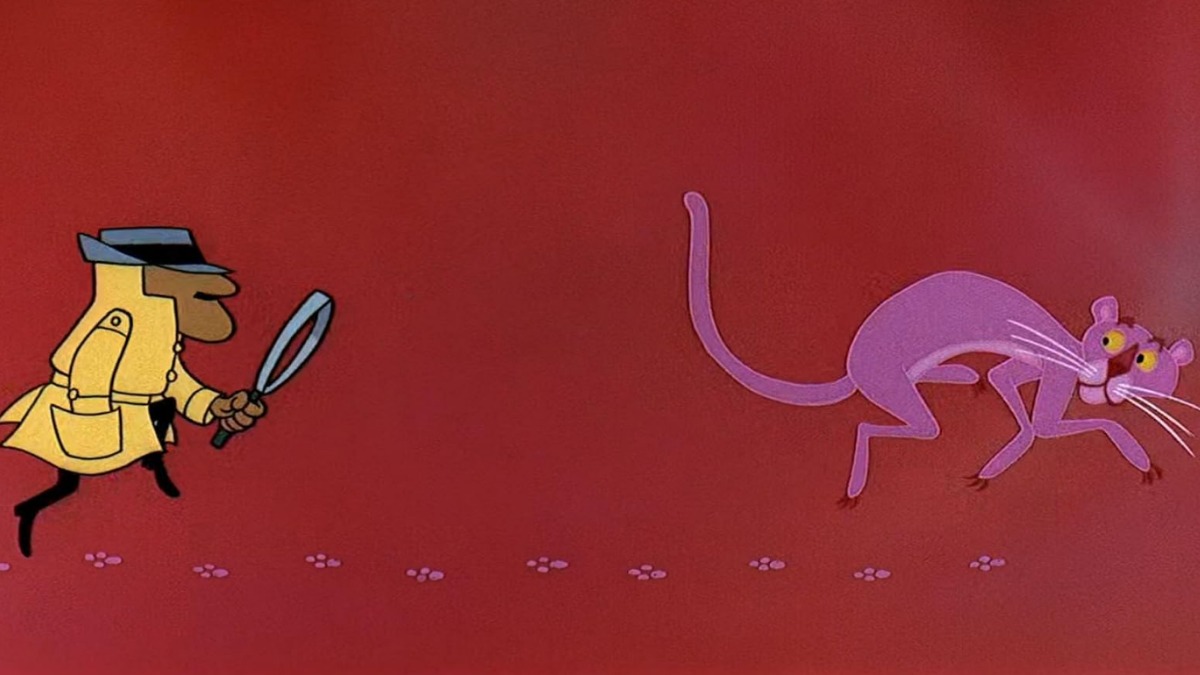
Johnson’s most famous contribution was the sultry, playful saxophone riff in Henry Mancini’s The Pink Panther Theme, recorded in 1963 for the Blake Edwards comedy. The track didn’t just become a cultural staple. According to Rolling Stone, it earned three Grammy Awards and an Oscar nomination for Best Original Score. The film’s score ranks at No. 20 on the American Film Institute’s list of the 25 greatest film scores.
Johnson once recalled the recording session with characteristic humility, saying, “We only did two takes, I think. When we finished, everyone applauded, even the string players.” That solo, delivered in just a few takes, became one of the most recognizable pieces of music in cinema history.
Johnson’s career stretched far beyond that one legendary riff
Born in Donaldsonville, Louisiana, in 1931, he grew up in a musical family. His father played banjo and saxophone, while his mother was a pianist. He made his professional debut at just 10 years old, initially as a singer before picking up the saxophone. His early years were spent touring with singer and pianist Charles Brown. By 1950, he and his brother Ray had made their recording debut for DeLuxe Records.
After serving in the Army, Johnson moved to Los Angeles in 1954. Here, he quickly became one of the most in-demand session musicians in the industry. Johnson played on recordings for an astonishing roster of artists, including Frank Sinatra, Nat King Cole, Peggy Lee, B.B. King, Marvin Gaye, the Beach Boys, and Ella Fitzgerald. He was equally at home in jazz, blues, rock, and pop, a rare skill that made him a favorite among producers and composers.
As he put it, “My solos always seemed to bring the record up another notch. I could do that in eight bars, I could do that in twelve bars, and I was used to maybe do fills behind the vocalist after that.” That ability to elevate a track with just a few notes was his signature. It’s why his work appeared on countless hits without most listeners ever knowing his name. In the 1970s and 1980s, Johnson’s session work continued to thrive.
He played on albums by Bette Midler, Carole King, Aaron Neville, Linda Ronstadt, Boz Scaggs, and Rod Stewart. His saxophone solos became a defining feature of the era’s sound, whether it was the smooth jazz inflections on a pop track or the raw, bluesy energy of a rock record. Even as he ventured into different genres, his jazz roots remained evident in his phrasing and tone. In 2002, he collaborated with Joni Mitchell on her album Travelogue.
Beyond his session work, Johnson released his own music
His 1959 album This Must Be the Plas! on Capitol Records and his 1975 release The Blues on Concord Jazz were both well-received. They showcased his skills as a bandleader and solo artist. But for most of his career, he was content to let his instrument do the talking, often in the background of other artists’ recordings.
That behind-the-scenes role was highlighted in the 2008 documentary The Wrecking Crew, which chronicled the unsung session musicians who shaped the sound of 1960s and 1970s Los Angeles. Johnson’s contributions, like those of many of his peers, were often overshadowed by the stars they supported, but their impact on music was immeasurable.
Bob Corritore, a harmonica player and record producer, paid tribute to Johnson on Facebook after his passing. “I just heard that we lost saxophone master Plas Johnson,” he wrote. “Best known for his famous sax part on the Pink Panther theme, his mid 1950s sides were raw, rockin’ jump blues instrumentals!”
Corritore recalled trying to discuss those early recordings with Johnson. The saxophonist dismissed them as “primitive” compared to the jazz eloquence he later achieved. “He was blessed with a warm, full tone and beautiful phrasing that he carried with him his whole life,” Corritore added. “A musician’s musician.”
Johnson’s legacy is a reminder of how much music relies on the unsung heroes
His work on The Pink Panther Theme will forever be his calling card. However, his influence extends to hundreds of recordings that shaped the sound of the 20th century. Whether it was the smooth jazz of Sinatra, the soulful grooves of Marvin Gaye, or the rock energy of the Beach Boys, Johnson’s saxophone was there.
For those who love music, his passing is a moment to revisit his work. If you’ve ever tapped your foot to a classic pop song or gotten chills from a blues solo, there’s a good chance Plas Johnson was part of the magic.
(Featured image: DePatie-Freleng Enterprises / The Pink Panther (1963) © The Mirisch Company)
Have a tip we should know? [email protected]
Follow The Mary Sue:
