


Ted Danson Admits Why His 1993 Friars Club Performance Was a Career-Ending Disaster That He Still Cannot Outrun
‘I stuck my finger in a light socket.’
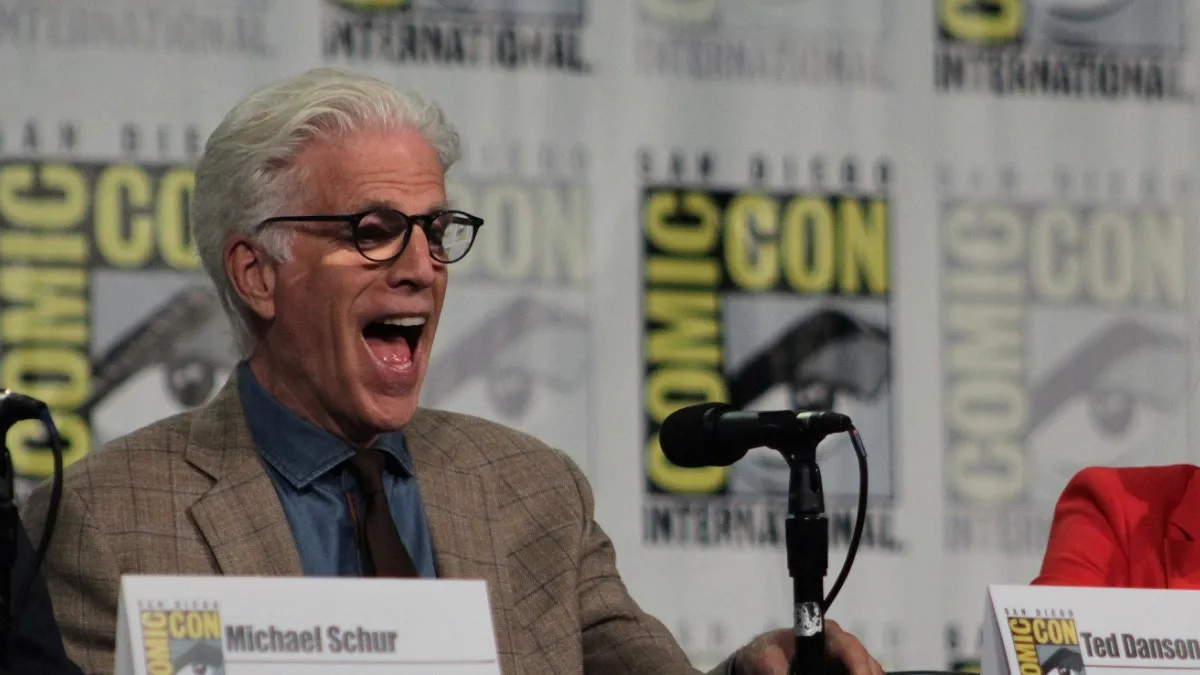
Ted Danson just admitted he’ll be apologizing for his 1993 Friars Club blackface roast of Whoopi Goldberg for the rest of his life. The Cheers star sat down with W. Kamau Bell on the Who’s With Me? podcast and called the incident a career-defining disaster he still can’t outrun, saying he now understands his intentions don’t matter, only the hurt he caused.
Danson’s appearance in blackface at a charity roast honoring Goldberg shocked the room and sparked immediate backlash. According to Complex, former New York City Mayor David Dinkins and talk-show host Montel Williams walked out in protest, with Williams later resigning from the Friars Club.
The Good Place alum said he knew the roast would be a minefield because his relationship with Goldberg was already falling apart, but tickets had been sold and backing out wasn’t an option. So he convinced himself he had a creative workaround. “My brain was going, OK, here is one of the most outrageous, funny Black women in the world,” he recalled. “I’m supposed to be roasting her, and I’m not a stand-up.”
That’s when he decided blackface would give him the license to say whatever he wanted
The moment he stepped on stage, he knew he’d made a catastrophic mistake. “Within 20 seconds, I was like, ‘I stuck my finger in a light socket,’” he said. He thought he was doing a satire on mixed relationships and being edgy, but the crowd reaction told a different story. About 20% of the audience laughed, 30% got the joke but hated it, and the rest “hated it and hated me.” The fallout was instant.
By the time he got back to his hotel, the controversy had already exploded. He had to call the mayor of New York, and his manager couldn’t even open his hotel room door because of the flood of messages. The incident cost him corporate sponsorships and resurfaced during the Black Lives Matter movement, leaving him shaken.
For years, Danson clung to the idea that his intentions – love and satire – excused the performance. But he’s since abandoned that defense. “Your intentions do not matter. The impact you have on people is what matters,” he said. “I thought I could run with the big boys, and I couldn’t. And it was stupid, and it was not my place, and it was wrong, and it was hurtful.”
He also acknowledged the burden the controversy placed on Goldberg, who publicly defended him at the time and even helped write some of the material. “Poor Whoopi Goldberg has had to defend me over the years, sweetly and gracefully,” he said. “So, the last thing she probably wants to do is be put in this position again.”
Goldberg’s stance has remained consistent
In the aftermath, she said, “We were not trying to be politically correct. We were trying to be funny for ourselves.” Danson, however, has shifted his focus from explaining the incident to owning it. “I apologize again to anyone who’s listening that I was arrogant enough to think that I had something to offer,” he said.
He admitted that the tabloids had been relentless about their interracial relationship, framing it as purely sexual, and he wanted to address that in his performance. But what started as an attempt to reclaim the narrative spiraled into something darker. “I thought I could be Robin Williams,” he said. “I can step up and pull this off. And that was so arrogant and stupid on my part.”
The fallout wasn’t just professional. According to Fox News, Danson revealed that his wife, Mary Steenburgen, who has worked extensively on civil rights, was frustrated by the stunt. The incident also resurfaced in recent years, leaving him feeling exposed and regretful.
Bell pointed out that Danson experienced “cancel culture” before it even had a name, but Danson’s response was humble. “I am forever apologetic,” he said. “I have no problem talking about this, but I need to and want to apologize for the rest of my life because somebody today can go on the internet, you know, and go, ‘What the f—? Wow, I feel betrayed. I feel angry.’ And I did that.”
Danson’s willingness to keep apologizing for the incident is commendable
What makes Danson’s reflection stand out is his willingness to keep revisiting the incident, even when most people would prefer to bury it. Bell praised him for that, calling it admirable that he continues to engage with the topic. “The fact that you even dealt with it in more recent years speaks to who you are,” Bell said.
Danson’s honesty about his arrogance and the lasting damage of his actions offer a rare look at how public figures grapple with past mistakes. It’s not just about the apology; it’s about the lifelong reckoning that follows.His story also highlights how quickly satire can cross into harm, especially when race is involved. He thought he was pushing boundaries, but the performance became a cautionary tale about who gets to tell which stories.
His admission that he “couldn’t run with the big boys” is a stark reminder that creativity without empathy can have consequences that last decades. For Danson, the roast wasn’t just a bad night but a turning point he’s still trying to make right. And while he can’t undo the past, his ongoing apologies show a rare level of accountability in an industry that often moves on without looking back.
(Featured image: aitchisons from United States)
Have a tip we should know? [email protected]
Follow The Mary Sue:
